

U.S.–Iran Talks Give Market a Boost—Can Calm Fade?
Wednesday, July 01, 2026
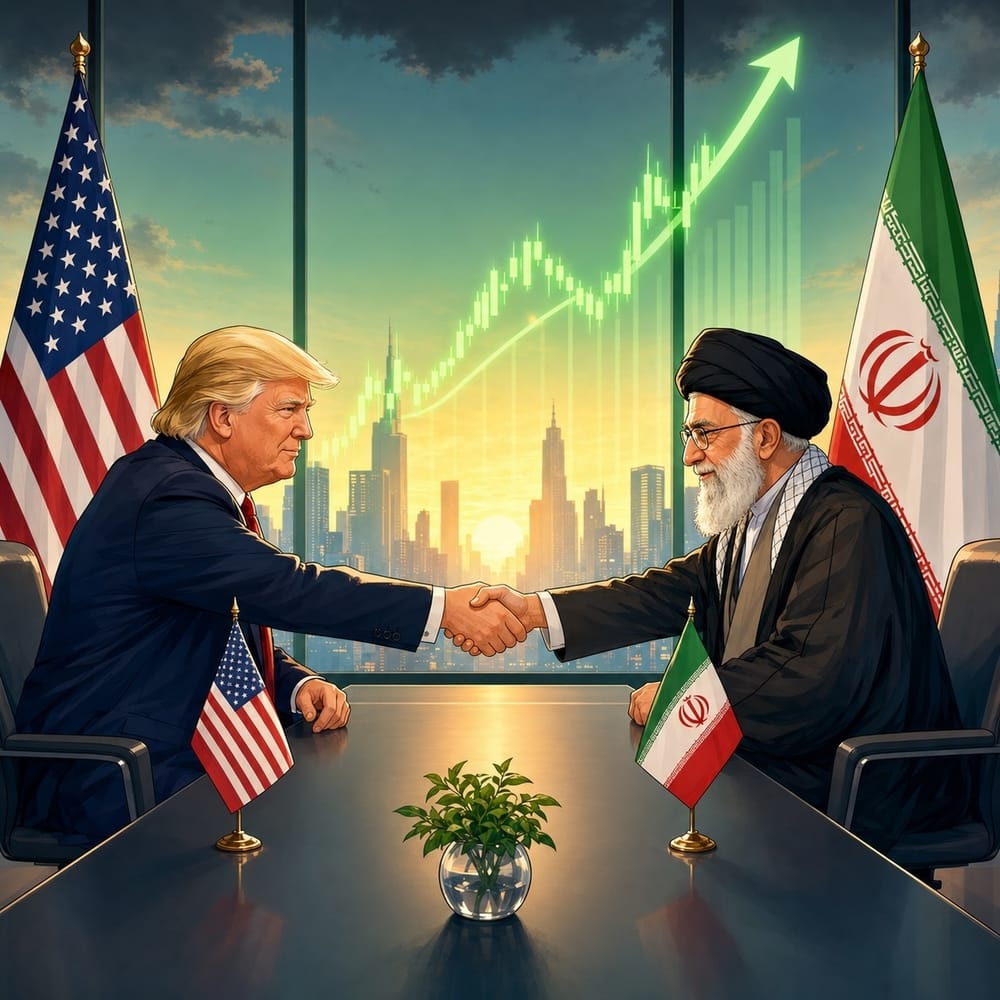
MARKET BOOST FROM U.S.–IRAN TALKS—HOW LONG WILL THE CALM LAST?
Ready for a little geopolitical gossip with your morning coffee? The market's thrilling ride this week was powered by whispers of potential U.S.-Iran dialogues in Doha. Like a surprise plot twist in your favorite soap opera, the mere prospect of these talks sent stocks soaring and oil prices sliding. It's a classic case of "will they, won't they," but with global stakes and stock market implications. Let's dive into who's winning, who's sweating, and whether this honeymoon phase will fade faster than a summer tan.
WHAT'S ALL THE FUSS ABOUT?
For those not glued to international news, the United States and Iran have been playing a high-stakes game of cat and mouse ever since tensions spiked over nuclear deals and sanctions. Talk of a potential meeting in Qatar sprouted optimism like daisies in spring, sending a wave of relief through markets. With energy prices mellowing, the stock market flashed a smile wider than a Cheshire cat, easing fears of runaway inflation.
THE WINNERS: WHO BENEFITS MOST?
So, who’s popping the bubbly over this news? Energy stocks, for starters, took a breather. We've seen oil prices nose-dive—down about 20%—as peacemaking signals slipped into investors' ears. This means cheaper fuel costs, which is good news for just about everyone except oil producers hoping for a price rebound. It’s a bit of a buzzkill for those bullish on fossil fuels, but a boon for sectors relying on lower oil prices.
Defense stocks, which often thrive on global tension like a plant on sunlight, may find their moment in the sun briefly dimmed. Aerospace and defense giants like Boeing and Lockheed Martin might feel a pinch if diplomatic vibes continue to mellow the global mood.
Meanwhile, broader indices like the S&P and Dow are basking in the afterglow. When investors aren’t biting their nails over geopolitical squabbles, they tend to loosen their purse strings, fueling a rally across varied sectors. It's a market party, and everyone's invited—at least for now.
WHAT COULD RAIN ON THIS PARADE?
Of course, every rose has its thorns. For one, the fickleness of geopolitical negotiations. Today's hope can morph into tomorrow's despair with a single tweet or statement. Should talks falter or veer off course, markets could quickly revert to their previous state of anxiety, sending oil prices soaring and stocks dipping.
Moreover, even if talks go swimmingly, the broader macroeconomic landscape still has its share of storm clouds. For instance, the tech sector is feeling the burn, with the value of the Magnificent 7—giants like Apple and Amazon—contracting by a solid 10% due to AI investment jitters. If tech continues its rollercoaster ride, it could overshadow any goodwill from international diplomacy.
Lastly, let's not forget that any substantive deal between the U.S. and Iran is likely as complex as the last season of your favorite political drama series. Skepticism abounds regarding whether any peace will be durable or if it's just an ephemeral ceasefire in a long-term conflict.
KEEP YOUR EYES PEELED
For retail investors, staying attuned to these developments is like watching the weather when planning a picnic. Bring sunscreen, but don't forget the umbrella. The key question remains: can this newfound calm be sustained long enough for investors to soak up some genuine gains, or will it fade away, leaving only the scent of what might have been?
In short, keep your binoculars trained on those headlines. Geopolitical tensions are the wild cards in the market's deck, capable of tipping the balance from bullish to bearish and back again faster than you can say “sanctions lifted.”
Whether this diplomatic dance leads to lasting harmony or a brief intermission, it's bound to keep us on the edge of our seats. Meanwhile, if you're an investor, strap in, stay informed, and enjoy the ride—it's bound to be a bumpy, yet possibly rewarding, one.
This article is for informational purposes only and is not investment advice. Always do your own research or consult a licensed financial professional before making investment decisions.
© Copyright 2024. All Rights Reserved.
© Copyright 2024. All Rights Reserved.