

U.S.–Iran Strikes Rock AI‑Fueled Tech Rally
Monday, July 13, 2026
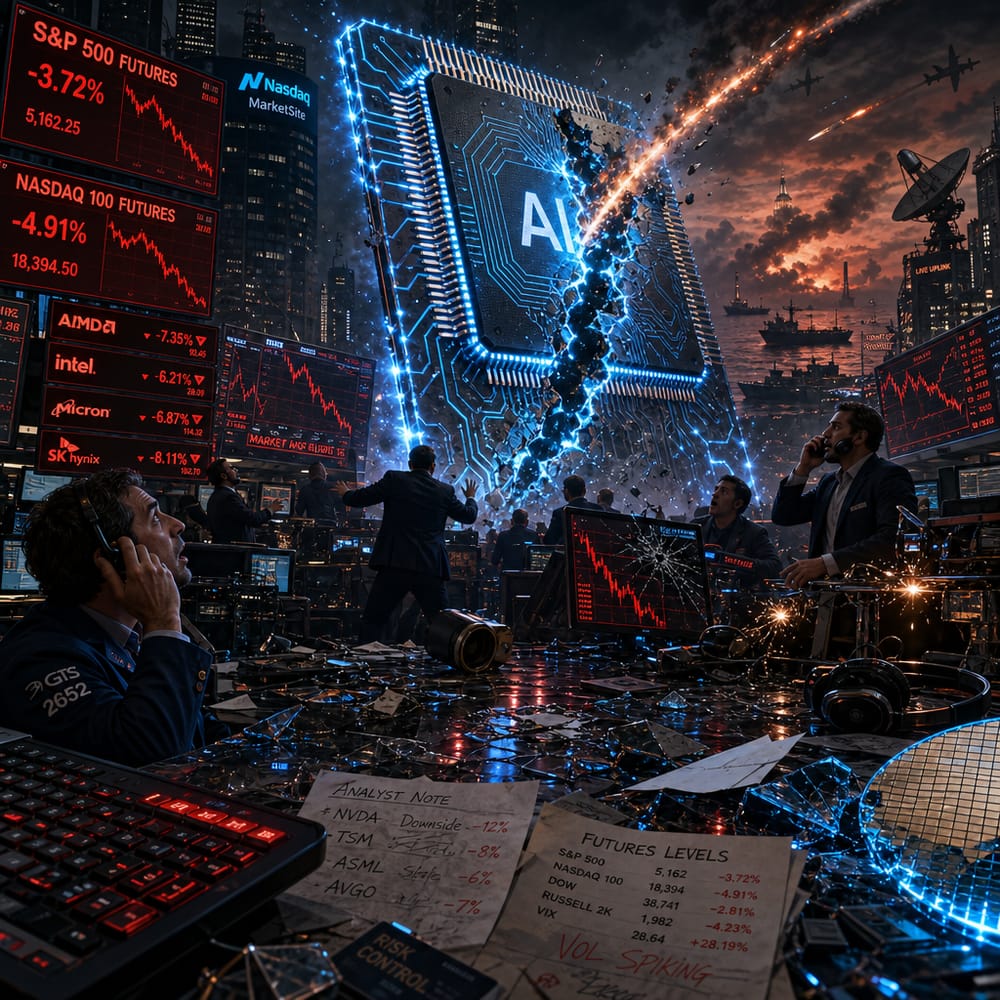
U.S.–IRAN STRIKES ROCK AI-FUELED TECH RALLY
Imagine this: you’re on a rollercoaster cresting the peak, the exhilaration is palpable, and suddenly, someone yanks the emergency brake. That's essentially what happened to the tech rally when U.S.–Iran tensions surged over the weekend. The Middle East is once again the epicenter of geopolitical jitters that have sent tremors through the global markets.
In the latest episode of “Who Struck First?”, the U.S. and Iran exchanged airstrikes, with the Strait of Hormuz—the watery lifeline for global oil—caught in the crossfire. This strait is to oil what Wi-Fi is to millennials: indispensable. So, when Iran hinted at its closure, investors had a mini panic attack. And you guessed it, futures for the S&P 500 and Nasdaq took a tumble faster than a novice skater on ice.
This escalating tension is not mere background noise for stock markets. It's more like a fire alarm blaring in a hotel lobby. Semiconductor stocks, especially those tied to artificial intelligence (AI), which have been on a bull run, suddenly found themselves in the bearish grip of uncertainty. Shares of South Korean semiconductor titan SK Hynix plunged 8% merely days after a successful debut on the Nasdaq. U.S. chip giants like Micron, Intel, and AMD felt the heat too, dropping 5%, 4%, and 2.6% respectively. It’s like watching a group of marathon runners trip one after the other, all thanks to a single unexpected hurdle.
THE STRAIGHT TALK ABOUT THE STRAIT
Let’s put the Strait of Hormuz in perspective. Around a fifth of the world’s oil passes through this narrow channel. Any threat to its accessibility can send oil prices skyrocketing, which in turn, throws a wrench into market sentiments. Rising oil prices typically stoke fears of inflation, and inflation is that uninvited guest at the party who won't leave. This puts the Federal Reserve on edge, with investors speculating whether they’ll tweak interest rates to keep the economy from overheating.
For tech stocks, especially the chipmakers riding the AI wave, the stakes are even higher. The market is wrestling with whether these are mere growing pains or the onset of something more sinister. After all, AI and semiconductor sectors have been the darlings of Wall Street, each pixel of their growth story fetching top dollar. But like any Hitchcock film, suspense is in the air. Will investors seize this dip as a golden opportunity to buy, or is it time to cash in and take shelter until the geopolitical storm blows over?
ALGORITHMS CAN’T DODGE BOMBS
The AI boom has fueled a massive appetite for semiconductors, which are essentially the neurons of modern tech. Companies like TSMC, the world's largest contract chipmaker, are flexing muscle with record revenues. Yet, geopolitical upheavals are to markets what kryptonite is to Superman: a formidable threat. The trade spat between Iran and the U.S. adds a layer of complexity that no algorithm can quite digest.
In a world where tech stocks have been riding high on AI-driven optimism, any disruption—whether it’s a drone strike or an oil embargo—can feel like a bad case of market vertigo. While some analysts see these dips as mere profit-taking, others argue it's a signal of deeper trepidations brewing beneath the surface.
NAVIGATING THE MARKET MAELSTROM
So, what should you do while the geopolitical pot boils over? Is it time to stick with tech, or is it wiser to pump the brakes? If you’re feeling adventurous, this dip might be the perfect moment to pounce on discounted tech stocks, banking on the sector’s resilience and long-term value. On the other hand, if you’re risk-averse, you might want to duck for cover and wait for the dust to settle.
With oil prices surging and rumors of further Fed rate hikes swirling, the investment landscape is anything but predictable. Volatility is the new norm, and while that can mean rewards for the bold, it also means heartburn for the cautious.
As the U.S. and Iran continue to flex military muscles, the markets will be watching closely, hanging on every word and every missile. Whether this geopolitical hiccup marks a temporary pause or a prolonged disruption remains to be seen. In the meantime, keep your seatbelt fastened and your eyes on the markets—it’s going to be a bumpy ride.
This article is for informational purposes only and is not investment advice. Always do your own research or consult a licensed financial professional before making investment decisions.
© Copyright 2024. All Rights Reserved.
© Copyright 2024. All Rights Reserved.