

U.S. Inflation Measures Held Steady in July, Supporting Hawkish Fed View
Saturday, August 29, 2026
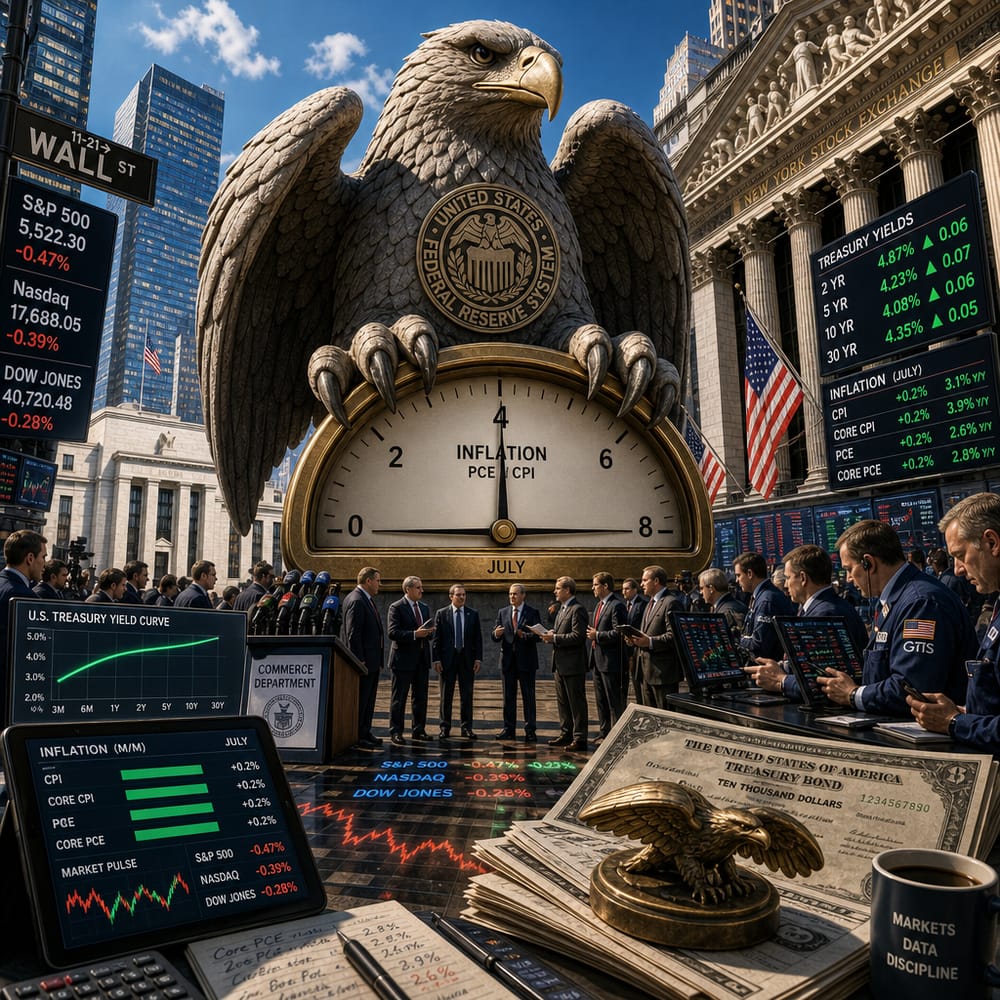
INFLATION DRAMA: THE FED'S HAWKISH STANCE AND WHAT IT MEANS FOR YOUR STOCKS
Inflation is like that uninvited guest who just won’t leave. You've tried to hint that the party's over, but here it is, lounging in your living room while the Federal Reserve, our central banking superhero, glares at it from the corner. July’s steady inflation figures have given the Fed a reason to keep its hawkish feathers fluffed, and investors are feeling the ripple effects throughout the market.
Let’s break it down. The Commerce Department dropped a mild bombshell with its report of stable inflation in July. This sort of stability isn't sending any pulses racing—or calming any nerves. It’s like getting a ‘meh’ on your quarterly review. Not bad, but not quite the gold star either. The Fed, in its usual cautious fashion, is reading these tea leaves as a green light to potentially keep the interest rates high for now. Their mission? To keep inflation in check without derailing the economic train.
Now, before you ask, "What’s the deal with the 'hawkish' talk?" let’s decode. In the world of finance, when we say the Fed is hawkish, it means they’re ready to raise interest rates to curb inflation. It’s like tightening the purse strings in your household to prevent overspending. Higher interest rates mean borrowing money becomes more expensive, which usually reins in spending and slows down inflation.
This steady inflation wouldn’t be a big deal if it weren’t for its pesky persistence. Investors are left clutching their pearls, wondering if the Fed will turn the rate dial all the way up. And why does it matter to you and your portfolio? Because steady inflation could mean more of the same from the Fed—higher interest rates for longer.
The fallout from this Federal vigilance? It’s shaking up the playground that is the stock market. The S&P 500, Nasdaq, and Dow are all feeling the pressure, behaving like a yo-yo, up one day and down the next. The bond market, too, is feeling the heat, with U.S. Treasury bonds serving as a weathervane for investor sentiment. When inflation refuses to budge, bond yields often rise as investors demand higher returns for their money amid the expectation of rate hikes.
But let’s talk brass tacks. What’s the immediate impact? Higher rates can make stocks less attractive. That’s because they increase the potential return from so-called "safe" assets like Treasuries, drawing money away from riskier stocks. It’s kind of like choosing a sure thing over a gamble when the stakes are high.
And then there's the sector story. Tech stocks, usually the belles of the ball, particularly feel the pinch. Companies like Apple and Amazon rely heavily on growth projections that become harder to believe when borrowing costs rise. Their fairy tale narratives of future earnings can lose some sparkle if inflation keeps its stubborn grip.
On the flip side, some sectors bask in the glow of rising rates. Financials, for example, can benefit from higher interest rates because they can charge more for loans. Think of banks as the happy kids in the corner, counting quarters while everyone else is watching the market go up and down like a seesaw.
So what should you do with this information? Keep your eyes peeled on the Fed’s next moves. Pay attention to Fed meetings and statements—these are the squeaky wheels that hint at when the next rate change may come. And remember: in a world of economic uncertainty, diversification is your friend. Spread your investments across different sectors to ride the waves of volatility.
The saga of inflation and interest rates is far from over. But as we watch this financial drama unfold, just remember: stay curious, stay informed, and most importantly, keep your investment cool. Because in the wild world of stock markets, preparedness is your best ally.
This article is for informational purposes only and is not investment advice. Always do your own research or consult a licensed financial professional before making investment decisions.
© Copyright 2024. All Rights Reserved.
© Copyright 2024. All Rights Reserved.