

U.S. Hiring Slows Sharply in September, Fed Rate-Hike Odds Shift
Sunday, October 04, 2026
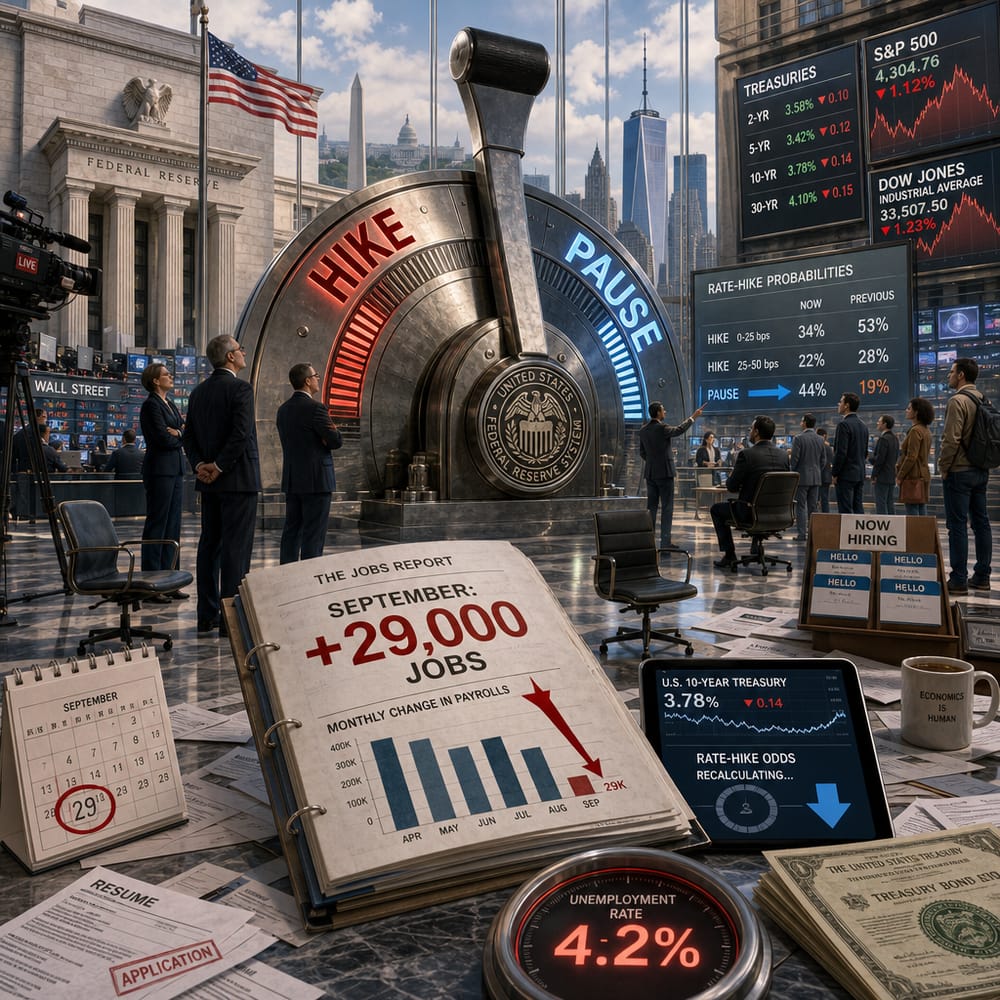
SEPTEMBER JOBS REPORT SHOCKER: WHAT IT MEANS FOR YOUR WALLET AND THE FED'S NEXT MOVE
If you thought September was all about pumpkin spice and back-to-school sales, think again. The surprise star of the month? A soft jobs report that dropped like a brick and shifted the Federal Reserve's rate-hike calculus faster than you can say "interest rate."
Let’s unpack this: The U.S. economy managed to add a mere 29,000 jobs in September. That's not quite the robust job growth Uncle Sam had been banking on. And with the unemployment rate ticking up to 4.2%, the data has economists scratching their heads and federal decision-makers scrambling to readjust their playbooks.
WHAT WENT WRONG?
So, where did the jobs vanish? Let's pin it down. Industries like manufacturing and retail are nursing some serious layoff hangovers. Manufacturing got hit by a combo of high input costs and lower demand, while retail's tale of woe comes from the ever-intensifying competition from online giants and sluggish foot traffic.
The usual suspects, like the tech sector, held their ground steadily, although with a more modest pace of hiring than in previous, frothier years. But one wonders how long tech can stay unscathed amid such economic turbulence and rising interest rates threatening to crimp capital.
THE FED'S DILEMMA: TO HIKE OR NOT TO HIKE?
Here's where it gets spicy. The Federal Reserve, our country's chief money maestros, has been on a rate-hiking spree to keep inflation in check. But with these wobbly job numbers, some are starting to wonder if the Fed might pump the brakes.
The latest limp labor market performance throws a wrench into the Fed's narrative of a resilient economy that could withstand higher rates. A hold on rate hikes could provide some relief to cash-strapped borrowers and businesses feeling the pinch of higher borrowing costs.
THE MARKET'S GUT REACTION
Expect your friendly neighborhood Wall Street to have some opinions over this. Bond markets could see a reprieve if the Fed adopts a more dovish tone. U.S. Treasuries might find a bit of a breather, as investors recalibrate expectations for future rate hikes, pushing bond prices up and yields down.
As for stocks? The S&P 500 and Dow Jones Industrial Average might see some volatility in the short term. A pause or delay in rate hikes could act as a balm for equities, but the broader economic uncertainties may keep traders on their toes.
PUTTING IT IN PERSPECTIVE
Why does this matter to you, sitting at home with a coffee in hand? Because the Fed’s decisions ripple across the economy, impacting everything from mortgage rates to your retirement savings.
If you're a saver, lower interest rates mean your cash stashed in savings accounts isn't going to earn much. But if you're a borrower, your credit card and loan interest rates might not skyrocket anytime soon, giving you a little more room to breathe.
IN A NUTSHELL
The September jobs report is more than just numbers—it’s a signal, a flashing orange light for policymakers and investors alike. It suggests we might not be out of the economic woods just yet. That means the Federal Reserve has some serious spreadsheet juggling to do before deciding whether to continue tightening the monetary screws.
While this might be a momentary lull, keep your eyes peeled for the upcoming economic reports. They'll help clue us in on whether this jobs hiccup is a blip or a bellwether for choppier economic waters ahead. For now, buckle up—you’re in for a wild ride.
This article is for informational purposes only and is not investment advice. Always do your own research or consult a licensed financial professional before making investment decisions.
© Copyright 2024. All Rights Reserved.
© Copyright 2024. All Rights Reserved.