

U.S. Government's Potential Ban on Chinese Optical Transceivers
Tuesday, August 18, 2026
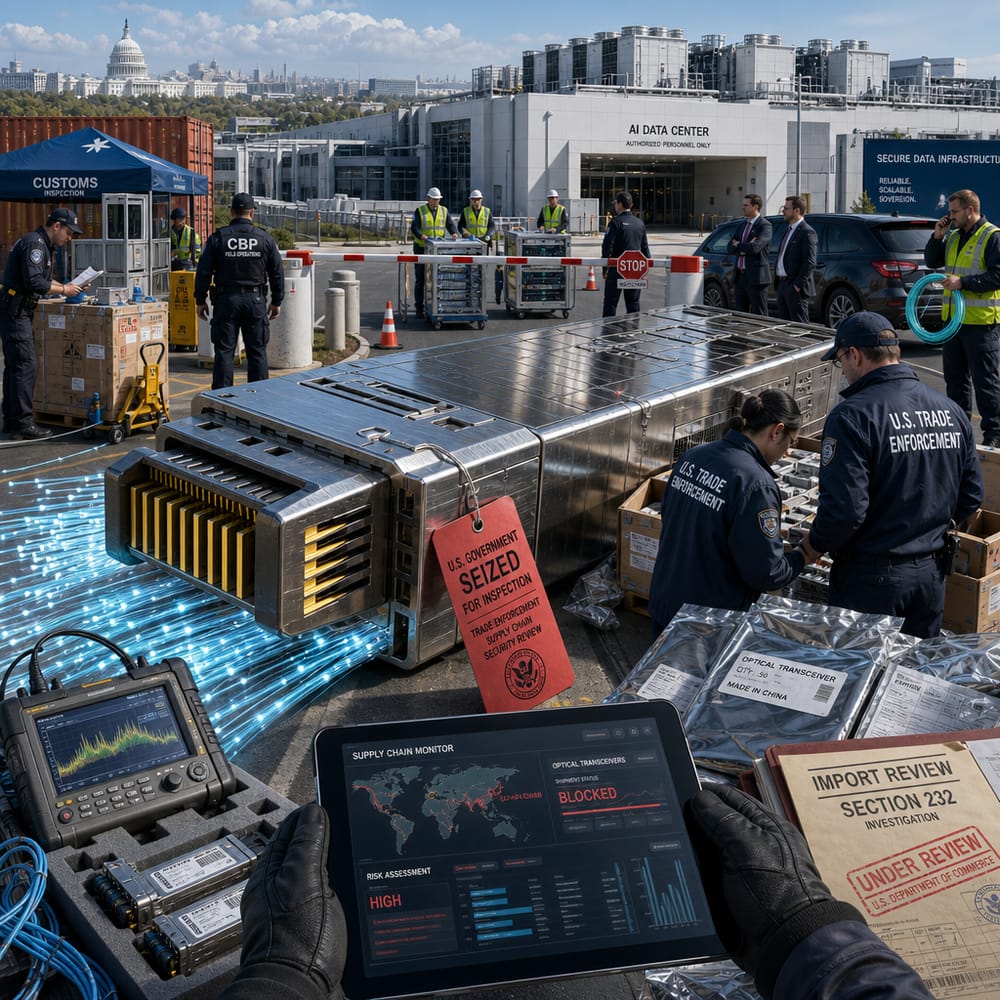
WHEN CLOUDS ROLL IN: THE U.S. TAKES AIM AT CHINESE OPTICAL TRANSCEIVERS
In the bustling corridors of Washington, a storm is brewing, one that might just rain on the parade of AI data centers across the U.S. We're talking about the potential U.S. government ban on Chinese optical transceivers. "Optical trans-what?" you say? These small, sophisticated devices are the unsung heroes of our digital age, the silent workhorses that keep data flowing seamlessly through the veins of AI networks and cloud providers like Amazon Web Services (AWS). But as tensions tighten, Uncle Sam is considering pulling the plug on their Chinese origins.
Why the fuss over these tiny gadgets? Picture this: You’re using your favorite cloud service, and suddenly it's as if traffic lights went out at rush hour. That’s the kind of disruption a transceiver ban might trigger. These little devices are pivotal in the data world, responsible for converting electrical signals into optical ones, ensuring data moves at lightning speed. Without them, even the AI overlords in your devices might start feeling sluggish.
The motivation behind this potential move is more political chess game than tech tinkering. Washington's stance is strategic: cut dependency on China, especially for tech that's critical to national security. But the economic ripple could feel more like a tidal wave, hitting right at the heart of U.S. tech companies.
First up in the potential firing line are the supply chains. Think of them as the digital silk roads, those intricate routes that bring tech from idea to reality. If Chinese transceivers are kicked out of the club, there's a scramble to find alternatives, and fast. This isn't just about swapping one component for another. It's about a foundational shift that could send costs soaring and timelines spiraling.
And trust us, the price tag won't be small-change. Cloud providers like AWS could face a steep uphill cost battle. Higher costs for them could mean higher prices for businesses and consumers who rely on their services. Imagine the trickle-down effect; companies might have to tighten their belts, and users could feel the squeeze in their wallets.
But every cloud has its silver lining. Enter Coherent and Lumentum, two U.S.-based tech stalwarts who are poised to step into the spotlight. If Chinese transceivers are given the boot, these companies could ride the wave of demand, seeing their stock tickers glow green with potential new market share. Suddenly, being domestic isn't just patriotic; it’s profitable.
However, this shift poses a global quandary. AI data centers aren't just playgrounds for U.S. tech giants. They’re the backbone of a global AI ecosystem. A disruption in transceiver supply could echo worldwide, altering the pace and cost of AI development in other countries reliant on U.S. cloud services.
So, what's the takeaway for the savvy investor? Keep an eye on Coherent and Lumentum. They could see a windfall if the ban comes to fruition. But also keep your ear to the ground for any ripple effects across the tech sector, as companies recalibrate and reassess their supply chains and costs.
For now, the U.S. is poised on the edge, weighing the pros and cons of a ban that could redefine the tech landscape. The narrative is still unfolding, but one thing's for sure: the dialogue around dependency, security, and technological sovereignty is only getting louder. As retail investors, it might just be time to tune in — your portfolio could thank you later.
In the end, whether this maneuver is about making a power play or dodging a technological bullet, it’s clear that the pages of this story are still being written. For those invested in tech's future, every twist in this saga could be as slick as the data streams these transceivers carry. Stay informed, stay critical, and perhaps most importantly, stay curious.
This article is for informational purposes only and is not investment advice. Always do your own research or consult a licensed financial professional before making investment decisions.
© Copyright 2024. All Rights Reserved.
© Copyright 2024. All Rights Reserved.