

U.S. Government Acquires 10% Stake in Intel
Saturday, August 22, 2026
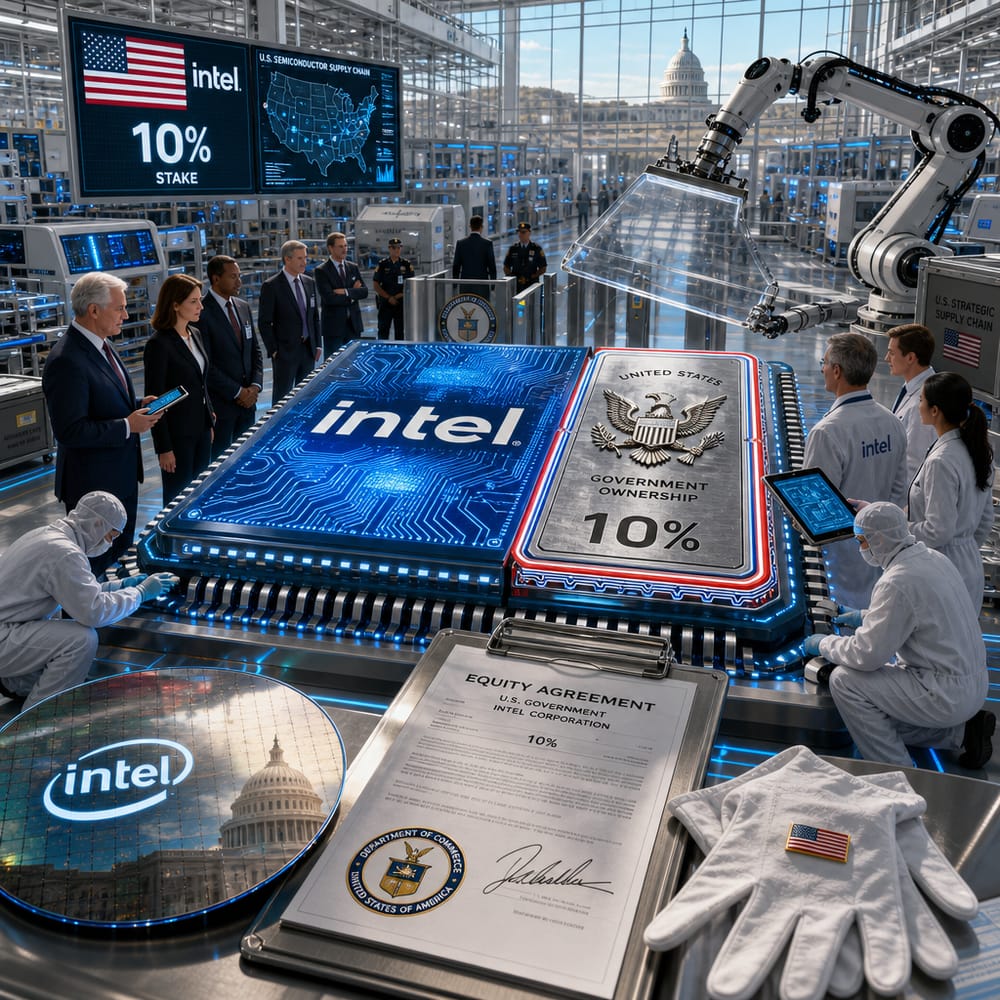
UNCLE SAM MEETS SILICON VALLEY: U.S. GOVERNMENT NOW OWNS 10% OF INTEL
In a plot twist that could have jumped right out of a spy thriller, the U.S. government just grabbed a cool 10% ownership stake in Intel. That's right, your friendly neighborhood Uncle Sam is now a major shareholder in one of the world’s biggest semiconductor companies. The move has left investors scratching their heads and tech gurus wondering how this will change the chip game.
THE SEMICONDUCTOR SAGA
Why is the U.S. government diving into the semiconductor pool? Because these tiny chips have become the new gold. They power everything from smartphones to fighter jets, making them critical to national security and technological supremacy. As the global chip shortage showed us, without semiconductors, the world grinds to a halt — quite literally.
By taking a slice of Intel, the U.S. is signaling that it's serious about keeping the semiconductor supply chain in check and ensuring that innovation stays on American soil. With geopolitical tensions and trade wars bubbling up like a pot of chili, securing semiconductor production has become a top priority.
GOVERNANCE MAKEOVER?
So, what does this mean for Intel’s governance? It’s like inviting your mom to the high-stakes poker table — things are bound to change. With a 10% stake, the U.S. government will likely have a say in Intel’s decisions, potentially steering the company toward projects that align with national interests rather than just profits.
While Uncle Sam might not micromanage the day-to-day operations, don’t be surprised if Intel’s board meetings start to feel a little more patriotic. We might see a stronger focus on research and development in areas critical to national security, or perhaps stricter guidelines on where Intel sets up shop.
INVESTOR SENTIMENT AND STOCK VALUATION
Investors are now caught in a whirlwind of speculation. On one hand, having the government as a backer could make Intel seem more stable — after all, Big Brother is unlikely to let a company it partially owns fall flat. On the flip side, increased government involvement could stifle the nimbleness and creativity that the tech industry thrives on.
The market hates uncertainty, and this unprecedented move certainly stirs the pot. Stock prices might see some volatility as investors adjust their expectations, but long-term effects will depend on how well Intel can balance government priorities with shareholder interests.
FEDERAL FUNDING AND FUTURE TECH
The million-dollar question: Is this just the beginning of federal forays into tech land? If the government is willing to buy a chunk of Intel, it could signal a future where federal funding for tech innovation becomes more common. This could be a game-changer for industries like AI and quantum computing, where U.S. dominance is just as strategic as it is profitable.
The partnership may also pave the way for more public-private collaborations, with Intel potentially acting as a conduit for channeling federal funds into ambitious R&D projects. This could fast-track advancements and help the U.S. maintain its lead in tech.
A NEW DAWN FOR CHIPS?
The U.S. government’s acquisition of a stake in Intel is more than just a financial maneuver — it’s a strategic play. While it shakes up Intel’s governance and investor expectations, it also underscores the vital role semiconductors play in everything from defense to consumer electronics.
As the dust settles, all eyes will be on how this uncharted partnership unfolds. Will it serve as a template for future government investments in key sectors? And how will Intel navigate this brave new world where public and private interests converge?
Whatever the outcome, one thing’s for sure: the tiny semiconductor is making some big waves. Whether you're an investor, a tech enthusiast, or just someone trying to understand why your phone’s price tag resembles a mortgage down payment, keep your eyes peeled. This is one storyline with all the potential twists of a Silicon Valley saga, and it’s just getting started.
This article is for informational purposes only and is not investment advice. Always do your own research or consult a licensed financial professional before making investment decisions.
© Copyright 2024. All Rights Reserved.
© Copyright 2024. All Rights Reserved.