

U.S. GDP and Inflation: Growth Accelerates Even as Price Pressures Persist
Sunday, November 08, 2026
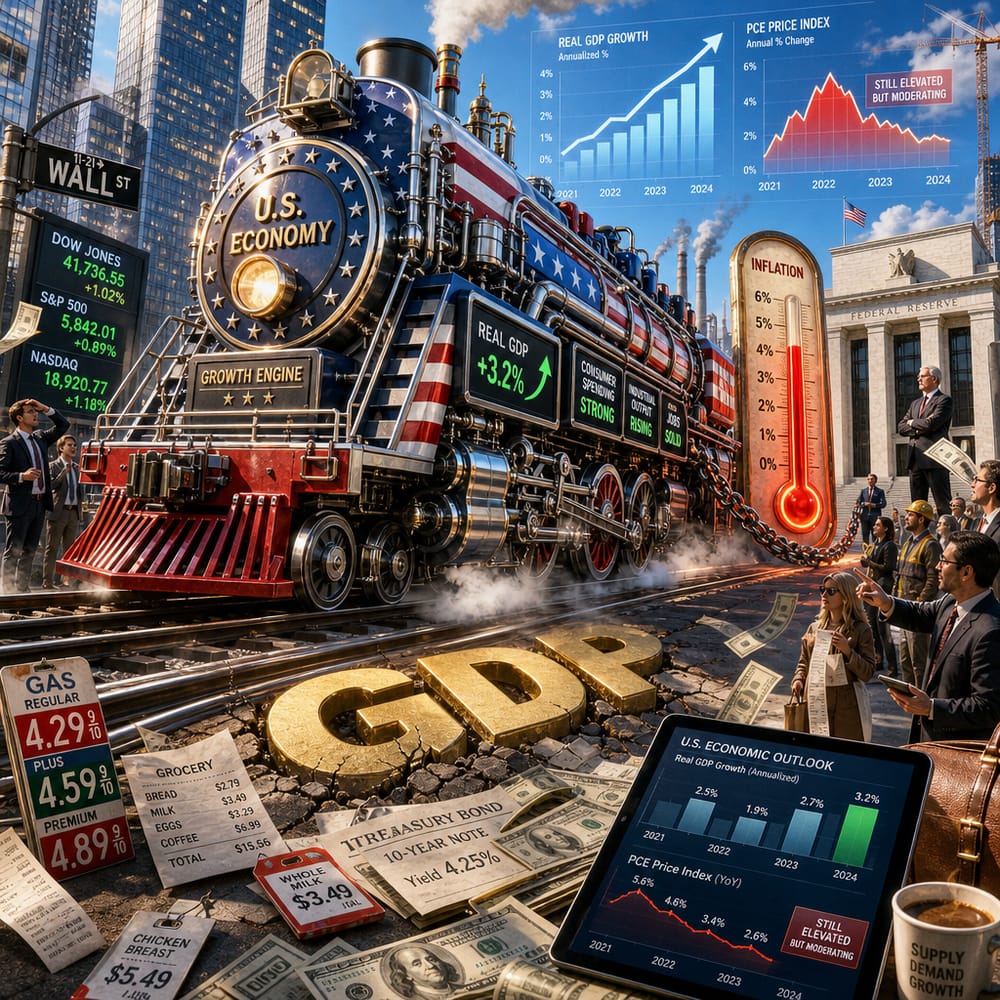
U.S. GDP AND INFLATION: GROWTH ACCELERATES EVEN AS PRICE PRESSURES PERSIST
Brace yourselves, folks, because it looks like the U.S. economy is flexing some serious muscle. Recent reports have shown that the U.S. GDP is not just growing—it's putting on a show like it’s the financial world’s version of the Super Bowl halftime. That's right, Uncle Sam's economy is expanding with all the fervor of a teenager who just got their first credit card. But here’s the kicker: inflation is still hanging around like that one party guest who just won’t leave. So, what’s the deal with this seemingly contradictory setup?
Let's break it down. GDP, or Gross Domestic Product, is what we fancy folk call the total value of everything produced within the nation’s borders. It’s the tell-all number that investors, economists, and your nosy neighbor use to gauge the health of the economy. And right now, it's signaling that the U.S. economy is in tip-top shape—spending, producing, and growing like it’s going out of style.
But hold your horses. Before you start popping the champagne, there's a twist. Inflation, while cooling slightly, is still playing hard to get. Despite its gradual decline, prices haven’t exactly returned to the good old days of bargain shopping and dollar menus. The delicate dance between strong GDP growth and persistent inflation is leaving investors scratching their heads and wondering what’s next for the Federal Reserve.
To get to the heart of the matter, let's consider what this robust GDP growth actually tells us. It shows that businesses are confident, consumers are spending, and investments are flowing. It’s essentially the economic equivalent of a high-five. However, the persistent inflation is a pesky reality check. It’s like having a winning lottery ticket with a minor typo. You’re excited, but there’s still a hiccup to fix.
Now, onto the $64,000 question—how will this impact the Fed's policy decisions? Well, the Federal Reserve has been playing a high-stakes game of Jenga with interest rates, carefully raising them to curb inflation without toppling the economic tower. Strong GDP growth might tempt the Fed to be a bit more laid-back, easing off the rate-hike pedal. But with inflation sticking around longer than that suspicious leftover in your fridge, they could still keep a cautious foot on the gas.
For investors, this economic narrative is both thrilling and nerve-wracking. On one hand, a strong economy often means strong markets. On the other, inflation and its impact on interest rates can make markets as jumpy as a cat in a room full of rocking chairs. It’s a balancing act worthy of its own reality show, and for market enthusiasts, the stakes couldn’t be higher.
But here's the twist in the plot: what does this economic story mean for market sentiment? In a world where narratives drive behavior as much as facts do, the tale of a booming economy with manageable inflation could be the sweet spot investors have been longing for. It's the kind of thing that makes stock markets rally and makes investors feel a little more zen about their portfolios.
In the backdrop of this economic drama lies the ever-important Personal Consumption Expenditures (PCE) price index. It's the Fed's favorite measure of inflation, akin to that one playlist you can't stop playing. If this index continues to show signs of inflation cooling, it could signal to the Fed that a gentler policy approach is feasible. But if it doesn’t, well, expect the Fed to keep its finger on the rate button.
So, what’s the big takeaway? As the U.S. economic engine revs at full throttle, retail investors should stay nimble. Keep an eye on Fed announcements and inflation data like they’re the latest episode of your favorite series—because they are. And remember, while GDP growth is the star of the show, inflation is the mischievous sidekick that’s still in the spotlight. Stay smart, stay informed, and maybe, just maybe, your investment portfolio will come out the hero of this story.
This article is for informational purposes only and is not investment advice. Always do your own research or consult a licensed financial professional before making investment decisions.
© Copyright 2024. All Rights Reserved.
© Copyright 2024. All Rights Reserved.