

U.S. Eyes Expanded Semiconductor Tariffs
Thursday, August 27, 2026
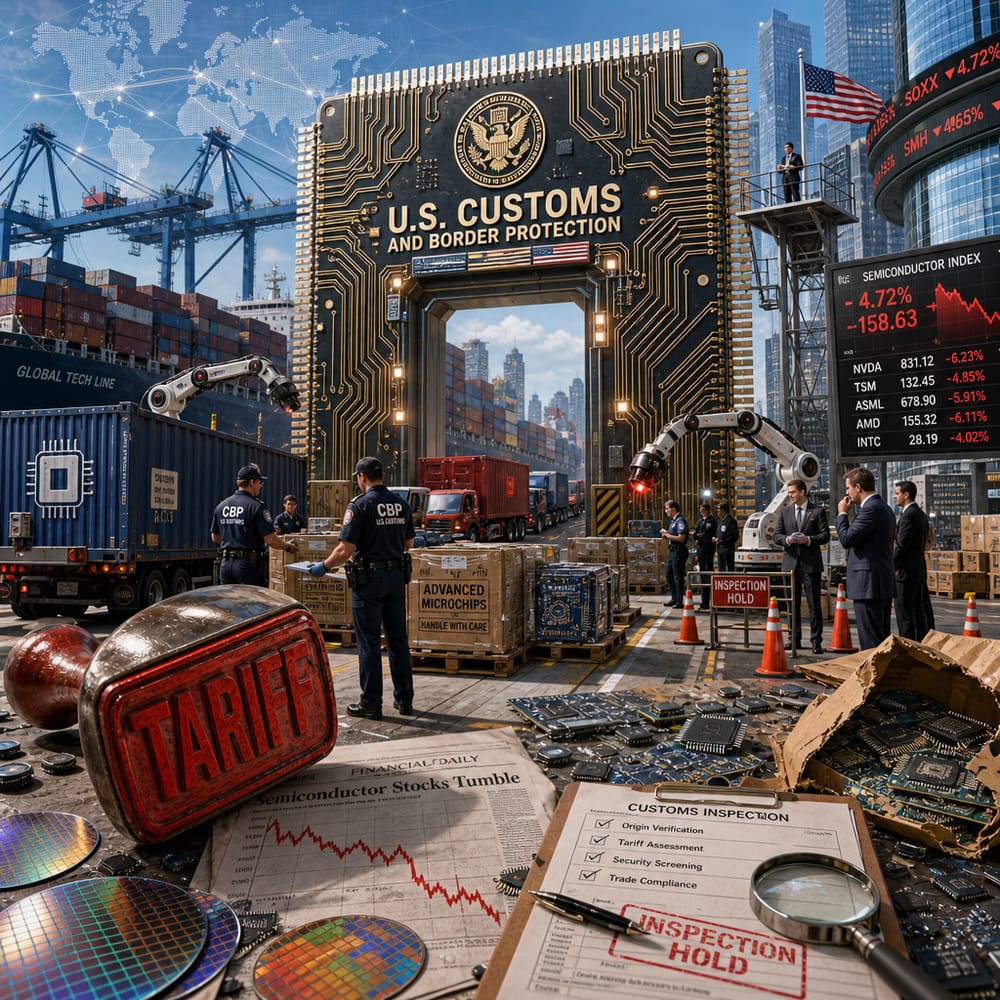
US EYES EXPANDED SEMICONDUCTOR TARIFFS
Grab your popcorn, folks, because the latest episode in the never-ending saga of U.S.-China trade drama is about to unfold. The U.S. is pulling a new plot twist straight from the playbook, considering slapping fresh tariffs on a whole range of techie treasures—semiconductors included. And if you think this is just another diplomatic spat, think again. This act could send shockwaves through your tech stock portfolio faster than you can say "artificial intelligence."
Let's get one thing straight: semiconductors are the lifeblood of the tech industry. These tiny chips are in everything from your smartphone to that fancy gaming console gathering dust in your living room. The proposed tariffs don't just stop at semiconductors either—they might extend to laptops, data center servers, and even gaming hardware. Imagine a world where booting up your next-gen console costs more than your favorite designer coffee. Yes, it's that serious.
Now, before you start hyperventilating into your VR headset, let's talk about what this means for tech stocks. In simple terms, tariffs are like a big, bad tax that makes imported goods more expensive. For tech companies already grappling with supply chain snarls and the relentless pursuit of the next big thing, this could be a bitter pill to swallow. Higher costs could squeeze profit margins, and that’s a language Wall Street does not want to hear.
The big players in the semiconductor arena, like Nvidia, AMD, and Intel, are riding a high tide fueled by the AI boom. Nvidia, for example, recently saw its stock soar after stellar earnings. Yet, with these potential tariffs looming, the tide could quickly turn. While the companies are on a trajectory of growth, tariffs could act like an unexpected iceberg. The costs associated with tariffs on semiconductors and related products could lead to price hikes, meaning consumers might have to pay more for tech products—or worse, companies might have to absorb the costs, impacting their bottom lines.
Now, let’s widen the lens. These tariffs aren’t just about dollars and cents; they’re the latest chess move in the U.S.-China trade game. The backdrop here is a high-stakes race to dominate the AI infrastructure landscape. By imposing tariffs, the U.S. aims to fortify its home turf in semiconductor manufacturing. A bold move, but one fraught with risk. Tariffs could aggravate trade tensions and provoke retaliatory measures from China, setting off a tit-for-tat that could destabilize the fragile trade equilibrium.
And what about the broader implications? Well, if this turns into a full-blown tariff tussle, other sectors might get caught in the crossfire. The ripple effects could touch everything from retail to manufacturing, as supply chains once again find themselves in a state of uncertainty. For retail investors, this spells out a landscape where caution might just be the smarter play.
The question that’s burning on everyone’s minds is: just how bad could it get? Well, it’s worth noting that the tariff talk is still in its early stages. There's room for negotiation, but markets, being the finicky creatures they are, react to sentiment as much as to substance. Uncertainty is Wall Street's kryptonite, and it could lead to volatility in tech stocks as investors attempt to predict the next move.
In the end, while tariffs might be the U.S. government’s way of trying to reshape the tech landscape and bring semiconductor manufacturing back home, the immediate impact could be a bumpy ride for tech stocks. The road ahead is fraught with uncertainties, but for those willing to brave the storm, it’s going to be one heck of a market ride. Hold on to your portfolios, because the techno-political theater is far from over.
This article is for informational purposes only and is not investment advice. Always do your own research or consult a licensed financial professional before making investment decisions.
© Copyright 2024. All Rights Reserved.
© Copyright 2024. All Rights Reserved.