

U.S. Export Controls Target Chinese AI Access
Sunday, August 30, 2026
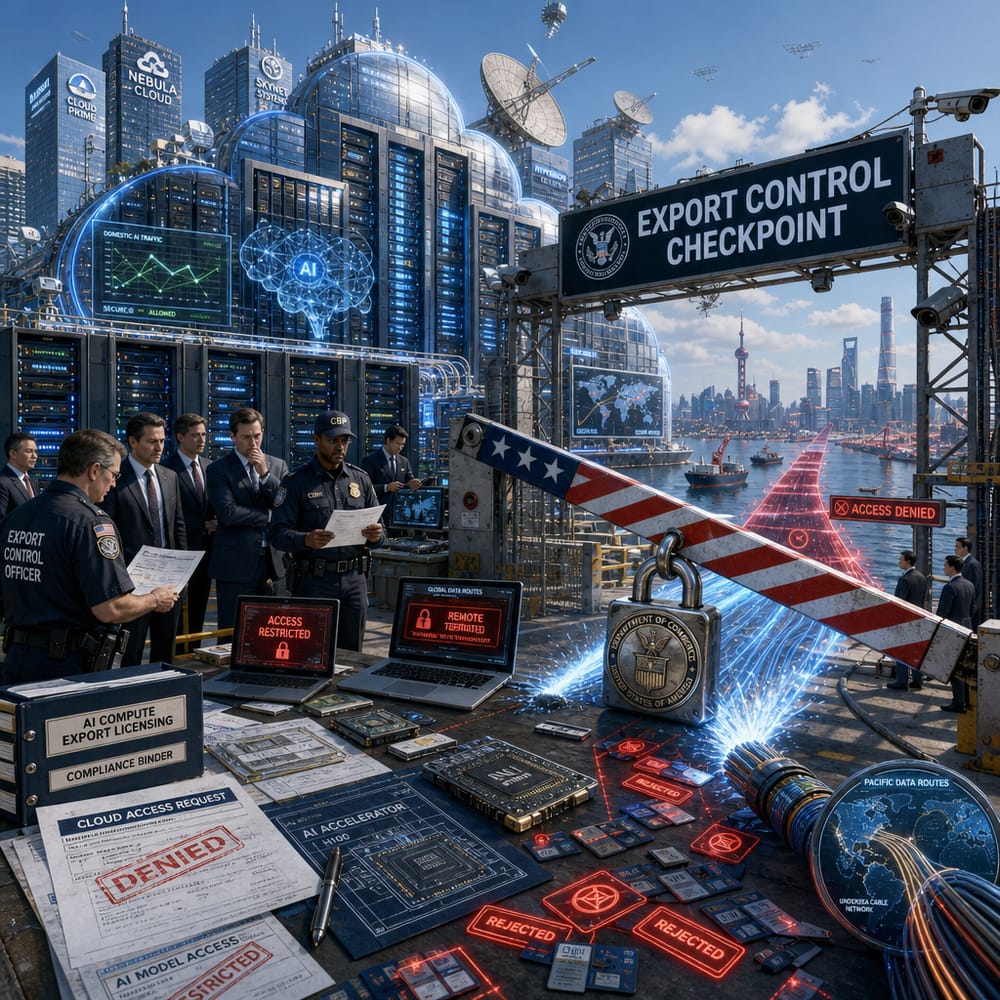
Buckle up, because Uncle Sam is revving up his engine and setting his sights on China’s AI ambitions. That’s right, folks, the U.S. government is about to drop a digital hammer by introducing fresh export controls designed to keep China’s digital hands off U.S.-hosted AI servers. Think of it as throwing a wrench in China’s AI machine just as they were getting up to speed. But, as with any good plot twist, it’s bound to send ripples through the tech playground.
Hold up, you say. What’s the big deal here? Well, in the high-stakes world of artificial intelligence, access to powerful computing resources—like those hosted stateside—is akin to having the keys to a futuristic tech kingdom. These controls could pull the rug out from under Chinese companies relying on remote U.S. servers, potentially slowing down China’s AI juggernaut. And let's not pretend this isn’t a strategic power play in the ongoing tech chess match between the U.S. and China. It’s like the Cold War, but with algorithms.
For the biggest brains in Silicon Valley, this move is more than just a hiccup; it’s a full-blown earthquake. Companies like Google and Microsoft, with their sprawling cloud services, might need to rethink their game plans. Could this limit their growth in one of the world’s most lucrative markets? You betcha. On the flip side, for firms focused on domestic AI innovation, this might just be the edge they’ve been looking for.
Now, onto the million-dollar question: How will this affect U.S.-China tech relations? Spoiler alert—it’s complicated. These controls are likely to fan the flames of an already fiery relationship. It’s not just about tech supremacy; it’s about setting the groundwork for who gets to rule the digital future. By restricting access to advanced AI capabilities, the U.S. is effectively drawing a line in the silicon sand. Expect China to respond, and don’t be surprised if they accelerate their homegrown AI efforts as a result.
That brings us to enforcement. Sure, Uncle Sam wants to play gatekeeper, but the digital world is notoriously slippery. Ensuring Chinese firms aren’t sidestepping these controls via third parties or through other means is a logistical nightmare. It’s a bit like trying to catch smoke with a net. And let's face it, tech regulations often move at the speed of dial-up, while technology itself is zipping by like fiber optic. This discrepancy could lead to a game of regulatory whack-a-mole, with enforcement always two steps behind the latest workaround.
Of course, the implications are far-reaching. Smaller U.S. firms looking to make a splash in the international AI scene might find themselves caught in the crossfire, dealing with increased scrutiny and red tape. And then there's the ripple effect on innovation itself. Could this protectionist stance stifle collaboration and slow the pace of breakthrough advancements? It’s a question that hangs heavy in the air.
For investors keeping an eagle eye on the market, this development is a stark reminder of the geopolitical risks entangled with technological advancements. AI companies and U.S. tech giants with extensive cloud services are now in the spotlight. Investors will need to wade through the potential fallout and opportunities this move presents.
As the digital dust settles, one thing’s for sure: the U.S.-China tech tango just got a whole lot more intense. The stakes are sky-high, and the outcome is anything but certain. Grab your popcorn, folks—this is one tech saga you won’t want to miss.
This article is for informational purposes only and is not investment advice. Always do your own research or consult a licensed financial professional before making investment decisions.
© Copyright 2024. All Rights Reserved.
© Copyright 2024. All Rights Reserved.