

U.S. Equities Slip From Highs on Weak Retail Spending Data
Friday, August 14, 2026
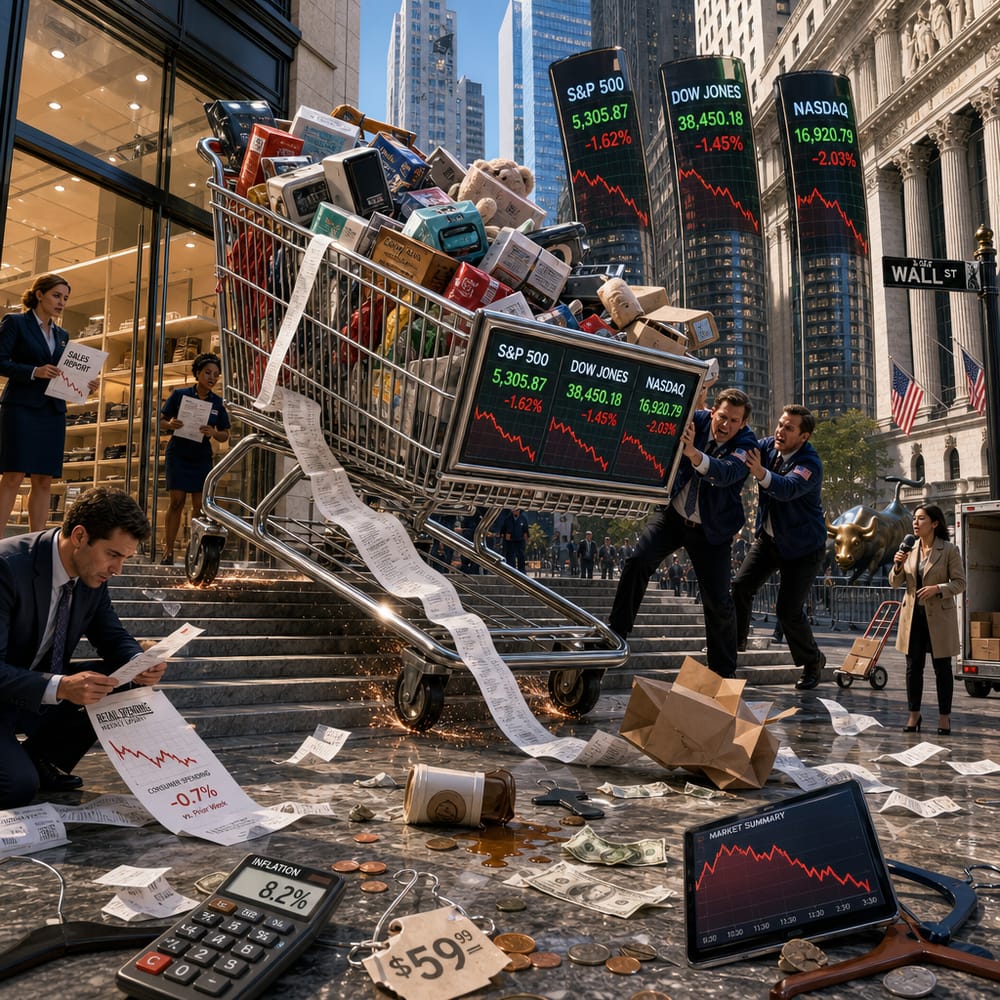
WHEN SHOPPERS SCATTER, WALL STREET SHIVERS: THE TALE OF RETAIL SALES AND S&P SLIPS
Picture this: You wake up on a sunny Friday morning, ready to check the markets with your morning cup of ambition. But as you scroll through your financial app, instead of the usual green arrows that make your heart sing, you find red numbers that scream, "Surprise!" What gives? Buckle up, because today's rollercoaster ride is courtesy of a retail sales report that’s as disappointing as a soggy breakfast burrito.
The S&P 500, Dow Jones, and Nasdaq, the stalwarts of U.S. equities, all took a synchronized dive, shedding around 0.2% each. Normally, a little market dip might be as concerning as a paper cut, but this one comes on the heels of retail sales data that suggests Americans are tightening their belts. Yes, in an economy that's been strutting around with high inflation, it seems our collective wallets have decided to take a little breather.
Let's break it down. Consumer spending kept the economic party going through much of 2026, but this latest report shows that shoppers are buying less than expected. Economists, typically a cautious bunch, had forecasted a modest uptick in spending. Instead, we got a decline, leaving investors wondering if the consumer-driven engine of the U.S. economy is running out of gas.
So, why does this matter to you, the savvy retail investor? First, let's talk market sentiment. When retail sales sputter, it raises red flags about consumer confidence. Less spending means businesses may see lower profits, which can make stock prices go sour faster than milk in the sun. If consumers are feeling the pinch, companies might not hit those earnings targets analysts love so much, and that can send stock prices reeling.
Now, let's swivel to the Federal Reserve, the omnipresent puppeteer of interest rates. Weak retail data could be music to the Fed's ears if they’re looking to keep interest rates lower for longer. When consumers spend less, it can signal a cooling economy, and the Fed might hold off on raising rates to avoid putting more strain on borrowers. Lower rates can be a boon for stocks, since they make borrowing cheaper and encourage investment. But, if inflation keeps its fiery grip, the Fed is stuck between a rock and a hard place, balancing the risks of a slowing economy against those of rising prices.
And here's where things get even spicier: The S&P's slip from its all-time high isn’t just about retail. Oil prices have been playing a game of seesaw too, swinging higher as tensions in the Persian Gulf keep everyone guessing about future supply. This pressure point, combined with retail woes, paints a picture of an economy where nothing is as steady as we’d like.
In the crystal ball of market predictions, there's a wildcard: consumer sentiment. If people start to worry about their finances, it might not be just malls that feel the chill. Less spending could lead to fewer jobs and could even ripple into other sectors, like technology and manufacturing, which have been riding high on AI and infrastructure booms. If consumers snap their purses shut, those sectors could see a slowdown too.
As an investor, what should you do? Well, it's time to channel your inner Sherlock Holmes. Keep an eagle eye on the upcoming economic data releases. Watch how the Fed wields its rate-setting powers. And remember, diversification isn't just a buzzword; it's your best friend in times of uncertainty. Spread your investments across different sectors and asset types to cushion against unexpected shocks.
So, what's the takeaway from today's retail-induced market frown? It's a reminder that while Wall Street loves a good rally, it hates surprises. Weak retail data has pulled back the curtain, revealing an economy that might not be as robust as it seems. But while markets wobble, opportunities also emerge. Keep your strategy sharp and your perspective balanced, and you’ll navigate these choppy waters just fine.
This article is for informational purposes only and is not investment advice. Always do your own research or consult a licensed financial professional before making investment decisions.
© Copyright 2024. All Rights Reserved.
© Copyright 2024. All Rights Reserved.