

U.S. Equities Rally Wraps Record Week—but Underlying Breadth Remains Thin
Friday, October 09, 2026
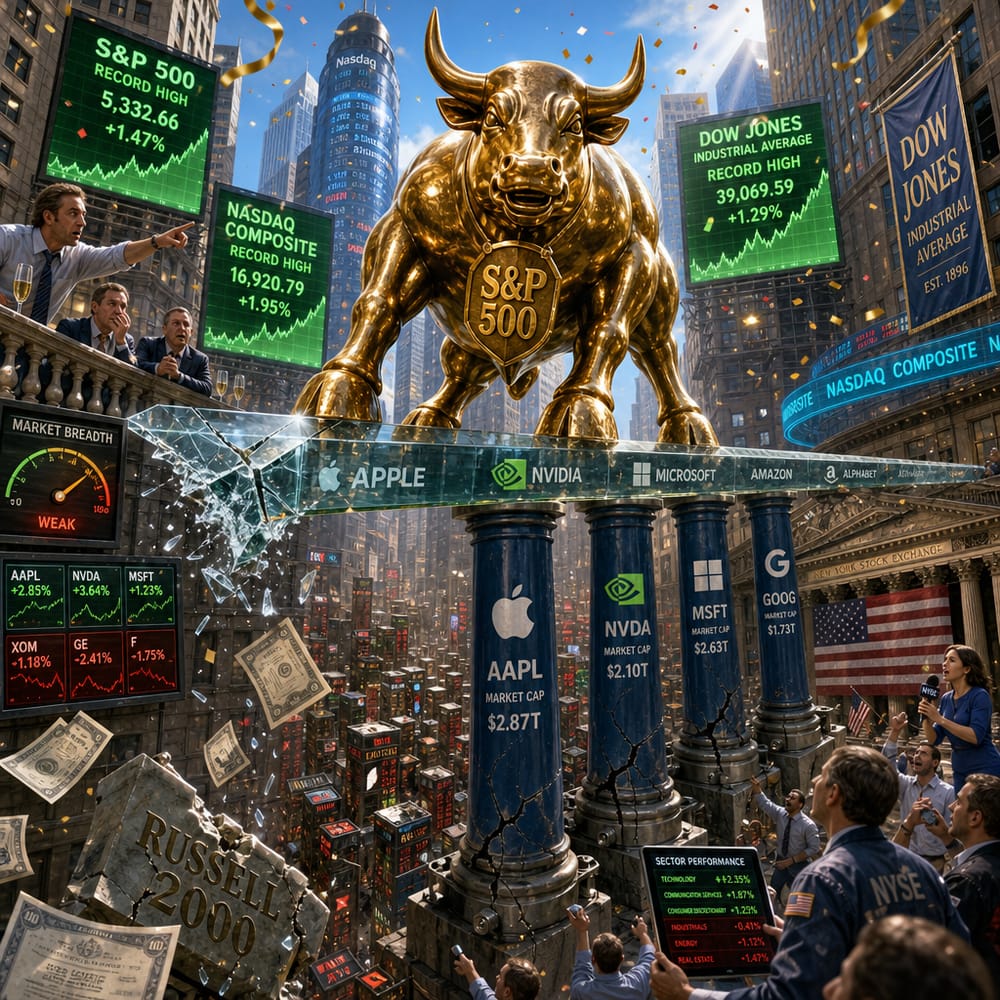
U.S. EQUITIES RALLY WRAPS RECORD WEEK—BUT UNDERLYING BREADTH REMAINS THIN
If Wall Street were a party, the S&P 500 would be the DJ blasting hits on repeat while most guests awkwardly sip punch, wondering how they ended up there. Despite the stock market’s dance floor being packed with upbeat numbers—S&P 500, Nasdaq, and Dow all toeing record highs—the guest list is rather limited. This market rally is starting to look a lot like a wedding where only the bride and groom know the dance moves.
While the indices are throwing confetti on a record-setting week, the underlying market breadth—or the number of stocks participating in the rally—seems as thin as a Hollywood salad. A few mega-cap tech stocks are doing the heavy lifting while many other stocks are just sitting this one out on the sidelines. Before you pop the champagne, let's take a look at why this matters.
WHAT IS MARKET BREADTH AND WHY DOES IT MATTER?
Market breadth is a fancy term for measuring how many stocks are actually participating in a market move. Think of it as the number of people on the dance floor versus those glued to their seats. When only a few stocks are driving the market upwards, it indicates narrow leadership—much like a few extroverts dragging everyone else to the dance.
Narrow market breadth can be a red flag. It’s like building a skyscraper on a shaky foundation—looks great now, but how stable is it really? Historically, rallies with broad participation are more stable and sustainable. When the breadth is thin, even a slight stumble by a leading stock can cause the whole market to trip over its own feet.
THE CURRENT MARKET CONUNDRUM
The recent surge in the S&P 500, which jumped 0.59% to 7,811.54, along with the Dow adding a solid 423 points, seems impressive at first glance. But take a closer look, and it’s like peeking behind the curtain at a magic show. The illusion is driven by a select few tech stocks, while many others are just making up the numbers.
Tech darlings are currently the life of Wall Street's party, much like that one guest who always shows up just to hog the karaoke mic. Meanwhile, sectors like retail, healthcare, and small caps represented by the Russell 2000 aren't exactly in a celebratory mood. These sectors are either dragging their feet or outright sitting this one out.
SO, WHAT DOES WEAK BREADTH SPELL FOR INVESTORS?
Weak market breadth can dampen investor sentiment, much like realizing the ice cream machine is broken after you’ve already paid for the buffet. When only a handful of stocks are in charge of a rally, the market’s stability is on thin ice. If those few stocks face trouble—think regulatory changes or earnings misses—the market might not have the breadth to absorb the blow.
This narrow leadership scenario can breed an air of caution among investors. Some might start thinking about taking chips off the table or diversifying their portfolios away from tech-heavy assets. Plus, with rising yields on junk bonds, investors may eye other income-generating opportunities, adding to market volatility.
THE BOTTOM LINE: STAY VIGILANT
For retail investors scrolling through their trading apps, the key is not to get swept away by headline index numbers. Dig a bit deeper, and you’ll see not all that glitters is gold. Understanding the underlying breadth can help you make more informed decisions instead of just following the herd.
The record highs are certainly worth a nod, but don’t forget to check if the rest of the market is following the same script. It might just save you from a nasty hangover when the music stops. So, before you start dancing along with the S&P 500, make sure you know who else is on the dance floor with you.
This article is for informational purposes only and is not investment advice. Always do your own research or consult a licensed financial professional before making investment decisions.
© Copyright 2024. All Rights Reserved.
© Copyright 2024. All Rights Reserved.