

U.S. Dollar Weakens on Slumping U.S. Retail Data; Euro Breakout Brewing?
Tuesday, August 18, 2026
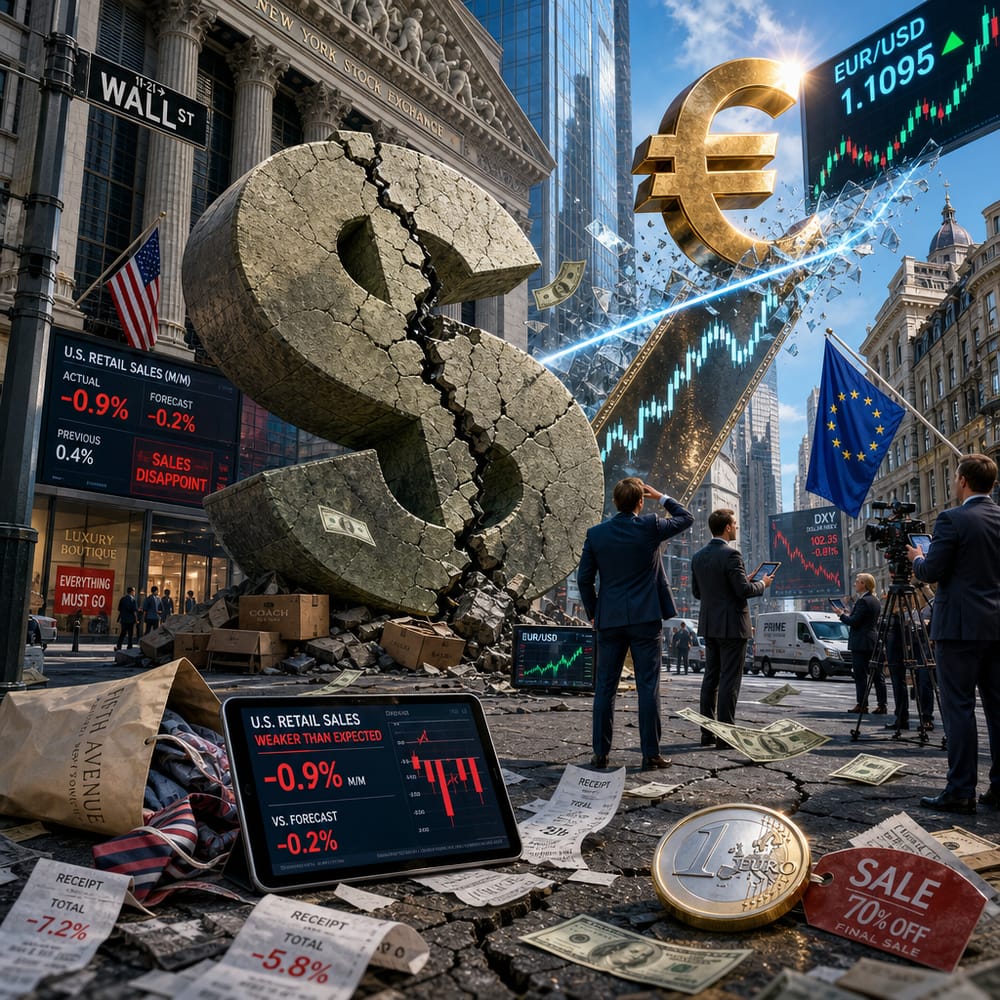
When a sneeze is all it takes to knock down a house of cards, you better be ready for an allergy season of economic news. This time, the sneeze came in the form of disappointing U.S. retail sales data, a statistic seemingly innocuous but potent enough to knock the wind out of the U.S. dollar. Let me break it down for you, because it’s not just the dollar that’s feeling under the weather—there’s a whole lot more at stake.
U.S. retail sales are the ultimate pulse check on consumer spending, and by extension, the entire U.S. economy. When these figures nosedive, the ripples are felt far and wide. The latest numbers showed that Americans are not exactly on a shopping spree, missing market expectations by a mile. And just like that, the mighty greenback found itself on shaky ground.
Now, why should you care if the dollar is feeling a bit gloomy? Well, a weakened dollar doesn't just mean cheaper vacations for Europeans flocking to New York. It could be the first note in a symphony of economic shifts, signaling a potential pivot in global currency markets.
The Dollar Index (DXY), which measures the buck against a basket of other major currencies, took a hit—and when the dollar sneezes, other currencies, particularly the Euro, start feeling a little more sprightly. Think of it as a see-saw: what goes down on one end, comes up on the other. With the dollar down for the count, the Euro might just be ready for its breakout performance.
Why does the Euro have a pep in its step? It’s not just the dollar's woes—Europe’s economy might have a few surprises up its sleeve. Let’s not pop the champagne just yet, but economists have been whispering sweet nothings about a possible Eurozone revival. If Europe plays its cards right—should healing inflationary pressures and a robust industrial sector continue to hum—it might just bolster the Euro further.
But let’s put the confetti back in our pockets because it's not all roses and lollipops on the European side of the pond either. The Eurozone is still grappling with its own hobgoblins like energy prices and geopolitical tensions. Yet, relative to the hot mess over in the U.S.—a delightfully complex cocktail of high Treasury yields, ballooning fiscal deficits, and stubborn inflation—the Euro looks like a safer bet for cautious investors.
For those with a keen eye on the EUR/USD trading pair, this situation is the love-hate drama you didn’t know you needed. A weaker dollar has ramifications beyond exchange rates. It’s like an opera where everyone’s singing but you have to decipher the libretto—a weaker dollar can make U.S. exports more competitive, while imports (hello, inflation) could get pricier.
Now, dear investors, don’t go exchanging all your dollars for Euros just yet. While the dollar might be licking its wounds today, currencies have a notoriously short memory. The Federal Reserve’s next move, geopolitical surprises, or even a resurgence in consumer confidence can tip the scales back in favor of the greenback faster than you can say ‘exchange rate.’
The real question is, where do you place your bets? Diversification is your best friend in this currency drama. Keep an eye on the broader implications of these economic narratives. While the Euro might be staging a breakout, remember that it’s not about swiping right on every uptick. Instead, use this as a cue to rebalance and rethink your portfolio. The world economy is much like a soap opera—just when you think you know the plot, a new twist awaits.
Ultimately, the world’s eyes are on the U.S. economy’s next move. Will consumers open their wallets again, or will the dollar continue its sulk in the corner? And across the Atlantic, will the Eurozone seize this opportunity to shine, or stumble back into its previous doldrums? Hold on tight, because the only constant in this economic rollercoaster is change itself.
This article is for informational purposes only and is not investment advice. Always do your own research or consult a licensed financial professional before making investment decisions.
© Copyright 2024. All Rights Reserved.
© Copyright 2024. All Rights Reserved.