

U.S. Dollar Weakens as Consumer Confidence Misses, Commodity Currencies Strengthen
Wednesday, August 26, 2026
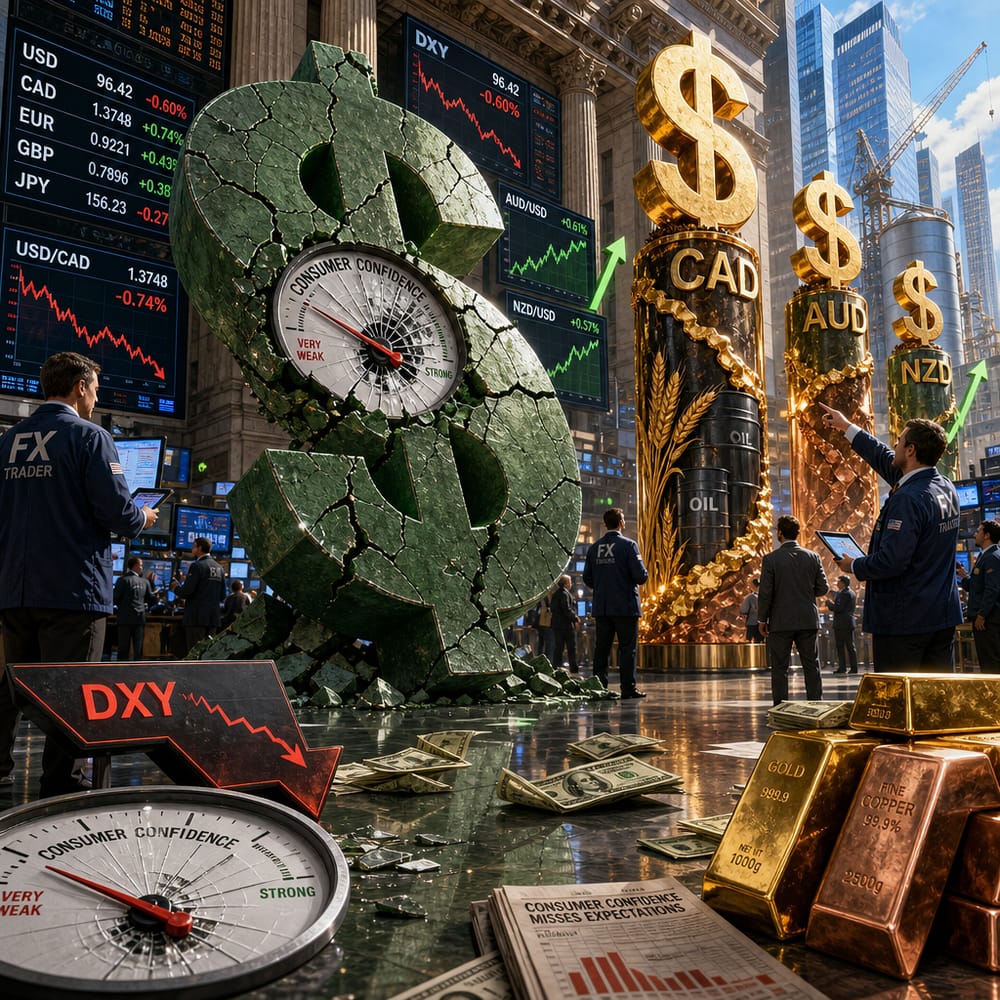
The U.S. dollar just took a little detour, and it's all thanks to the folks out there feeling a bit less chipper about their financial future. Yep, it turns out consumer confidence isn't exactly riding high right now, and it's stirred things up in the currency world. But before you panic and start burying cash in your backyard, let's dive into what's happening and why it matters to you.
What happens in the minds of consumers doesn't stay there; it ripples out and gives currencies a jolt. When the latest consumer confidence data hit the streets, it wasn't the rosy picture everyone had hoped for. Instead of a feel-good boost, we got a reminder that not everyone is as thrilled about the economy as they'd like to be. And when consumers tighten their purse strings, it can send the dollar into a bit of a funk.
This dip in consumer confidence matters because it's one of those key indicators the Federal Reserve keeps an eye on. When people are clutching their wallets tighter, it signals slower spending, which could mean the Fed might think twice before hiking interest rates. No rate hikes might sound peachy, but it also means the dollar can lose a bit of its swagger on the global stage.
As the dollar decided to chill on the sidelines, the U.S. Dollar Index (DXY) barely moved. Meanwhile, commodity currencies made a bit of a power play. The Canadian dollar, Australian dollar, and other pals linked to stuff like oil and metals perked up. Why? When the dollar eases its grip, it makes these commodities cheaper for buyers using other currencies, and that usually gives a boost to currencies of countries that export these goods.
What does this tell us about the Fed? Well, they're probably scratching their heads and reassessing their game plan. If the consumer confidence blues continue, it might embolden them to hold off on further rate hikes. After all, raising rates when consumers are sulking could be like kicking a puppy when it's down—it might just make things worse.
But how does this party get started? When confidence plummets, people stop buying those shiny new gadgets or luxury vacations, and businesses feel the pinch. That means less money circulating, which can slow economic growth. The Fed might decide to keep interest rates low for longer, encouraging lending and spending in a bid to jolt the economy back to life.
So, what should you be keeping an eye on? First, the EUR/USD and GBP/USD pairs are likely to be on the move. With the greenback less sure of itself, the euro and the pound could edge up, especially if Europe's economic scene looks more promising. If you're a forex fan or just someone planning a trip across the pond, this is your cue to keep tabs on those rates.
And let’s not forget our friend, the Canadian dollar. With the U.S. dollar cooling its heels, USD/CAD could see some action. Canadian exporters, particularly those in oil and natural gas, are likely enjoying this ride. A stronger loonie against a weaker dollar means more bang for their buck—quite literally.
Now, before you get swept away in the currency whirlwind, remember that markets are ever-evolving creatures. Today's consumer jitters could be tomorrow's optimism if the Fed decides to wow us with some economic wizardry. Keep your eyes on future data releases, Fed announcements, and the whispers of Wall Street analysts trying to predict the next twist in this drama.
In summary, the dollar's little vacay is a reminder of how consumer confidence can shape the financial landscape. The ripples are felt worldwide, influencing trade, investments, and good old interest rates. Whether you're a seasoned investor, a casual market enthusiast, or just someone saving for that dream trip, stay informed and adapt to the winds of change.
So, while the dollar takes a breather, consider your moves wisely. Keep an ear to the ground and enjoy the show, because in the world of finance, there's never a dull moment.
This article is for informational purposes only and is not investment advice. Always do your own research or consult a licensed financial professional before making investment decisions.
© Copyright 2024. All Rights Reserved.
© Copyright 2024. All Rights Reserved.