

U.S. Dollar Weakens Amid Fading Fed Hike Bets
Wednesday, August 19, 2026
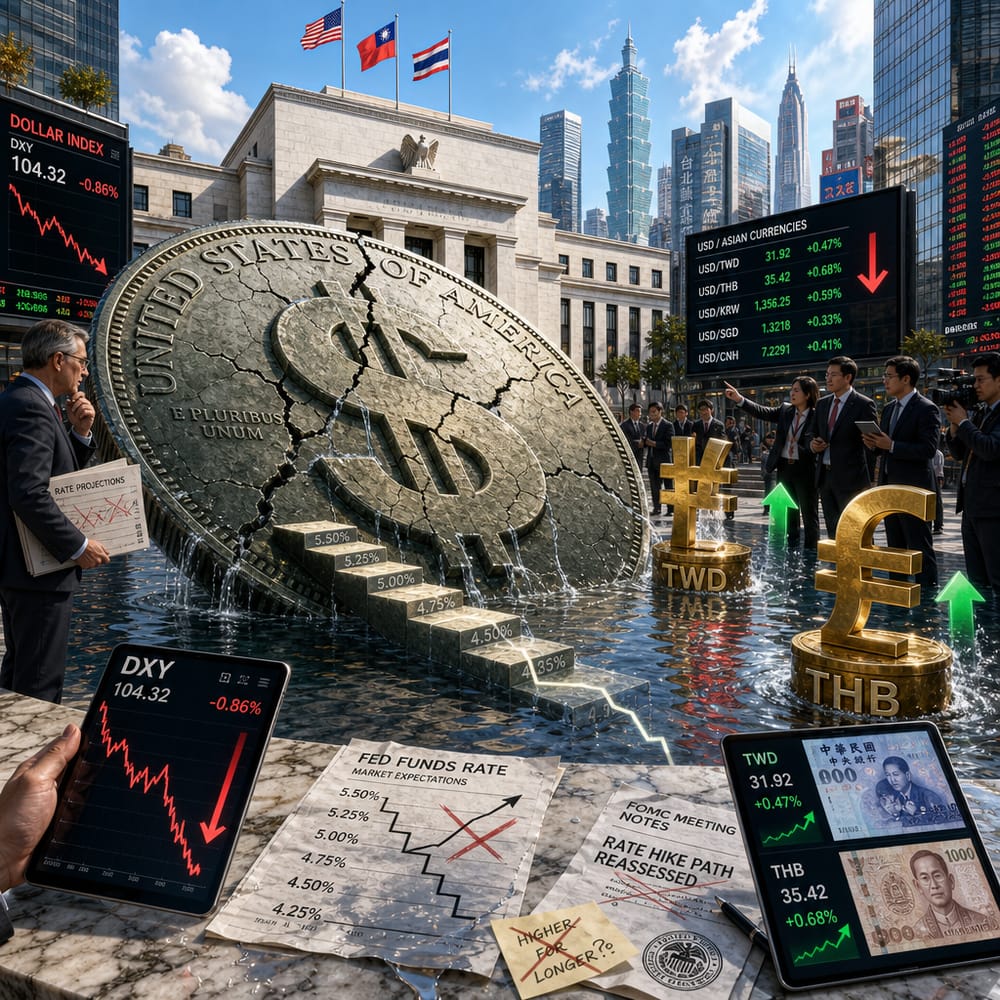
THE GREENBACK SLUMPS: HOW ASIAN CURRENCIES ARE CASHING IN
Hold onto your hats, folks—there's a financial shake-up happening, and it involves none other than the U.S. dollar. For a while, the dollar has been flexing its muscles, keeping other currencies in check with its global dominance. But now, the tables are turning. The dollar's swagger has taken a hit, and Asia's currencies are basking in their moment in the sun.
So, what's going on? The U.S. dollar is stumbling because investors are ditching their bets that the Federal Reserve will crank up interest rates any time soon. This isn't just a micro-trend; it’s a movement that's reverberating around the globe, sending ripples through trade balances and tweaking investment strategies.
A CASE OF FADED FOMO
For months, investors have been gripped by the fear of missing out—FOMO if you will—on the Fed hiking interest rates. Higher rates in the U.S. usually make the dollar more attractive because they offer better returns for those parking their money in America. But as those anticipated hikes lose their luster, so too does the almighty dollar.
The result? The dollar index (DXY), which measures its strength against a basket of major currencies, is looking a bit under the weather. This decline has opened the door for Asian currencies to hop, skip, and jump their way up the charts.
ASIA'S CURRENCY COMEBACK TOUR
Let's talk about the real winners here—the Asian currencies. The Thai baht and Taiwanese dollar, among others, are staging a comeback worthy of a standing ovation. Investors are turning their eyes eastward, as the reduced attractiveness of the dollar means Asian currencies are no longer the wallflowers of the global financial dance.
The Thai baht, for one, is experiencing a bit of a renaissance. As tourism rebounds post-pandemic, a weaker dollar makes Thailand an even more attractive destination for foreign travelers. Meanwhile, the Taiwanese dollar is riding high on the semiconductor boom, as Taiwan remains a critical hub for chip manufacturing. U.S. tech giants are keen to keep their supply chains flowing smoothly, and a stronger Taiwanese dollar won't hurt those ambitions.
BROADER IMPLICATIONS: A BALANCE OF TRADE POWER
So, what does all this mean for U.S. trade and foreign investment? For starters, a weaker dollar makes U.S. exports more competitive on the global stage. American goods become cheaper abroad, potentially boosting sales and benefiting U.S. companies with an international presence.
However, there’s a flip side. The cost of imports rises, potentially squeezing U.S. consumers’ wallets. For countries with currencies that are gaining strength, like those in Asia, the purchasing power for American goods might wane, shifting trade dynamics even further.
INVESTOR STRATEGIES: TIME TO RECONSIDER THE PLAYBOOK?
For investors, this shift in currency dynamics means it's time to rethink strategies. Diversification away from dollar-centric assets could become a more popular move. Asian markets might offer opportunities that were previously overshadowed by the strength of the greenback.
However, it's not all smooth sailing. Currency markets are notorious for their volatility, and rapid shifts can catch even seasoned investors off guard. Still, for those willing to embrace a little risk, the rewards could be significant.
A WATCHFUL EYE ON THE FED
While the current mood suggests a lull in rate hikes, don't discount the Federal Reserve just yet. Economic indicators and inflation data are still in play, and a surprise move by the Fed could easily reverse current trends.
In the meantime, investors would do well to keep a finger on the pulse of both U.S. economic policies and the growing strength of Asian market dynamics. It’s a complex dance, but those adept at reading the rhythms could find themselves ahead of the curve.
So, the next time you hear talk of currency markets and your eyes start to glaze over, remember there's drama to be found here. The ebb and flow of the dollar and its global rivals isn't just for economists and bankers—it's a tale of power, opportunity, and change that could shape future fortunes. And who knows? You might even find it a thrilling saga to follow.
This article is for informational purposes only and is not investment advice. Always do your own research or consult a licensed financial professional before making investment decisions.
© Copyright 2024. All Rights Reserved.
© Copyright 2024. All Rights Reserved.