

U.S. Dollar Weakens Amid Economic Data Misses
Monday, August 17, 2026
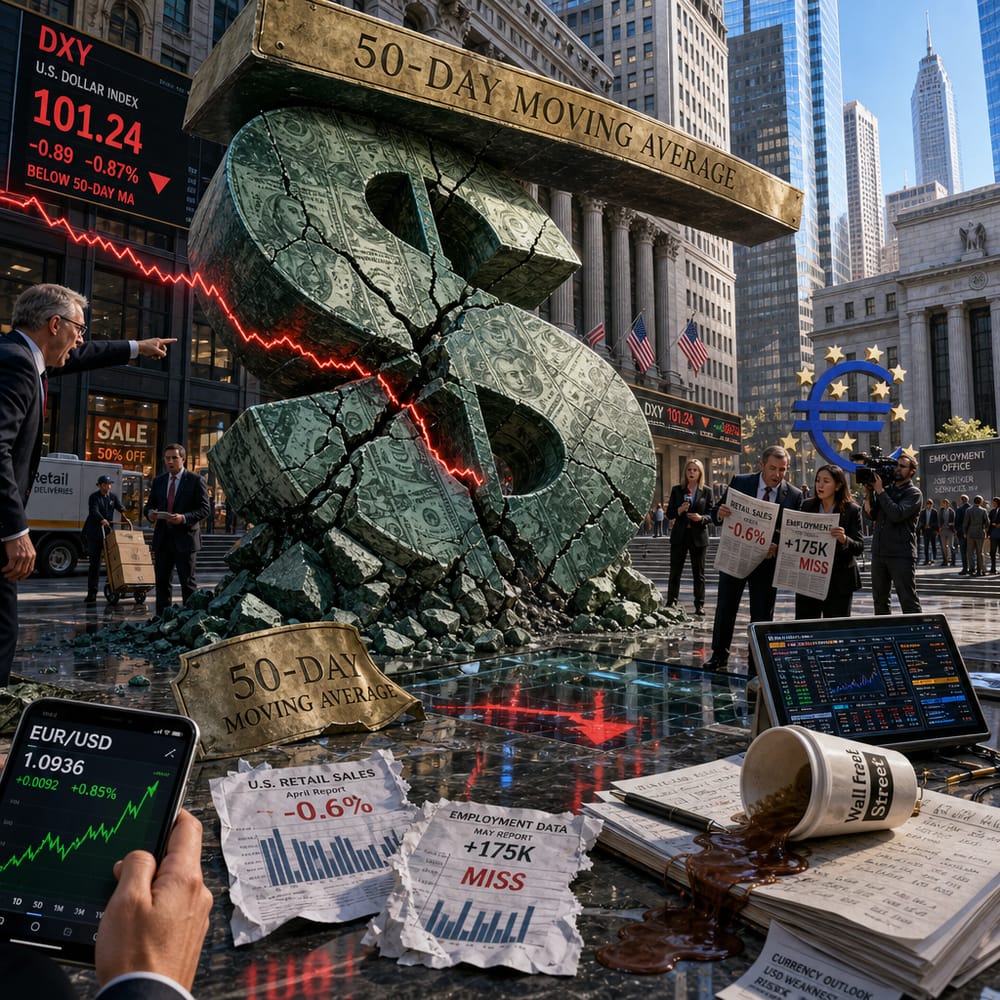
A roaring giant often commands attention, but even the mightiest can stumble, and that’s precisely what the U.S. dollar has done. After a strong surge that made currency traders giddy, the dollar index (DXY) has taken a nosedive, slipping below its 50-day moving average. It’s a bit like watching a sprinter trip on their shoelaces — unexpected, dramatic, and ripe for speculation.
The culprit behind the dollar's stumble? Recent U.S. economic data that missed expectations like a blindfolded dart player. Retail sales didn't hit the bulls-eye, and employment figures showed less hustle than anticipated. So, what's the big deal if a few economic metrics underperform? For starters, it paints a picture of a less vigorous economy, and that has currency traders revisiting their dance cards.
THE DOLLAR'S GLOBAL DANCE
Let’s talk trade — that intricate global dance where countries swap goods, services, and insults. The dollar plays a lead role in this performance, being the world's go-to currency. When the dollar weakens, American goods become as seductive as a half-price sale, making them more appealing to foreign buyers. That could boost U.S. exports, but it might also mean that those foreign-made goods — which Americans love — get a bit pricier on the shelves.
But there’s more. A weakened dollar doesn’t just shuffle trade balances; it also influences global sentiment about where to park money. If the dollar isn't strutting its stuff, investors might start eying other currencies with renewed interest, shifting their portfolios in a way that could ripple across markets like a splash in a kiddie pool.
INFLATION AND INTEREST RATES: WHAT NOW?
Okay, so the dollar's got the jitters. What about inflation? If there's one thing the Federal Reserve loathes more than lukewarm coffee, it's inflation running amok. A weaker dollar can fan inflation’s flames because it makes imports more expensive — and we all know how much the U.S. enjoys a healthy dose of imported goods.
Inflation knocking at the door usually prompts the Fed to reach for the interest rate lever. But here's the dilemma: going too hard and too fast with rate hikes could choke whatever growth we’ve got going. It's like trying to hit the brakes and the gas at the same time — you might not get where you want to go.
So, will the Fed let inflation simmer a bit or slam the brakes with higher rates? That's the question making economists and investors bite their nails these days.
EUROPEANS AND THEIR EUROS
Across the pond, the euro might get a little swagger in its step if the dollar keeps losing muscle. The euro has been quietly enjoying the dollar's downturn, with EUR/USD trading reflecting that dance of currencies.
But it’s not all sunshine and roses for Europe. The eurozone is wrestling with its own economic gremlins, from sluggish growth to energy market headaches. So, while a stronger euro sounds like a win, it could also complicate the European Central Bank’s attempts to revive the continent’s economy by making European exports less attractive.
WHAT NEXT?
The dollar's recent dip could be a temporary slip, a hiccup in an otherwise robust recovery, or the beginning of a new trend. Either way, the tremors are worth watching because they could affect everything from the price of your next international flight to the stock market's mood.
For now, investors are left with a platter of possibilities, each more tantalizing and nerve-wracking than the last. Will the dollar regain its footing, or is it in for a rougher ride? As always, the markets will be keeping a keen eye on those economic reports, and investors might just have to buckle up for a bumpy journey. After all, in the world of finance, the only constant is change.
This article is for informational purposes only and is not investment advice. Always do your own research or consult a licensed financial professional before making investment decisions.
© Copyright 2024. All Rights Reserved.
© Copyright 2024. All Rights Reserved.