

U.S. Dollar Weakens Against Emerging-Market Currencies Amid Carry-Trade Revival
Thursday, October 01, 2026
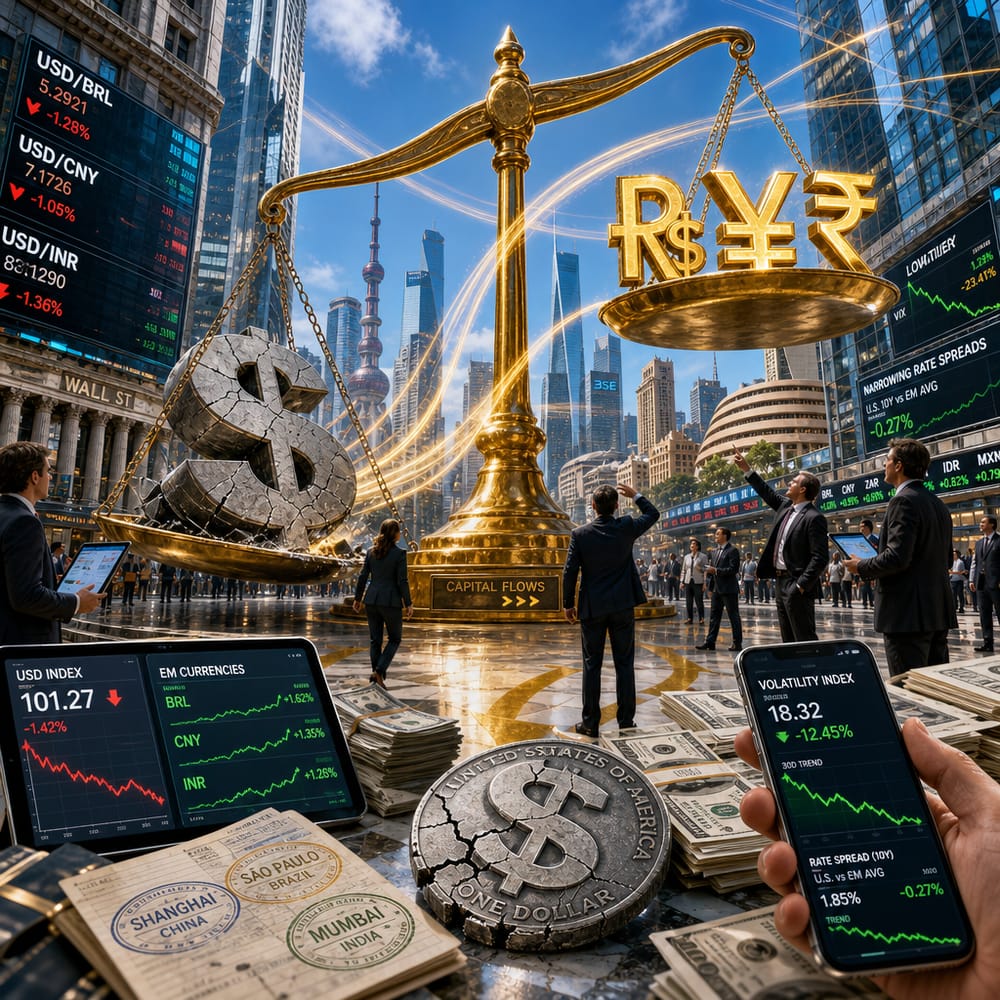
IF THE DOLLAR COULD TALK: CARRY TRADES ARE BACK, AND THEY’RE MAKING WAVES
If the U.S. dollar had a LinkedIn profile, it might need to switch its status to "it's complicated." After years of flexing its green muscles, the dollar is showing signs of weakness against emerging-market currencies. What’s the culprit? Buckle up, folks — it's the carry trade, and it's back in vogue like cargo pants.
WHAT’S A CARRY TRADE ANYWAY?
Imagine borrowing money at a low interest rate from one country to invest where rates are higher. It's like buying cheap soda in bulk at Costco and selling it at a premium at a summer fair. When the stars align — meaning, when interest rate differentials are favorable and market volatility is low — investors jump in to make a pretty penny.
Recently, thanks to stabilizing rate differentials and a relative lull in market chaos, these trades are making a comeback like Polaroid cameras at a hipster wedding. Investors are borrowing in dollars and investing in higher-yielding emerging-market currencies like the Brazilian real, Chinese yuan, and Indian rupee.
WHY ARE EMERGING-MARKET CURRENCIES HAVING A MOMENT?
With the dollar not looking so buff lately, investors are scouting for currencies in markets that promise juicier returns. The Brazilian real, for instance, is catching eyes with its relatively high interest rates. Meanwhile, despite China's recent economic slowdown, the yuan remains a player, partly because of its sheer economic clout. And the Indian rupee? Let's just say it's on a hot streak as India's growth story continues to attract investors like moths to a flame.
This shift in appetite has beefed up these currencies, making them more attractive to those looking to get a good bang for their buck — or, more accurately, someone else's buck.
BUT WAIT, ISN’T THERE A CATCH?
Like any good plot twist, carry trades come with risks. You see, these aren't just set-it-and-forget-it investments. Currency fluctuations can really mess with your returns, potentially turning gains into losses faster than you can say "exchange rate."
Additionally, geopolitical events or sudden changes in interest rates can throw a wrench in the works. Remember, the market adores stability. When things get shaky, investors might panic and unwind their carry trades. That means selling off those emerging-market currencies and flocking back to the safety of the dollar — like people rushing back indoors when it starts to drizzle on a picnic.
SO, WHAT’S THE BIG PICTURE FOR THE DOLLAR?
While the U.S. dollar's current slump might give carry traders a reason to pop open the champagne, it’s not all sunshine and rainbows. A weakening dollar could signal a shift in global capital flows, affecting everything from the cost of imports to inflation rates. For emerging markets, a strong currency might be a double-edged sword: it can attract investment, but it can also make exports pricier and hurt their competitiveness.
Moreover, if carry trades become too popular, they might inflate these currencies beyond sustainable levels. The resulting pop, when it happens, could be less of a gentle sigh and more of a full-blown burst.
WHAT HAPPENS NEXT?
As always, predicting the future of currencies is somewhat like predicting the weather: laden with guesswork. Investors keen on carry trades need to keep an eagle eye on global economic signals and prepare for the unexpected. That means staying informed, diversifying investments, and having an exit strategy that doesn’t involve panic-selling.
For the everyday investor, this trend highlights the intricacies of global finance and how they can ripple through markets. Whether you're holding dollars, reals, or rupees, the interconnectedness of the financial world is a reminder that what happens in one market can resonate worldwide.
So, grab your popcorn. The carry trade drama is far from over, and like any Hollywood blockbuster, it's bound to have a few more twists in store.
This article is for informational purposes only and is not investment advice. Always do your own research or consult a licensed financial professional before making investment decisions.
© Copyright 2024. All Rights Reserved.
© Copyright 2024. All Rights Reserved.