

U.S. Dollar Under Pressure: DXY Drops to Two-Month Low
Monday, August 17, 2026
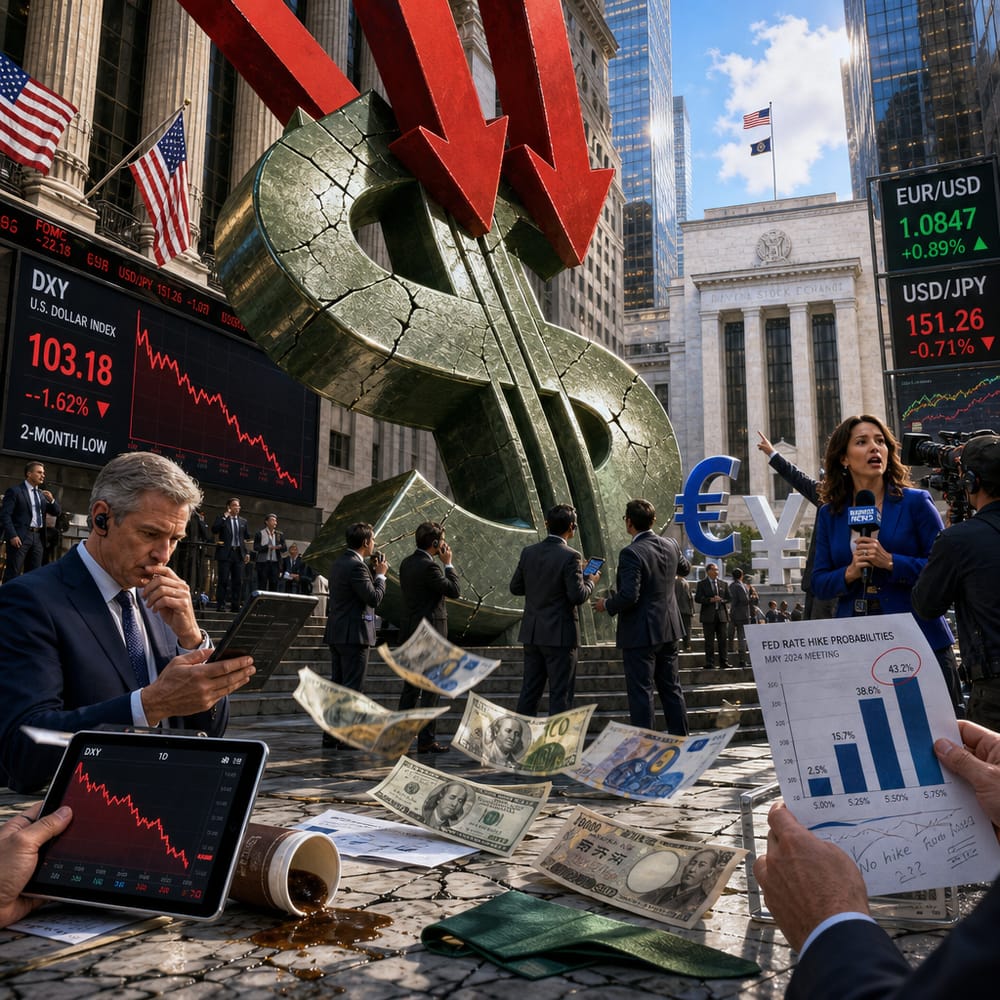
THE DOLLAR TAKES A DIP: WHAT IT MEANS FOR YOUR WALLET
Picture this: the U.S. dollar, the heavyweight champ of the currency world, just took a hit. The dollar index (DXY) dropped to a two-month low, leaving traders and economists scratching their heads and investors biting their nails. But what’s the big deal, you ask? Well, a weaker dollar can send ripples through the global economy, and you might feel the splashback, whether you’re shopping for groceries or planning a vacation abroad.
Why is the dollar suddenly looking a bit wobbly? The clue here is the Federal Reserve’s recent change of heart. Once upon a time, the Fed was all about aggressively hiking interest rates to combat inflation like a caffeine-fueled cowboy corralling runaway cattle. But now, the economy has cooled a smidge, and the Fed’s trigger finger is getting itchy. Investors are betting the Fed might ease up on the rate hikes, making the dollar look a tad less appealing to global investors chasing higher returns.
So, what happens when the dollar catches a cold? Let’s dive into the consequences.
GLOBAL TRADE: WHO ARE THE WINNERS AND LOSERS?
A weaker dollar might sound like America's loss, but guess what? It's a boon for U.S. exporters. Imagine selling your homemade apple pies at a neighborhood fair. If the dollar weakens, those pies become cheaper for folks paying in euros or yen, boosting your sales. Similarly, American goods become more competitive overseas when the dollar dips, potentially driving up export demand and helping U.S. companies rake in more profits.
But there’s a flip side. If you’re an American with a penchant for imported cheese or Italian leather shoes, brace yourself. Imports become pricier when the dollar loses its mojo, since it costs more dollars to buy the same foreign goods. This could nudge inflation upwards in the U.S., adding a few extra dollars to your grocery bill.
FED'S BALANCING ACT
The Fed is walking a tightrope over a pit filled with economic pitfalls. The challenge? Adjusting policies to keep inflation in check without throwing the economy into a tailspin. A weaker dollar complicates this act. As import prices rise, inflationary pressures sneak back like an unwanted house guest, forcing the Fed to contemplate those rate hikes again. It's a classic case of damned if you do, damned if you don’t.
The dollar’s weakness could also impact the Fed’s policy decisions. If a tepid dollar leads to healthier exports, boosting economic growth, the Fed might decide to hold fire on further rate increases. But if inflation rears its ugly head, the Fed could be forced to recalibrate and resume its hawkish stance.
INVESTING IN A CHANGING LANDSCAPE
For investors, a weaker dollar isn’t a doomsday scenario—it’s a chance to rethink strategies. How about looking across the pond? Foreign assets become more attractive in a weaker dollar environment. A rally in the euro or yen against the dollar could juice up your returns on international equities or bonds.
Currency pairs like EUR/USD and USD/JPY are the bread and butter for forex traders. As the dollar falters, these pairs can experience swings that savvy investors might exploit. However, remember that forex is a rollercoaster more exhilarating than any Disney ride, so proceed with caution or, better yet, a seasoned guide.
But hey, if you're not into the high-speed maneuvering of forex trading, maybe consider diversifying your portfolio with assets less sensitive to currency fluctuations. Gold, for instance, often glitters brighter when the dollar dims, as investors seek refuge in stable havens amid currency uncertainty.
THE LONG VIEW: WHAT’S NEXT FOR THE DOLLAR?
While the dollar’s recent dip might feel like a harbinger of doom, it's part of the natural ebb and flow of currency markets. What matters is how you, savvy investor that you are, navigate the waves. Whether you’re adjusting your investment strategy or just biding time, remember that currencies, much like life, are cyclical.
As the Fed recalibrates its strategy, keep an eye out for signals—economic data releases, Fed statements, and geopolitical developments. They all have a role in the unfolding drama of the dollar.
In the meantime, enjoy cheaper exports, brace for pricier imports, and maybe indulge in that foreign asset or two. Just remember, in the world of finance, the only constant is change. And as for the dollar? It might be down, but it's far from out.
This article is for informational purposes only and is not investment advice. Always do your own research or consult a licensed financial professional before making investment decisions.
© Copyright 2024. All Rights Reserved.
© Copyright 2024. All Rights Reserved.