

U.S. Dollar Surges Near 19-Month High
Sunday, November 15, 2026
THE GREENBACK GIANT: WHY THE U.S. DOLLAR IS FLEXING ITS MUSCLES
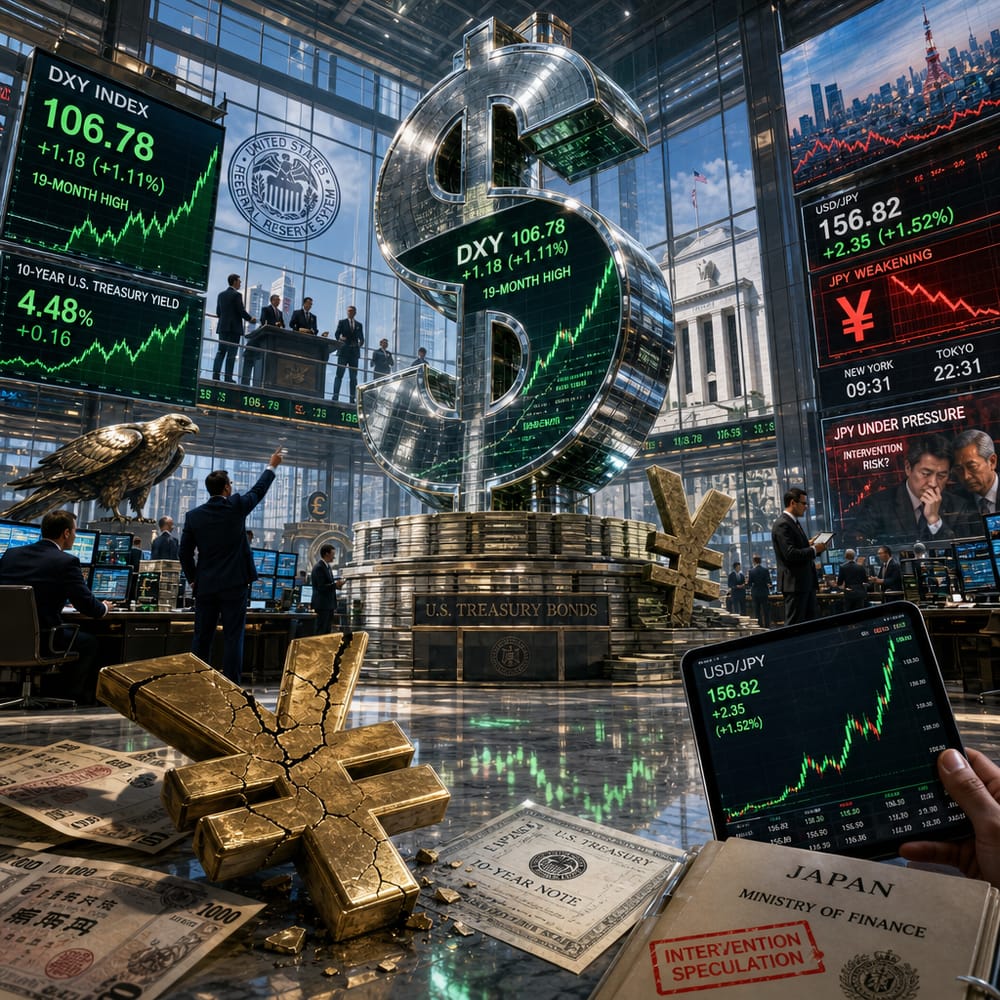
Hold onto your wallets, folks—because the U.S. dollar is flexing like it just found a new gym routine. The U.S. Dollar Index, also known by its nickname, DXY, is strutting near a 19-month high, leaving other currencies feeling like dollar store knock-offs. The surge isn't just a blip; it's the result of signals from the Federal Reserve that could give a hawk vertigo and rising U.S. Treasury yields that have investors thinking the dollar is the only game in town.
But what does this mean for you, the everyday investor, and why should you care if the dollar is on a power trip? Well, strap in because this isn't just about exchange rates—it’s a global economic rollercoaster.
THE DOLLAR DOMINO EFFECT
First things first: when the dollar gets stronger, it’s not just inflating its own ego. It impacts global trade balances, emerging markets, and even the earnings of multinational companies. If you’re a U.S. company selling goods overseas, a strong dollar means your products just got more expensive for foreign buyers. That can dampen sales and put a squeeze on profits. Think of it as the financial equivalent of your favorite restaurant suddenly doubling its prices—less appetizing for everyone.
Emerging markets, often the scrappy underdogs of global finance, aren’t immune either. Many of these economies borrow in dollars, so when the greenback surges, their debt repayments skyrocket like a house of cards in a windstorm. It’s not pretty.
JAPAN: THE YEN ON THE ROPES
On the flip side of this currency see-saw is the Japanese yen, which has been limping along like it just ran a marathon in stilettos. The yen's weakness is starting to ring alarm bells in Tokyo, with some even whispering about possible intervention to prop it up. Intervention, for those uninitiated in central bank lingo, is when a country’s government steps in to buy or sell currency to control its value.
If Japan decides to take action, it could shake up global currency stability and send ripples through the foreign exchange markets. Imagine being at a party where someone suddenly decides to change the playlist from smooth jazz to heavy metal—with no warning. Awkward and a bit chaotic.
FED FOLLIES: WHAT’S NEXT?
Back stateside, the Federal Reserve is playing its part like the maestro at an economic symphony. With inflation numbers having played hardball recently, the Fed's been hinting at keeping interest rates on the upper end. This hawkish stance—imagine the Fed as a bird of prey eyeing every economic twitch—is one of the main reasons why the dollar is riding high.
Investors, eternally in search of higher returns (like caffeine addicts looking for the next coffee fix), are flocking to U.S. Treasury bonds, pushing yields up and, you guessed it, the dollar along with them.
So what are the Fed's next moves? If inflation doesn’t cool its jets, we might see interest rates holding steady or even nudging up again. And if you're thinking of getting into the mortgage market or looking at loans, keep your eyes peeled—higher interest rates could make borrowing more expensive, pinching both wallets and nerves.
THINKING IT THROUGH
What does all this mean for your portfolio? For starters, if you’re invested in companies with heavy international exposure, especially in emerging markets, you might see some turbulence. Consider diversifying to hedge against the strong dollar headwinds.
It's also a good time to watch currency trends and think about how they affect your investments. The strengthening dollar might be your cue to look into sectors or companies that benefit from lower import costs. After all, when the dollar is strong, it can buy more imported goods for less.
As for the yen’s saga, it's one to keep on your radar. Any intervention could lead to sudden shifts in the currency markets, affecting everything from Asian stocks to multinational earnings.
In the ever-spinning carousel of global finance, the dollar’s climb and the yen's slip are a reminder that currency dynamics can be a wild ride. So keep your seatbelt fastened and your investment strategy flexible. In the world of money, staying informed and adaptive is the name of the game.
This article is for informational purposes only and is not investment advice. Always do your own research or consult a licensed financial professional before making investment decisions.
© Copyright 2024. All Rights Reserved.
© Copyright 2024. All Rights Reserved.