

U.S. Dollar Surges After Blowout Jobs Report — Best Day Since June
Saturday, November 07, 2026
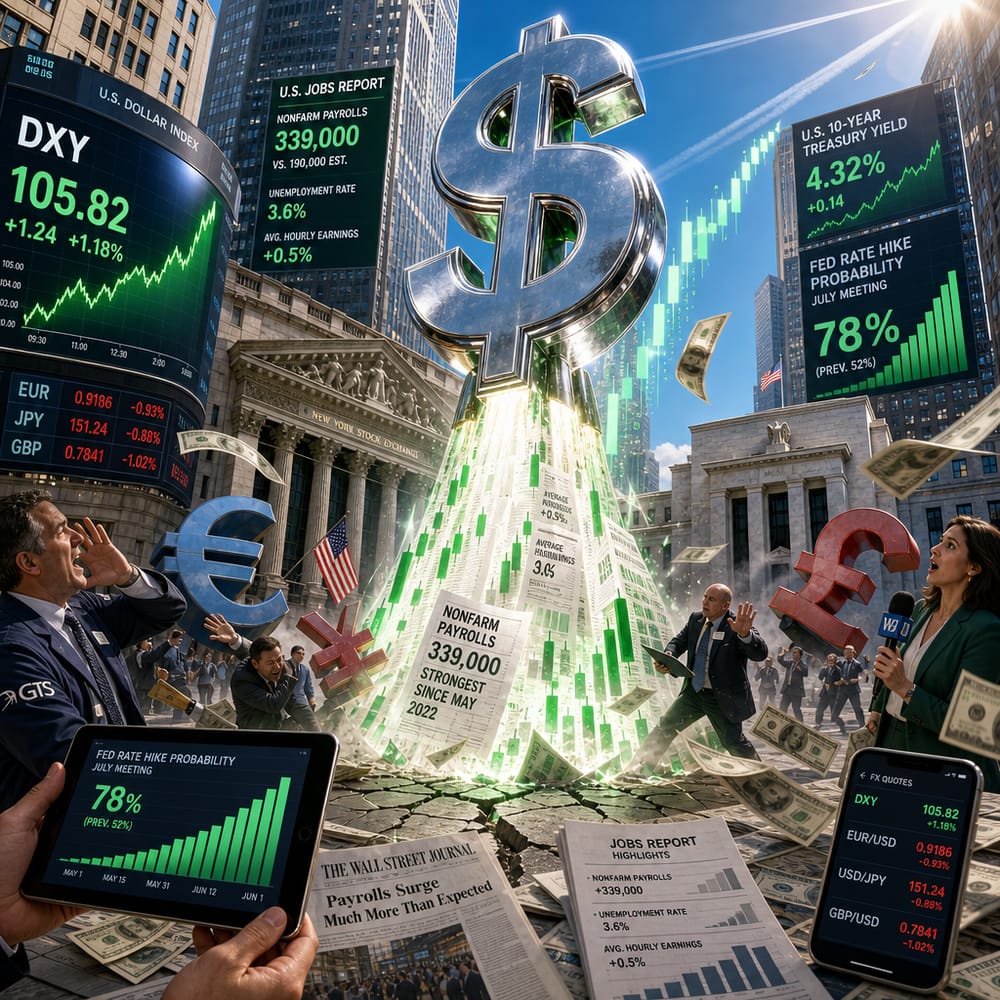
THE DOLLAR'S BIG DAY: WHY A FEISTY JOBS REPORT HAS EVERYONE BUZZING
They say money talks, but right now, it’s screaming. The U.S. dollar just threw a party, and it’s all thanks to a blockbuster jobs report that’s got investors buzzing louder than a coffee machine on a Monday morning. The U.S. dollar index (DXY), which measures the greenback against a basket of other currencies, just had its best day since June, and it’s got everyone from Wall Street to Main Street talking.
So, what’s got the dollar flexing on the foreign exchange stage? Well, Uncle Sam’s job market is on fire! The latest report showed that more people are clocking in and cashing out checks than analysts dared to dream. In a world where everyone’s got an opinion about the Fed, this jobs extravaganza is raising eyebrows and, more importantly, interest rate expectations.
WHAT THE JOBS REPORT MEANS FOR THE FED
Here’s the deal: The Federal Reserve has been tiptoeing around interest rate hikes like it’s trying not to wake a sleeping baby. But with this robust jobs report, the central bank hawks might just take flight. Higher employment numbers suggest that the economy is cruising along quite nicely, thank you very much, which means the Fed might have to crank up those interest rates sooner than anticipated.
Why does this matter? Well, higher interest rates make holding dollars more appealing because investors get a better return. Think of it like choosing between a gourmet meal or a soggy sandwich—the dollar’s starting to look like filet mignon.
EMERGING MARKETS FEEL THE HEAT
But hold onto your hats, because it’s not all sunshine and rainbows. The dollar’s rise is a double-edged sword, especially for emerging markets. When the U.S. dollar strengthens, currencies in countries like Brazil or South Africa can take a tumble because their debt, often in dollars, becomes tougher to manage. It’s like trying to pay off your loan when the interest rate suddenly jumps—it’s bound to pinch.
These economies might start feeling the heat, as capital could shift back to the U.S., seeking the safety and better yields of the dollar. This, in turn, could put pressure on their own financial systems, especially if their economies aren’t rocking as hard as the States.
THE DOLLAR’S SAFE HAVEN APPEAL
Aside from the ripple effects on emerging markets, the dollar’s rise reinforces its status as a safe haven. Let’s face it: when global markets get shaky, investors flock to the dollar like moths to a flame. It’s the financial world’s security blanket, and right now, everyone’s pulling it a little tighter.
But this cuddly comfort comes with potential risks for investors. Currency markets are notorious for their volatility—think of them as the financial equivalent of a rollercoaster with no seatbelt. The stronger dollar might also put pressure on U.S. exporters, as their goods become more expensive for overseas buyers. It’s the economic equivalent of trying to sell ice to Eskimos.
WHAT DOES THIS MEAN FOR INVESTORS?
So, what’s an everyday investor to do in this whirlwind FX environment? First, keep an eye on the Fed’s next moves. Their decisions will be like plot twists in your favorite TV drama—could change everything when you least expect it. Second, consider how exposure to foreign currencies in your portfolio could play out in this high-stakes game. A strong dollar can erode the value of foreign investments when converted back to greenbacks.
Finally, remember that while the dollar’s surge might feel like a tidal wave, it’s essential to stay level-headed. Diversification remains your best defense against market mood swings—like having an all-weather jacket in a place with unpredictable weather.
In the end, the dollar’s big day underscores the interconnectedness of global markets. While the U.S. labor market might be popping champagne, investors worldwide are assessing what this means for their portfolios. As always, staying informed and agile will help you navigate these choppy waters. Now go forth and trade wisely—may the odds be ever in your favor!
This article is for informational purposes only and is not investment advice. Always do your own research or consult a licensed financial professional before making investment decisions.
© Copyright 2024. All Rights Reserved.
© Copyright 2024. All Rights Reserved.