

U.S. Dollar Slump Fuels Euro Strength: EUR/USD Hits Two-Month High
Tuesday, August 18, 2026
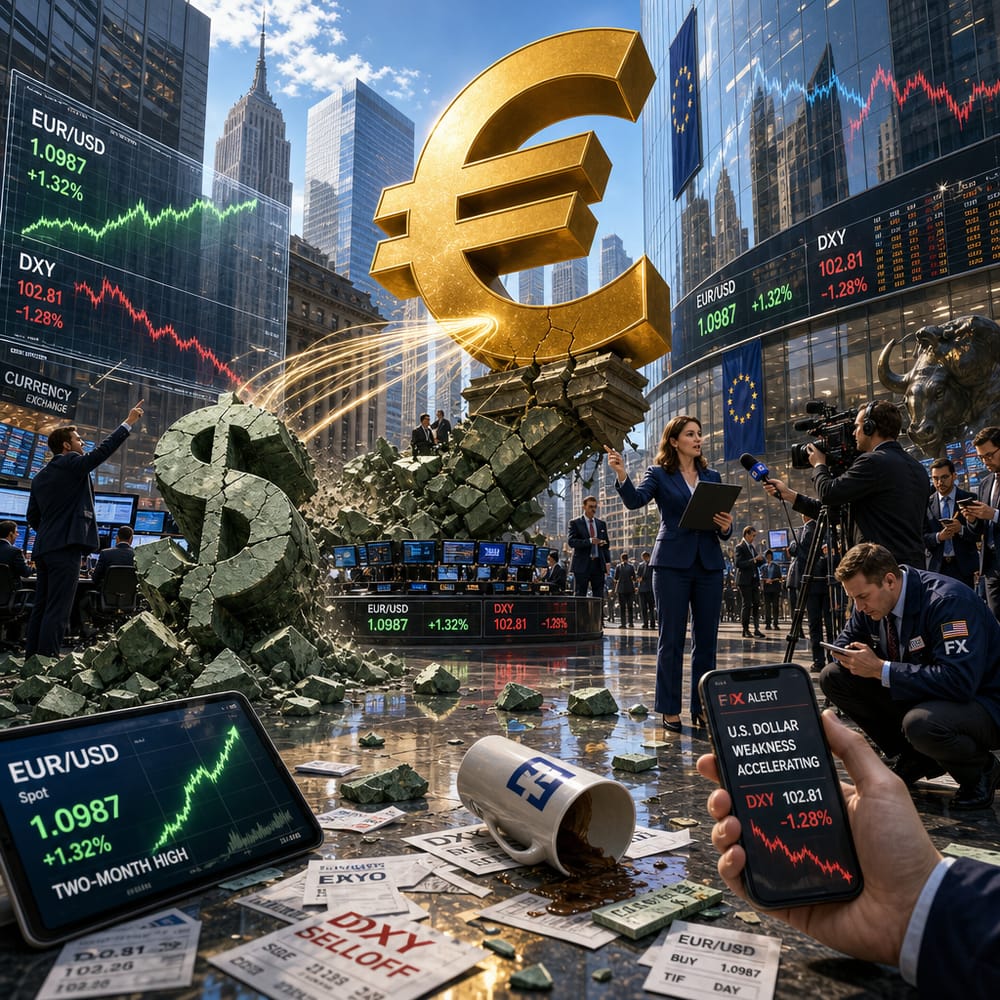
THE DOLLAR DIPS AND THE EURO DANCES: WHY IT MATTERS FOR YOUR WALLET
Hold onto your hats, folks, because the U.S. dollar is taking a bit of a nosedive, and the euro is pirouetting its way to a two-month high. If you’re scratching your head wondering why this matters, let me break it down for you.
First things first, the U.S. Dollar Index (DXY), which measures the dollar against a basket of other major currencies, has fallen to its lowest since June. This isn’t just some arcane Wall Street mumbo jumbo; it has real implications for your wallet, especially if you’re holding euros or doing business with Europe.
WHAT'S DRAGGING THE DOLLAR DOWN?
Let’s start with the dominoes that are toppling the dollar. Picture this: U.S. fiscal policies are on a bender, racking up a tidy deficit of $432.3 billion in July alone. And with Treasury yields hitting their highest levels since the early 2000s, the financial landscape is getting as rocky as a teenager’s love life.
Higher yields might sound like a good thing—they mean better returns on government bonds, right? But there’s a catch. The soaring yields are being driven by fears of persistent inflation and government spending that’s gone out of fashion faster than bell-bottoms. When investors smell trouble, they start selling off dollars and hunting for safer bets—hence, the dollar’s decline.
A STRONGER EURO, STRONGER EUROPE?
Now, with the dollar feeling the heat, the euro is having a moment in the sun. It’s up against the dollar, and this shift could potentially grease the wheels of European economic recovery. A stronger euro could make imports cheaper, putting more dough in the pockets of European consumers. That’s good news for spending, and spending is the lifeblood of any economy.
But before you start popping the champagne, remember: a stronger euro can be a double-edged sword. It could hurt European exports because European goods become pricier for those holding weaker currencies. This tug-of-war between consumer spending and export challenges will be the tightrope Europe walks in the coming months.
RISKS ON THE INVESTOR HORIZON
For investors, the wavering dollar and buoyant euro come with their own baggage of risks. If you’re someone who holds assets in foreign currencies, changes in the dollar’s value can affect the worth of your investments. Imagine your portfolio is a roller coaster—currency shifts are the unexpected twists and turns that can send you up or crashing down.
Moreover, a weaker dollar could mean higher costs for goods imported into the U.S., potentially fanning the flames of already high inflation rates. And let’s not forget the geopolitical tension that’s hanging in the air like a thunderstorm. With Trump’s saber-rattling rhetoric towards Iran and rising global bond yields, financial markets are on edge, and volatility might just be the new norm.
SO, WHAT NOW?
What should you do with all this info? Well, if you’re an investor, it’s time to keep an eagle eye on currency trends and consider diversifying your portfolio to hedge against currency swings. For the average Joe, be mindful of how these shifts might affect prices on everyday goods. A trip to Europe might set you back less in dollars, but that new imported gadget might suddenly seem a tad more expensive.
In this global economic dance, the dollar and euro are leading, and it’s a performance that’s far from over. Keep your eyes peeled and your investments agile. As the world turns, the markets are sure to keep us on our toes.
This article is for informational purposes only and is not investment advice. Always do your own research or consult a licensed financial professional before making investment decisions.
© Copyright 2024. All Rights Reserved.
© Copyright 2024. All Rights Reserved.