

U.S. Dollar Slips as Market Trims Fed Rate-Hike Expectations
Monday, August 17, 2026
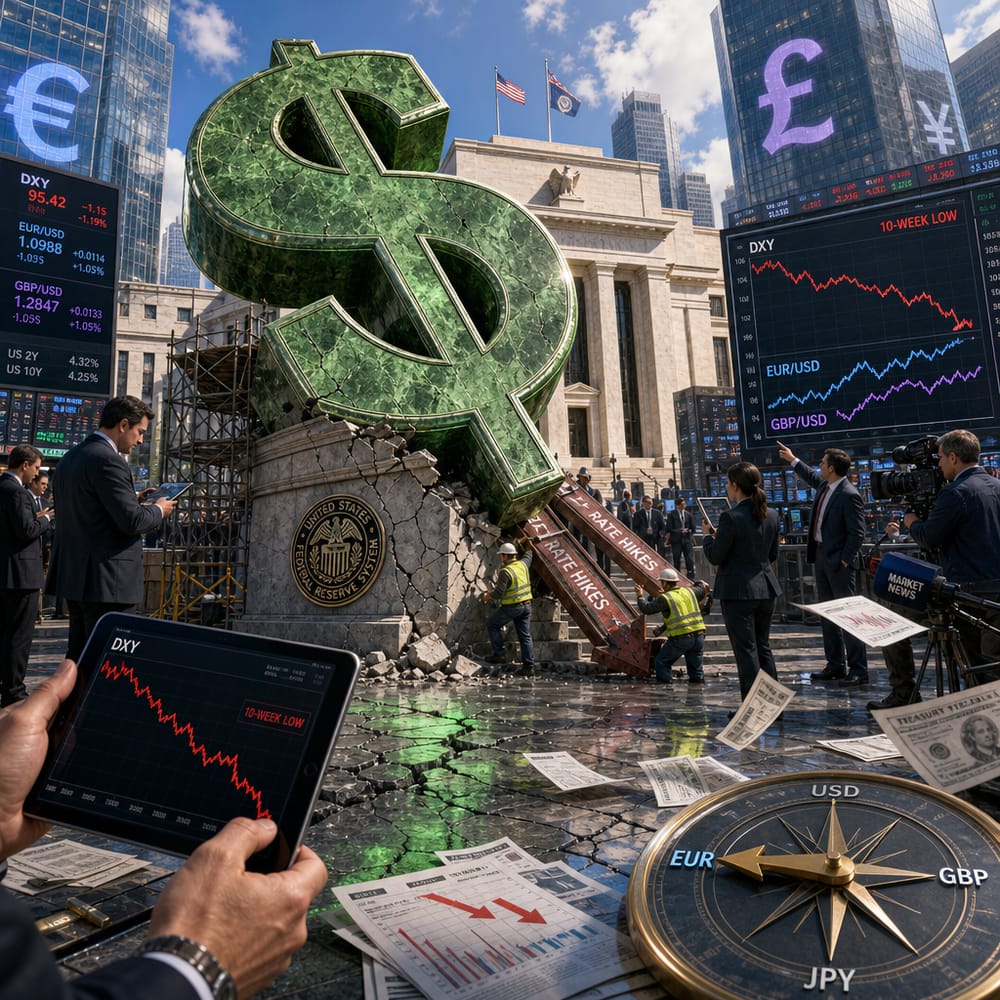
If the U.S. dollar were a contestant on a reality TV show, it just got kicked off the island. After a smashing debut earlier this year, the greenback has slipped to a 10-week low against a basket of other currencies. Think of it as the dollar's version of a summer slump. But what's behind this fall from grace? And more importantly, how does it affect your pocketbook and investment portfolio? Sit tight; we’re about to spill the beans.
BAD NEWS BEARS
So, what triggered the dollar's downward spiral? In short: weak U.S. economic data. Unflattering jobs numbers and lackluster retail sales have left investors less than enthusiastic about the American economic engine. The market had been expecting a robust display of Yankee ingenuity, but what it got was more "meh" than "yeah!"
Let's break it down. Recent job reports revealed that the labor market isn’t as hot as previously thought. Fewer jobs were added, and wages aren't rising fast enough to ignite inflation—a key ingredient for any rate hike recipe. Meanwhile, retail sales figures came in softer than expected, signaling that American shoppers might be feeling a bit pinched. Put these elements together, and the market’s faith in further Federal Reserve rate hikes is rapidly waning. Fewer rate hikes mean less incentive for people to park their money in dollars, hence the fading greenback.
NO SPRING CHICKEN
With the dollar losing steam, other currencies are feeling like the cool kids at the cafeteria again. The euro has been capitalizing on the dollar’s weakness, inching up against the greenback. Meanwhile, the British pound is also strutting its stuff, gaining ground as traders reassess their portfolios. But it’s not just a European party. Emerging market currencies have gotten a little room to breathe too, as a weaker dollar makes it easier for these countries to repay their dollar-denominated debt.
WHAT THIS MEANS FOR THE FED
The Federal Reserve now finds itself in a bit of a pickle. On the one hand, they’d love to raise rates to keep inflation in check. On the other hand, the economic data is saying, “not so fast.” In the past, a strong dollar and robust economic data had been the perfect pair for rate hikes. Now, the Fed may need to tread carefully, especially with a jittery market already scaling back its expectations.
If the trend continues, the Fed might adopt more of a “wait and see” approach rather than diving headlong into more aggressive rate hikes. This nuanced Fed policy could keep the dollar weaker for longer, potentially fueling more of the same dynamics we’re seeing now in the currency market.
THE RIPPLE EFFECT
A weaker dollar isn’t just a number on a screen; it’s got a global influence. For starters, it impacts global trade by making American goods cheaper abroad—a win for U.S. exporters. Commodity prices could also get a boost, as most are priced in dollars. This might be good news for oil producers, but it could spell higher prices at the pump for American consumers. And let’s not forget the stock market. A weaker dollar could goose earnings for multinational companies, given their overseas profits will translate into more dollars back home.
THE BIG PICTURE
In this ever-twisting plot, the dollar’s current slide has more than just local ramifications. It’s a global event affecting trade balances, commodity prices, and even geopolitical dynamics. Investors need to brace themselves for a world where central banks might become more dovish, and the currency landscape continues to shift beneath their feet.
In the end, whether you're holding greenbacks or euros, one thing's clear: volatility isn’t packing its bags anytime soon. For retail investors, that means keeping both eyes on the ball, staying nimble, and perhaps brushing up on those currency conversion apps. Who knew following the dollar could feel like binge-watching your favorite drama series? Only this one comes with a much higher stakes finale.
This article is for informational purposes only and is not investment advice. Always do your own research or consult a licensed financial professional before making investment decisions.
© Copyright 2024. All Rights Reserved.
© Copyright 2024. All Rights Reserved.