

U.S. Dollar Retreats Against Euro and Swiss Franc
Thursday, August 20, 2026
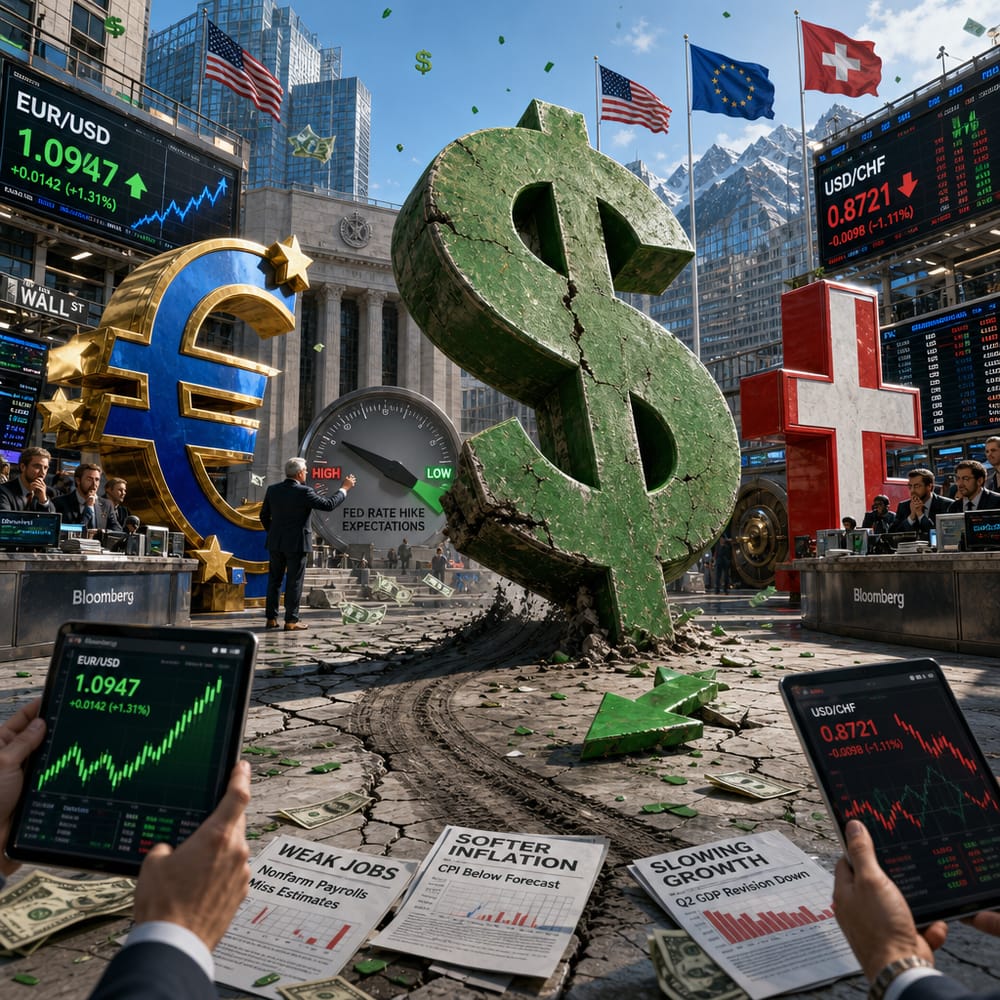
DOLLAR ON THE BACKFOOT: EURO AND SWISS FRANC TAKE THE LEAD
Buckle up, currency traders! The U.S. dollar just hit a speed bump, and the euro and Swiss franc are ready to zoom past. If you've been keeping an eye on your currency apps, you've probably noticed that the greenback isn't flexing its muscles like it used to. So, what’s causing this currency kerfuffle, and why should you care? Let’s dive into the latest forex drama, sprinkled with some economic intrigue.
The dollar's decline can be traced back to a couple of lackluster economic data points from the United States—think of it as a bad report card for the economy. First on the list is the consumer confidence index, which took a nosedive, leaving analysts scratching their heads and lowering their expectations for the Fed’s next move on interest rates. Add to that some disappointing factory output numbers, and it's like the dollar lost its mojo overnight.
Now, why does this matter for forex traders? It’s all about interest rates, folks. The Federal Reserve—America's economic puppet master—was expected to keep hiking rates, making the dollar more attractive as investors chased higher yields. But with these weak data points, the likelihood of another rate hike just did a vanishing act faster than your Bitcoin during a market crash. Investors are now left wondering if the Fed will hit the pause button on rate increases, which spells trouble for the dollar.
Traders, always hungry for any edge they can get, are now revisiting their playbooks. It's like rethinking your game strategy after your star player’s leg injury. With the Fed possibly holding off on those rate hikes, forex traders are pivoting, betting on the euro and Swiss franc to gain ground. The EUR/USD (euro to dollar) and USD/CHF (dollar to Swiss franc) currency pairs are now the hot gossip in trading circles. A weaker dollar means cheaper euros and francs, bringing a smile to the faces of European exporters and Swiss hoteliers.
But wait, there's more. The implications for future Fed policy are huge. The central bank is now in a bit of a pickle. On one hand, they’ve got inflation lurking like an unwanted houseguest. On the other, they’re facing slowing economic momentum. If they raise rates, they risk further slowing the economy. If they hold off, inflation might rear its ugly head again. It's a classic rock-and-a-hard-place scenario—a balancing act that Fed Chair Jerome Powell surely didn’t sign up for.
What does this all mean for retail investors like you? If you’re dabbling in forex, it might be time to consider your positions. The dollar’s retreat could present opportunities to capitalize on movements in the euro and franc. Keep an eye on the economic calendar and the Fed’s next move—it's like waiting for the next episode of your favorite drama series.
In the grand chessboard of global finance, the dollar's dip isn't just a blip; it's a signal of shifting tides. While the dollar catches its breath, savvy traders are plotting their next moves, and the euro and Swiss franc are gearing up for their moment in the spotlight.
So, keep your eyes peeled, your trading apps handy, and your strategies flexible. In the world of forex, fortunes are made (and lost) on the whims of numbers and the whispers of central bankers. As the dollar retreats, the stage is set for a fascinating financial showdown. Stay tuned, because this currency saga is far from over.
This article is for informational purposes only and is not investment advice. Always do your own research or consult a licensed financial professional before making investment decisions.
© Copyright 2024. All Rights Reserved.
© Copyright 2024. All Rights Reserved.