

U.S. Dollar Pauses as Markets Price in Fed Hold Amid Soft Inflation & Jobs Data
Wednesday, August 26, 2026
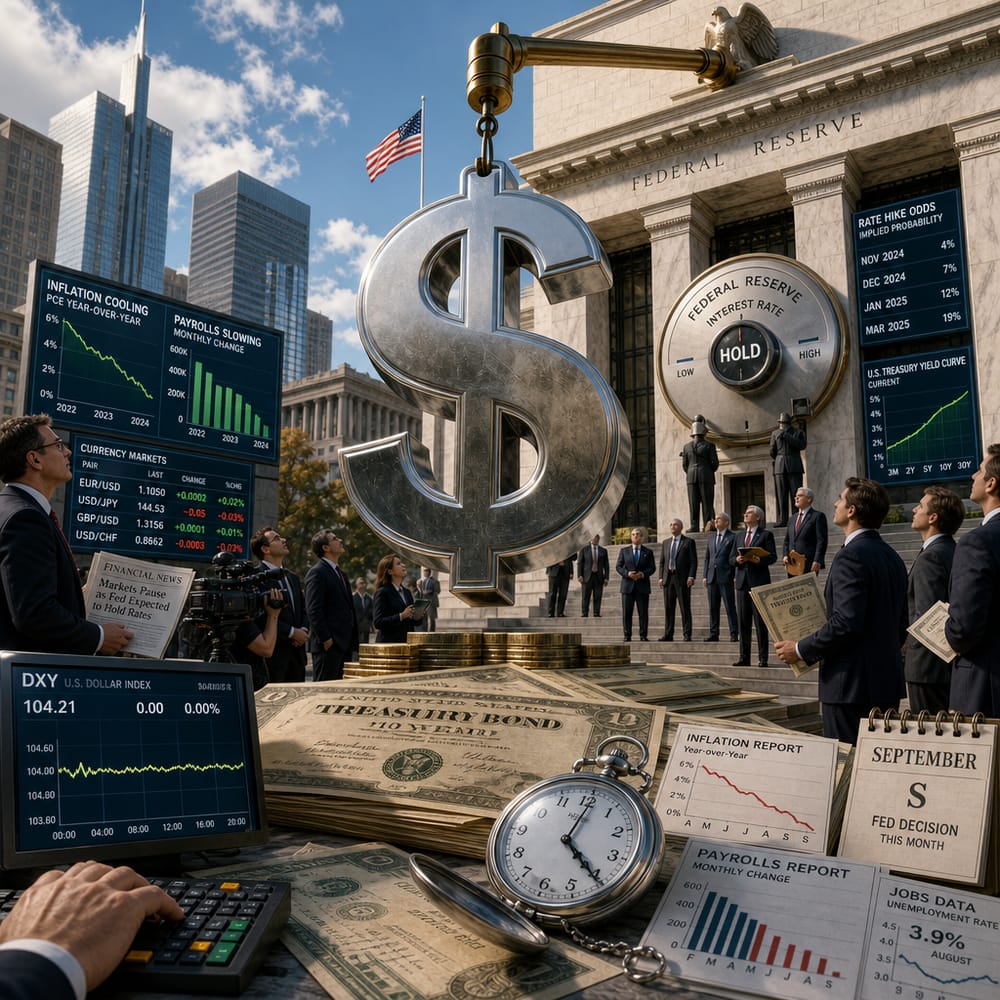
MARKETS ON PAUSE: THE FED HOLDS ITS BREATH, AND SO DOES THE DOLLAR
In the world of financial wizardry, where every sneeze from the Federal Reserve sends ripples through global markets, a surprising stillness has settled. Picture this: the U.S. dollar, usually the life of the party, is now sitting quietly in the corner, nursing a flat glass of soda. Why, you ask? It seems the Federal Reserve might just let interest rates take a nap instead of their usual hikes. With softer inflation whispers and ho-hum jobs data, the dollar's got some thinking to do. So let’s dive in and unravel what this means for you, your investments, and the quirky world of currency markets.
THE FED TAKES A BREATHER?
For months, the Fed was like that overcaffeinated barista, constantly upping the espresso shots in your latte—only here, the shots were interest rate hikes, designed to keep inflation under control. But now, with inflation and job numbers doing the economic equivalent of a yoga class, the Fed may decide it’s time to cut back on the caffeine. If the Fed holds rates steady, the dollar stays calm, cool, and collected.
So what does a Fed rate hold mean for the almighty dollar? In simple terms, it's akin to pressing the pause button. A pause can stabilize the dollar, maintaining its value against a basket of global currencies, which might sound a bit dull but holds significant implications for everything from your morning coffee price tag to your overseas stock holdings.
THE EMERGING MARKET EFFECT
When the dollar behaves, emerging markets breathe a sigh of relief. Picture them as those smaller, scrappier kids on the block who get pushed around whenever the dollar decides to bulk up with rate hikes. A stable dollar might make life a bit easier for these markets. You see, a stronger dollar often leads to capital flying out of emerging markets, making it pricier for them to service dollar-denominated debts. But with the dollar taking a chill pill, these markets might actually get a chance to shine a little brighter.
But it’s not all rainbows and butterflies. If the Fed holds and the dollar weakens, emerging market currencies could strengthen unexpectedly, leaving investors in a tricky spot, having to navigate the volatile exchange rate waters.
PITFALLS AND POSSIBILITIES FOR INVESTORS
Now for the million-dollar question—what are the potential risks for folks like you? Let’s be clear: markets are the wild west of finance. Even a whisper from the Fed can send markets into a tizzy, but a pause could mean less volatility in the currency markets. However, beware of complacency. A steady dollar can also lull you into a false sense of security.
Investors, here's your cheat sheet: keep an eye on U.S. Treasury bonds. These are the barometers for expectations around interest rates. If bond yields start moving dramatically, that’s a signal that expectations for future hikes are shifting. And remember, a lot can change fast in the financial world—what seems like a calm lake today could turn into a stormy sea tomorrow.
The Fed’s hold could also lead to a search for yield, meaning investors might flock to riskier assets, boosting stocks and other investment classes. But don’t forget, higher risk often means higher volatility. So, while the dollar might be chilling, make sure your portfolio is prepped for any sudden moves.
THE BIGGER PICTURE
The stability of the U.S. dollar isn’t just a line in the sand—it’s a safeguard of sorts for global trade and investment flows. Think of it as the keystone holding together the archway of global finance. A stable dollar keeps the cogs of global commerce well-oiled and humming, impacting everything from commodity prices to international investments.
So, what’s the takeaway? Keep your eyes peeled on the Fed’s next move like a hawk eyeing its prey. Whether they choose to hold rates or not, the decision will ripple through the markets in ways both seen and unseen. Until then, the dollar waits, and so do we, poised for the next chapter in this ongoing economic saga.
This article is for informational purposes only and is not investment advice. Always do your own research or consult a licensed financial professional before making investment decisions.
© Copyright 2024. All Rights Reserved.
© Copyright 2024. All Rights Reserved.