

U.S. Dollar Nears Three-Month Lows Ahead of Key PCE Data and Fed Vice-Chair Speech
Tuesday, August 25, 2026
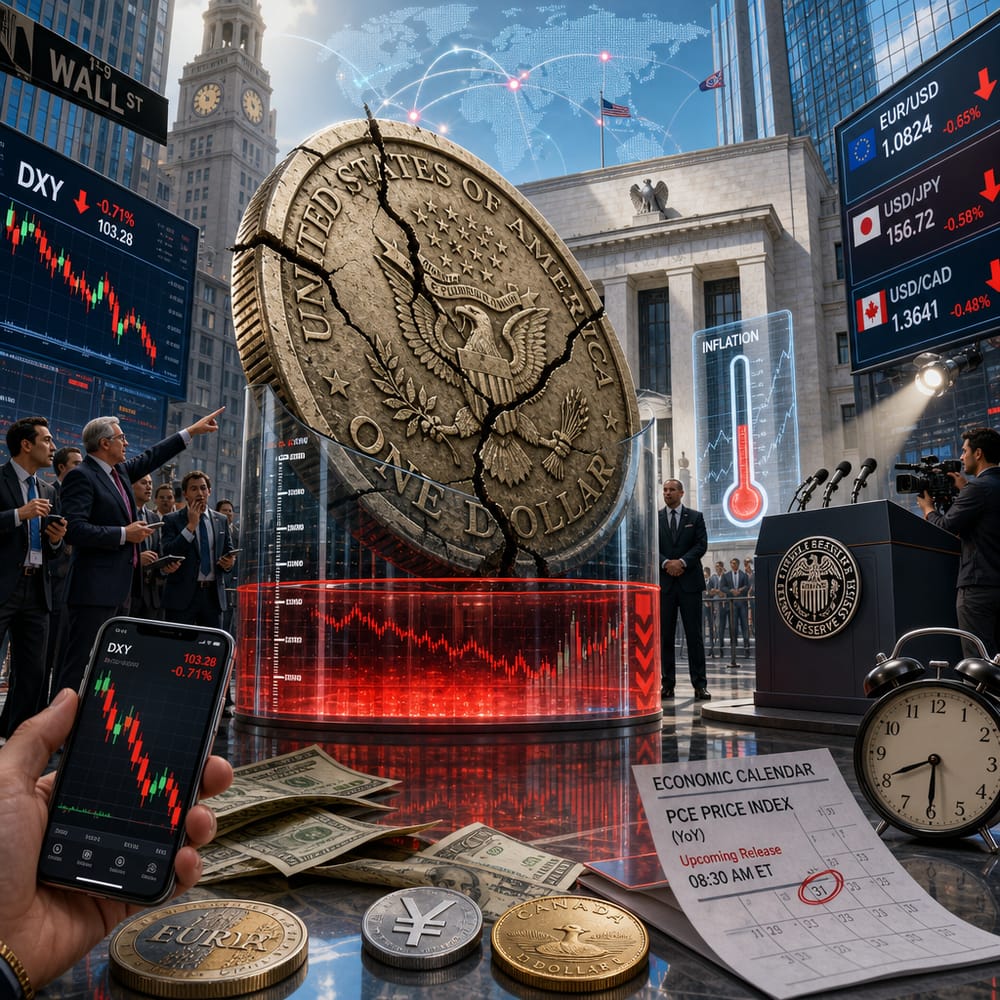
The U.S. dollar, once the unstoppable greenback, is now wobbling like a toddler in a bounce house. If you've got a keen eye on the forex market, or even if you're just looking for a juicy financial story to spice up your day, it's worth noting that the U.S. Dollar Index (DXY) is flirting with lows last seen three months ago. And just like a drama unfolding on prime-time TV, there's a cliffhanger ahead: the Personal Consumption Expenditures (PCE) inflation report and a speech by Fed Vice Chair Warsh.
THE STAGE IS SET
Picture this: traders are perched at their desks like hawks, eyes glued to screens, fingers itching to hit "buy" or "sell." The market's waiting for signals like an audience anticipating the next plot twist. The PCE report is the data that tells us how much money is burning holes in consumers' pockets each month, and it carries significant weight. Inflation indicators in this report could either nudge the dollar back to solid ground or push it further off the cliff.
So, what’s the street saying? The expectation is for a modest rise in consumer spending, suggesting that inflation is bubbling away quietly rather than boiling over. But hey, expectations are kind of like weather forecasts: occasionally right, often wrong, and always interesting.
WARSH SPEAKS
Enter stage right: Fed Vice Chair Warsh. When Fed officials talk, the markets listen. Warsh's speech isn't just a casual chat over coffee; it's a key moment that could define the future direction of U.S. monetary policy. Will he signal a halt on interest rate hikes to give the economy some breathing room, or will he hint at more tightening? The forex crowd is on tenterhooks, waiting to decipher every syllable like it’s Shakespeare.
If Warsh indicates that inflation is the monster under the bed and more rate hikes are needed to keep it at bay, the dollar might get its swagger back. But if he takes a softer tone, expect the dollar to keep doing the limbo.
PAIR PRESSURE
For those playing the forex game, it's about picking the right dance partner. The USD has several key rivals: the euro (EUR), the Japanese yen (JPY), and the Canadian dollar (CAD). Think of them as contestants on "Currency Dancing with the Stars," waiting to see who takes the lead.
The euro is holding a strong hand, buoyed by the European Central Bank's own dance steps as it navigates its economic challenges. Meanwhile, the yen has been dealing with its own issues back home, with Japan juggling low interest rates and economic growth. The Canadian dollar, on the other hand, has been riding the wave of commodity prices, particularly oil, which seems to be on a roller coaster of its own.
So, if you’re trading USD/EUR, USD/JPY, or USD/CAD, keep your eyes peeled. These pairs could see swings as big as the ones we imagine on the dance floor if the PCE data and Warsh’s words shake things up.
WHAT TO WATCH
Beyond the immediate reactions, here’s what traders and investors will be watching: does the dollar's dip reflect a broader concern about the U.S. economy's strength, or is it just a momentary blip on the radar? Will global geopolitical tensions play a part in this drama? And crucially, how will other central banks respond to the Fed's cues?
Remember, the forex market is less of a sprint and more of a marathon. It’s where the patient and the informed can find opportunity. Whether you’re a seasoned trader or just someone who enjoys keeping up with financial intrigue, these are the questions to keep on your radar.
In the end, the U.S. dollar is like any heavyweight champion: it's taken a few hits, but it's not down for the count just yet. As we wait for the next moves in this high-stakes game, one thing’s for sure: the coming days will be full of excitement, volatility, and opportunities for those ready to seize them. Grab your popcorn, folks — the show is just getting started.
This article is for informational purposes only and is not investment advice. Always do your own research or consult a licensed financial professional before making investment decisions.
© Copyright 2024. All Rights Reserved.
© Copyright 2024. All Rights Reserved.