

U.S. Dollar Nears Multi-Month Lows Amid Bond Buybacks and Iran Sanctions Uncertainty
Monday, August 24, 2026
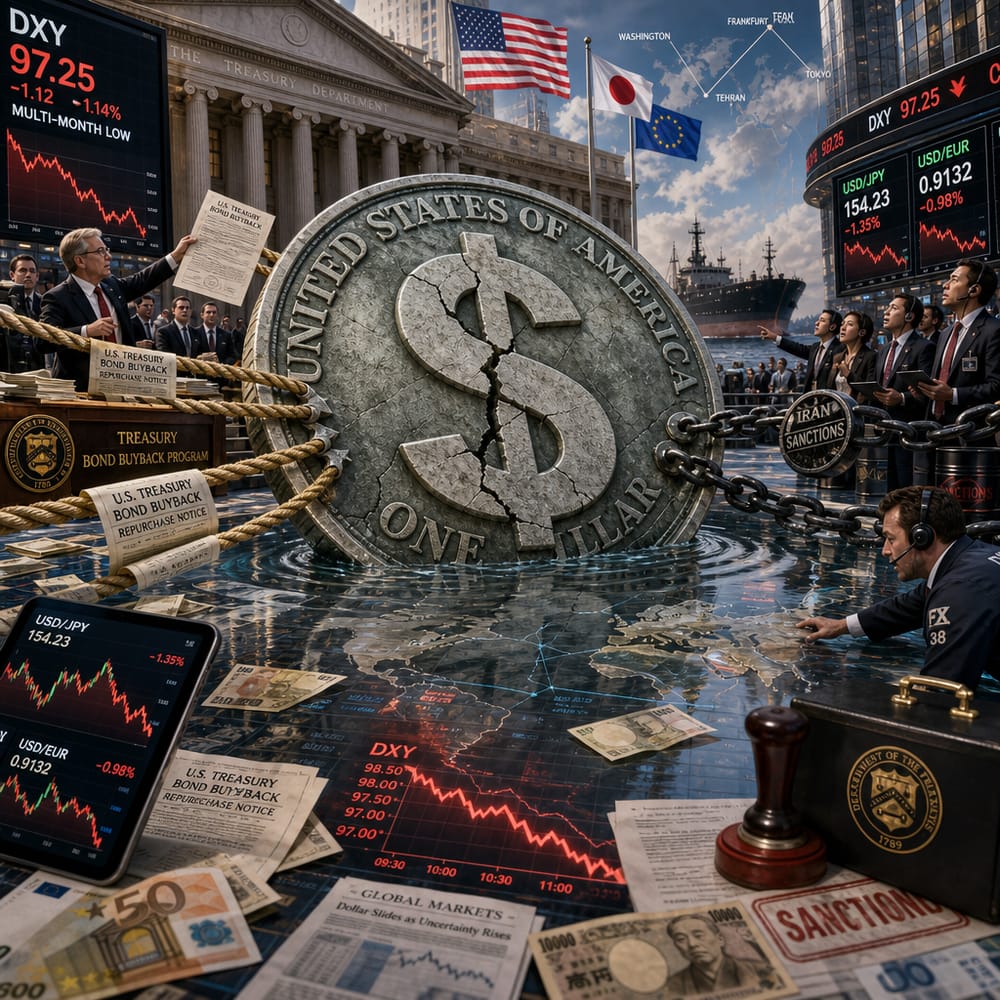
THE DOLLAR DILEMMA: BOND BUYBACKS AND IRAN SANCTIONS HIT THE GREENBACK HARD
The U.S. dollar, once the undisputed heavyweight champ of the financial ring, is now wobbling on its feet like a boxer in the twelfth round, struggling to stay upright. Its latest bout with weakness comes courtesy of some unexpected jabs: U.S. Treasury bond buybacks and the Trump administration's geopolitical tango with Iran. But before we get too deep into the weeds, let's break this down for those of you reading on your morning commute or over your third cup of coffee.
First up, bond buybacks. Think of them as the government’s way of hitting the "undo" button on some of its borrowing. The Treasury has announced plans to buy back long-term government bonds using its sizeable cash reserve, dubbed the "General Account." Normally, you'd think this move might lend the dollar some strength by injecting cash into the economy. But in the topsy-turvy world of finance, things aren't so straightforward.
When the Treasury decided to splash the cash on buybacks, bond yields took a nosedive. And here's a quick cheatsheet for you: lower bond yields often mean a lower return for dollar investors. Less bang for their buck, so to speak. This has put pressure on the U.S. dollar, sending it sliding to its lowest levels in months. It’s like the dollar just went on sale, and everyone wants a piece of it for cheaper.
But wait, there's more. Enter stage left: the geopolitical drama. The Trump administration has rolled out what they're calling an "economic D-Day" against Iran, with new sanctions aimed at squeezing every last drop of revenue from the Islamic Republic. As if that weren't enough to stir the pot, the U.S. isn't playing favorites; it's threatening to sanction anyone who dares to keep doing business with Tehran. This includes, quite notably, China. Yes, the economic thriller that is the U.S.-China relationship has added another chapter.
Now, while this might sound exciting if you're a fan of international intrigue, it's making the global currency markets more jittery than a chihuahua in a thunderstorm. If the U.S. starts throwing sanctions around like confetti, it risks disrupting trade flows and economic ties, impacting everything from your morning coffee prices to the tech gadgets you can’t live without. This looming uncertainty is enough to keep investors tossing and turning at night, leading them to seek safer havens — which, ironically, is usually the dollar. Yet, thanks to those bond yield drops, the greenback isn't looking as attractive as it once did.
So, what's the takeaway here for your average Jane or Joe scrolling through this on their phone during a lunch break? Well, a weaker dollar can have ripple effects. It might mean more expensive imports — think pricier vacations and costlier electronics. On the flip side, it could make U.S. exports more appealing abroad, potentially boosting American businesses.
Companies that rely heavily on exports or operate internationally might see their fortunes change with the shifting tides of the dollar. Keep an eye on the U.S. Dollar Index (DXY), which tracks the dollar against a basket of foreign currencies, and the USD/JPY and USD/EUR pairs for the dollar's stand-off with the yen and the euro, respectively. These are your market barometers, hinting at how global investors are feeling about the dollar's prospects.
In this unpredictable mix of government policy and international strategy, the U.S. dollar finds itself navigating choppy waters. Retail investors, armchair economists, and anyone with a stake in the global economy would do well to keep their eyes peeled for the next plot twist. As the world spins with bond buybacks and sanctions spats, the dollar's fate hangs in the balance, poised for its next move. Stay tuned, America, because in the world of finance, the only constant is change.
This article is for informational purposes only and is not investment advice. Always do your own research or consult a licensed financial professional before making investment decisions.
© Copyright 2024. All Rights Reserved.
© Copyright 2024. All Rights Reserved.