

U.S. Dollar Near Multi-Month Lows Amid Debt-Buyback Plans
Monday, August 24, 2026
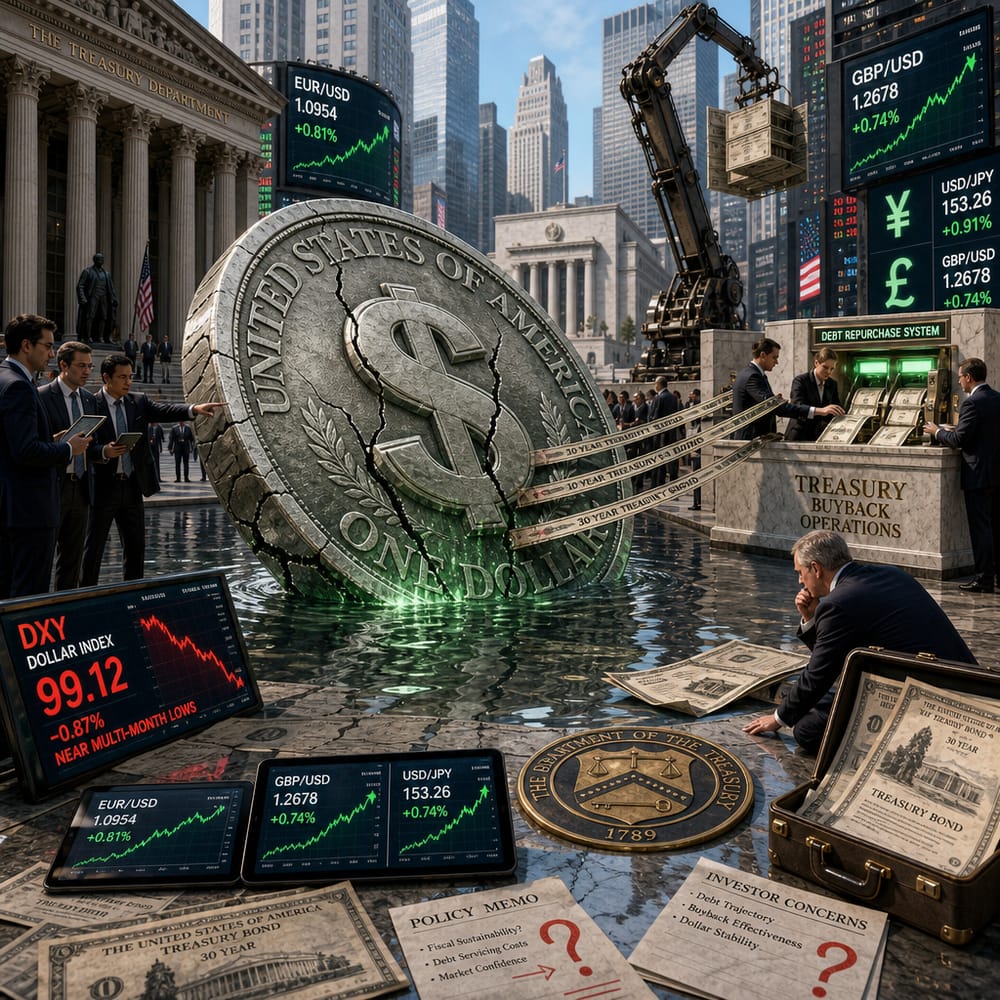
WHEN THE USD LOSES ITS MOJO: DOLLAR DIPS AMID TREASURY MOVES
The U.S. dollar is having one of those "I woke up like this" moments, but not in a good way. It’s lounging near multi-month lows like it forgot to set the alarm, and the culprit behind its groggy state? The U.S. Treasury, with its not-so-secret scheme to buy back long-dated bonds. But hold on, it’s not just about the Treasury’s financial maneuvers. Toss in a sprinkle of policy uncertainty, and you've got a recipe for a dollar that’s lacking its usual safe-haven swagger.
The big question is, why does any of this matter? Apart from the bragging rights that come with having the world's reserve currency, a drooping dollar can send ripples through the global currency market. Forex traders might have to rethink their strategies, and investors could feel the heat as their portfolios adjust to the shifting tides.
THE TREASURY’S TWIST AND SHOUT
Let’s dive into the Treasury's latest escapade: a buyback plan for long-dated bonds. Think of it as a financial version of spring cleaning, but instead of dust bunnies, they’re sweeping up older, less-traded securities. The rationale? Lowering yields on these long-term bonds to keep borrowing costs in check. It sounds straightforward, but here’s where it gets dicey: nobody's quite sure how they’re funding this operation.
Treasury Secretary Scott Bessent mentioned that they could tap into the Treasury General Account—a near $1 trillion piggy bank. But the exact plan? Still a bit of a mystery. And if there’s one thing markets hate, it’s uncertainty. They’re like toddlers that way.
SAFE HAVEN STATUS: ON HOLD
The U.S. dollar is often the go-to “safe haven” when markets get shaky. But with the Treasury's bond buyback plan casting long shadows of doubt, its reputation is taking a hit. Investors are left wondering if Uncle Sam’s playbook is as solid as it used to be. The dollar’s dip is like a celebrity sighting in sweatpants—it’s got people talking, and not in a flattering way.
This uncertainty is driving fluctuations in currency pairs like EUR/USD, GBP/USD, and USD/JPY. The euro and pound are getting a little lift, while the yen is enjoying its time in the spotlight. Forex traders are now second-guessing their next move, contemplating if the greenback will shake off its current slump or dig itself deeper.
GLOBAL MARKETS FEEL THE TREMORS
When the dollar sneezes, the world catches a cold. As the dollar index (DXY) languishes, global markets are bracing for impact. A weaker dollar can make U.S. goods cheaper for foreign buyers, but it also means that other nations' exports become pricier. It’s a double-edged sword that can slice away at trade balances and stir up economic growth concerns globally.
Take Canada, for instance. Already embroiled in tariff turmoil with the U.S., the loonie, Canada’s beloved dollar, is sliding downhill. With the U.S. dollar in a slump, and tariffs cranking up the pressure, Canadian industries might have to navigate some choppy waters. And they’re not alone—this currency conundrum is a global affair.
THE BIGGER PICTURE
So, what does this all mean? Should we start hiding our dollars under the mattress? Probably not. The dollar's dips and dives are a natural part of the financial ecosystem—a market dance, if you will. But keeping an eye on these shifts is crucial. They can affect everything from the price of your morning coffee to the health of your investment portfolio.
Investors, whether seasoned pros or casual dabblers, should pay attention to how these macroeconomic moves might influence their holdings. It’s not just about currency values—stocks, commodities, and even cryptocurrencies can feel the ripple effects of a weaker dollar.
In the grand scheme of things, the U.S. dollar isn't down for the count. Markets ebb and flow with the regularity of ocean tides. But as the Treasury continues its bond-buyback journey, and policy signals flicker like a broken neon sign, we might all want to buckle up. It could be a bumpy ride for the greenback—and those who track its every move. So stay sharp, keep your eyes on the charts, and remember: in the unpredictable world of finance, expect the unexpected.
This article is for informational purposes only and is not investment advice. Always do your own research or consult a licensed financial professional before making investment decisions.
© Copyright 2024. All Rights Reserved.
© Copyright 2024. All Rights Reserved.