

U.S. Dollar Index Nears Three-Month Low
Thursday, August 20, 2026
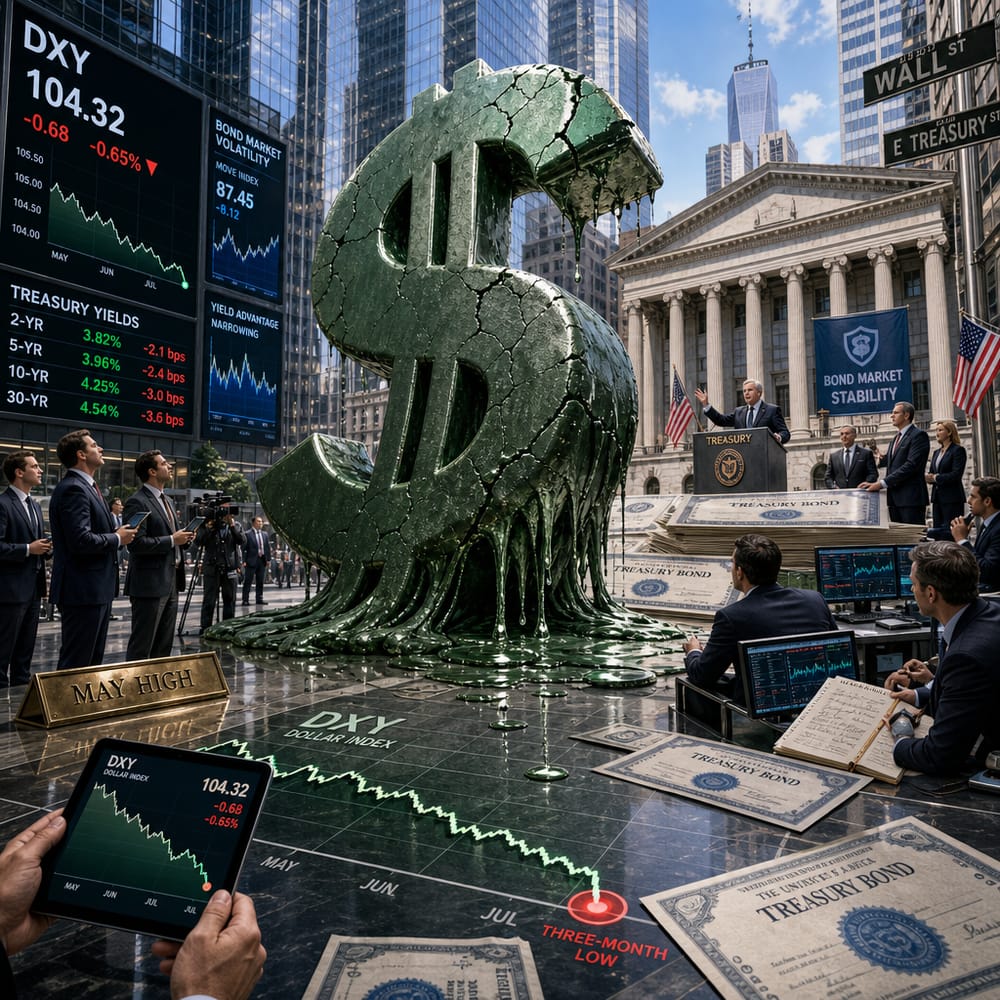
U.S. DOLLAR INDEX NEARS THREE-MONTH LOW: WHAT'S SHAKING THE GREENBACK?
Picture this: the sturdy greenback, a heavyweight champion in the global currency ring, just took a hit and is now hovering near a three-month low. So, what’s knocking this powerhouse off its pedestal? Spoiler alert: it’s not a surprise battle with Euro or Yen, but a clever move by the U.S. Treasury. In the wild world of high finance, bond market interventions can swing the dollar’s strength like a pendulum, and folks, the pendulum is swinging towards Weak Dollar Town.
Before we dive into the juicy details, what exactly did the U.S. Treasury do to ruffle the feathers of the almighty U.S. Dollar Index? Well, they decided to play the role of bond market superhero. Think of it like this: bond yields were rising, everyone was panicking, and the treasury swooped in with a debt buyback plan. They declared they’d be repurchasing a hefty chunk of 10-, 20-, and 30-year debt. It’s like offering a soothing cup of chamomile tea to jittery bond investors. But hang tight—there’s more to this story.
Now, the idea behind this debt buyback is to stabilize bond prices. When bond prices are stable, yields, or the interest rates that bonds pay, usually go down. And when yields are low, the dollar isn’t as attractive to investors hungry for high returns, causing the dollar index to slip down a bit. It’s like investors looking for the next big thrill ride and finding out the roller coaster is temporarily out of service.
But why does this matter to you and your humble investment portfolio? For starters, when the dollar isn’t flexing its muscles, it has ripple effects across the global economy and right back into your pocket. A softer dollar is often music to the ears of U.S. exporters. American goods become cheaper for foreign buyers, which can boost sales abroad—happy days for companies that have been craving some international love.
On the flip side, when the dollar isn’t packing its usual punch, importing goods can get pricier. That fancy Italian cheese and the latest gadgets from Japan? They might be putting a slightly bigger dent in your wallet. So, if a Parisian vacation has been on your bucket list, you might want to pack your bags sooner rather than later.
Now, zooming out from your personal spending, a weaker dollar also affects commodity prices. Goods like oil, gold, and other raw materials are usually priced in dollars. When the dollar drops, these commodities often become more expensive in other currencies, potentially giving commodities a boost. So, if you have investments in commodities, you might just witness them riding a wave of appreciation.
Wondering if this is the end of the line for the dollar’s bull run? Not so fast. The currency markets are notoriously unpredictable. While Uncle Sam’s debt buyback plan might soothe the bond market beast for a while, it’s hard to say whether the dollar will stay down for the count or spring back with a vengeance.
And let’s not forget, a simmering pot of geopolitical tension is always ready to spill over and shake up financial markets. Not to mention, smart money is always eyeing the Federal Reserve’s next move with hawk-like precision. Any hint at interest rate hikes or economic forecasts can send the dollar index spiraling back up.
So, dear reader, while the U.S. Treasury’s intervention might seem like a snooze-fest headline for the financial uninitiated, it’s actually a thrilling saga of strategic moves, quick pivots, and economic ripple effects. Keep your eyes peeled and your investments diversified.
Whether you’re a casual observer or a seasoned investor, welcome to the thrilling ride that is the currency market. Keep your arms and legs inside the vehicle, and don’t forget to tip your financial advisor. Cheers to savvy investing!
This article is for informational purposes only and is not investment advice. Always do your own research or consult a licensed financial professional before making investment decisions.
© Copyright 2024. All Rights Reserved.
© Copyright 2024. All Rights Reserved.