

U.S. Dollar Index Nears Multi-Month Lows Amid Softer U.S. Data and Fed Hike Uncertainty
Thursday, August 20, 2026
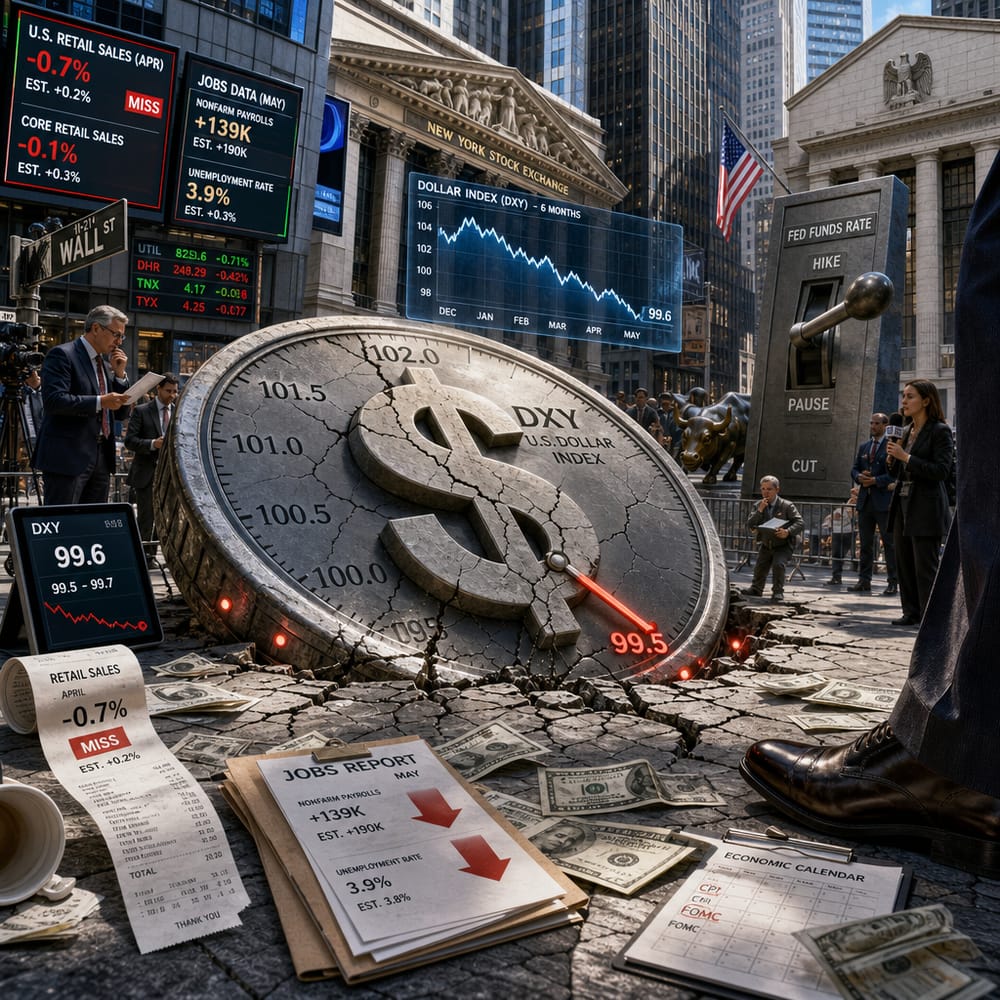
The U.S. Dollar Index is sliding faster than a kid on a freshly waxed playground slide, and it's all thanks to some softer-than-expected U.S. economic data paired with a serious case of "Will they, won't they?" from the Federal Reserve on interest rate hikes. Let's dive into why the almighty greenback is suddenly looking a little less mighty.
First, let's break down what the U.S. Dollar Index, or DXY, even is. Think of it as the report card for the U.S. dollar, grading its performance against a basket of other global currencies like the euro, yen, and British pound. Lately, that report card's been hanging around the 99.5 to 99.7 range — not terrible, but certainly not the honor roll. This is the lowest we've seen since early June, thanks to some disappointing U.S. retail sales and job data that have thrown cold water on the idea of imminent Fed rate hikes.
WHY DOES THIS MATTER TO YOU?
A weaker dollar is like a double-edged sword for the U.S. economy and, by extension, your wallet. On one hand, it makes American exports cheaper and more competitive abroad — hooray for U.S. businesses! On the other hand, it makes imports more expensive, which can nudge inflation upward. So, if you've been eyeing those fancy European shoes or a new Japanese gadget, prepare to dig a little deeper into your pockets.
The inflation angle is crucial. As the dollar weakens, the cost of imported goods rises, which can stoke inflation. This is like trying to douse a campfire by throwing gasoline on it — you're not helping the situation. The Fed has been walking a tightrope, trying to balance interest rates to keep inflation in check without slamming the brakes on economic growth.
FED'S DILEMMA: TO HIKE OR NOT TO HIKE
Now let's chat about the Federal Reserve, our nation's financial tightrope walker. They're in a bit of a pickle: raise rates too quickly and risk throttling economic growth, or keep them low and potentially fuel inflation. The recent slump in the dollar adds another wrinkle, making the path forward even murkier.
With the dollar dipping, the Fed faces a bit of a "choose your own adventure" scenario. Do they hike rates to prop up the dollar and tame inflation, risking recession? Or do they keep rates as is and let the dollar find its own balance, potentially letting inflation edge higher? It's a high-stakes game of economic chess and all eyes are on the Fed's next move.
THE GLOBAL RIPPLE EFFECT
A weaker dollar also ripples through international markets like a stone skipping across a pond. For global traders, a softer dollar usually means U.S. stocks and bonds become more attractive. But it also means that countries with dollar-denominated debt might feel the squeeze. They have to shell out more of their local currency to meet those dollar obligations, which can strain already tight budgets.
There's also the impact on commodities. Most global commodities, like oil and gold, are priced in dollars. So when the dollar weakens, these commodities tend to get pricier, impacting everything from your morning cup of coffee to the gas you put in your car.
LOOKING AHEAD
So where does this leave us? Well, it's hard to predict whether the dollar will continue its slide or bounce back. That's why it's crucial to keep an eye on economic indicators and Fed announcements. Retail investors like you should also pay attention to sectors that might benefit from a weaker dollar, like export-heavy industries or U.S. companies with significant international sales.
In short, the dollar's dip is more than just a blip — it's a potential harbinger of broader economic shifts. Whether you're a casual stock market observer or the next Warren Buffett in training, understanding these dynamics can help guide your investment decisions.
As we wait for the next Fed meeting like kids peeking through the cracks in their bedroom door on Christmas Eve, the only thing we can be sure of is this: the world of finance never sleeps. So keep your eyes peeled and your investment strategy flexible. It's a wild ride, and the twists and turns are what make it interesting.
This article is for informational purposes only and is not investment advice. Always do your own research or consult a licensed financial professional before making investment decisions.
© Copyright 2024. All Rights Reserved.
© Copyright 2024. All Rights Reserved.