

U.S. Dollar Index Nears Multi‑Month High as Rate Divergence Widens
Tuesday, November 17, 2026
WHY THE U.S. DOLLAR IS ON A ROLLERCOASTER TO NEW HEIGHTS
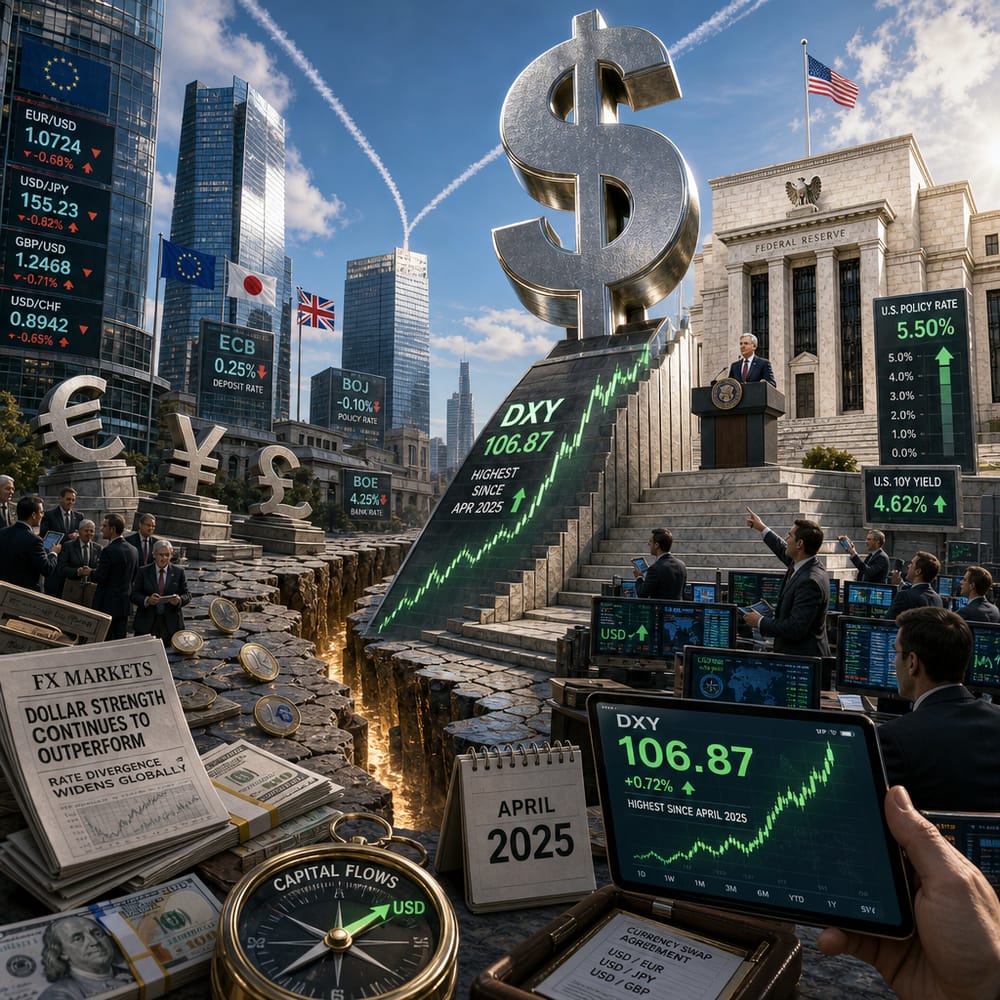
Hold on to your hats, folks. The U.S. Dollar Index (known in the biz as DXY) is partying like it’s 2025. If you haven't been paying attention, the dollar has been on a tear, climbing to its highest points since the spring of that year. What's driving this greenback on its upward spiral? Think of it as a showdown among the world's central bankers, with the Federal Reserve playing the over-caffeinated cowboy against a cast of more laid-back contenders.
First things first: Let's zero in on why the dollar is flexing its muscles like it just left the gym. The Federal Reserve, which sets interest rates in the U.S., has been hinting that more rate hikes might be coming. Higher interest rates attract foreign investors looking for better returns, and as they snap up dollar-denominated assets, they boost the demand—and thus the value—of the dollar. It's not rocket science; it's more like a high-stakes game of musical chairs.
While Fed Chair Jerome Powell may have the pedal to the metal, other central banks are cruising along in the slow lane. The European Central Bank (ECB), for example, is singing a more mellow tune. With inflation fears still in the mix but not quite at scare-the-children levels, they're opting to keep their rates low and steady. This difference in interest rate policies creates a rate divergence, and guess what? It's a big reason why the dollar is soaring.
But before you pop the champagne, consider the ripple effects of a strong dollar. For starters, it’s a bit like a heavyweight in a game of international tug-of-war. Emerging market currencies often suffer when the dollar gains ground. Countries with debts priced in dollars suddenly find themselves owing more, which can squeeze their economies like a vise. It’s like when your rent goes up but your paycheck doesn’t—nobody’s thrilled.
Then there’s the stuff your dad might grumble about at the dinner table: the trade deficit. A stronger dollar makes U.S. exports more expensive abroad and imports cheaper, potentially widening the trade gap. That's something that can give policymakers and businesses alike sleepless nights, as they wrestle with the complex ballet of global trade.
Meanwhile, central banks around the world are left with a series of dilemmas. They can either sit tight and watch their currencies weaken in the shadow of the mighty dollar, or they can take action. Some might raise their own interest rates in response, but that’s not always a popular choice, especially if their economies aren’t performing like rock stars. On the flip side, letting their currencies drop too much can make imports costly and fuel inflation. It’s a tightrope walk, and the net isn’t always visible.
So, what’s the next chapter in this financial drama? The market will be keeping a close eye on the Fed’s next move. If the Fed continues to hike rates, the dollar could keep climbing like a mountain goat on a caffeine rush. Elsewhere, we'll be watching for any signs of life from other central banks. Will the ECB decide to join the rate-hiking party or stay on its current easy-going path? The answer will have global implications.
And let's not forget the folks on Main Street, flipping through their phones for the latest. All this financial wizardry might seem like a Wall Street soap opera, but it hits home in real ways. Check your grocery receipts and gas station tabs—prices of commodities like oil often get tangled up in the dollar's strength, affecting what you pay for everyday items.
In the end, the dollar’s current romp tells us a lot about where the big players think the economy is headed. While a strong dollar can be a sign of confidence in the U.S. economy, it’s a double-edged sword that swings wide. So stay tuned, because in the world of currency, the plot is always thickening.
This article is for informational purposes only and is not investment advice. Always do your own research or consult a licensed financial professional before making investment decisions.
© Copyright 2024. All Rights Reserved.
© Copyright 2024. All Rights Reserved.