

U.S. Dollar Index Nears 20-Month High Amid Fed Rate Hike Expectations
Friday, November 27, 2026
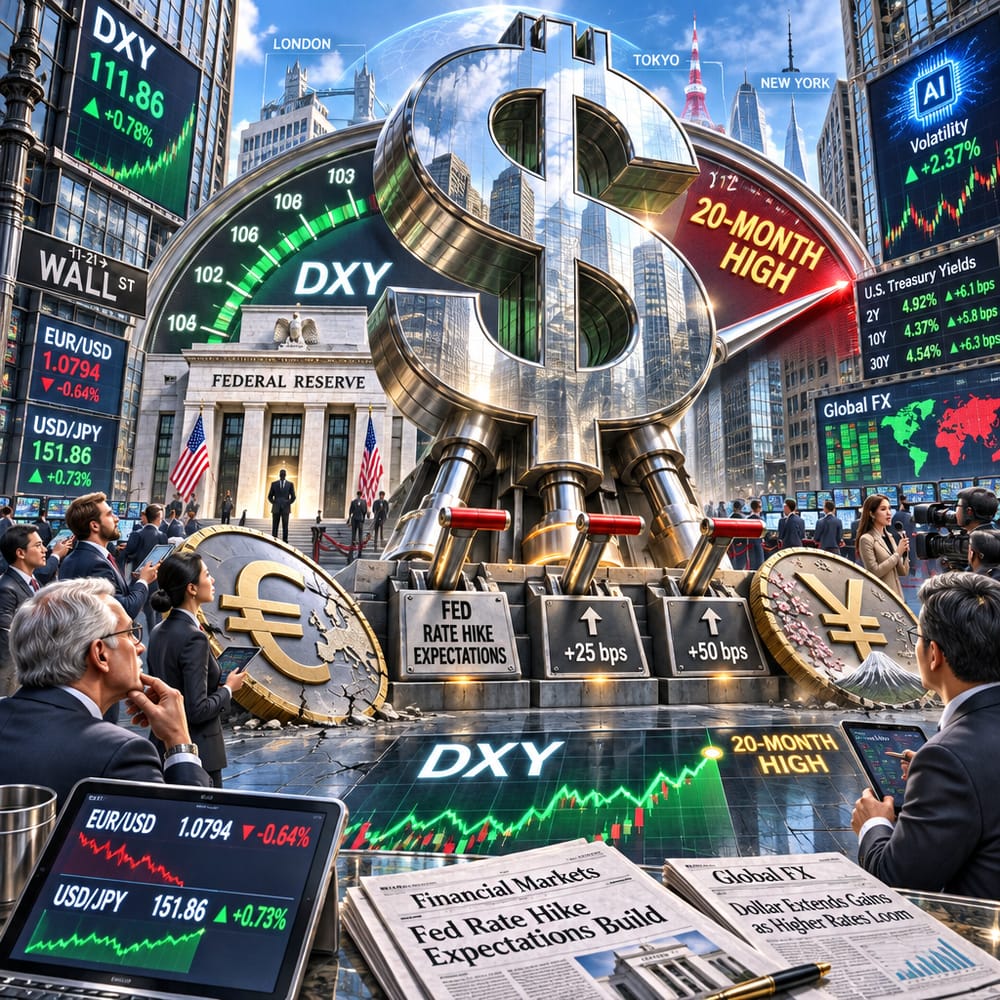
HOLD ON TO YOUR HATS: THE DOLLAR’S RISE, AND WHAT IT MEANS FOR YOU
Buckle up, folks. The U.S. Dollar Index (DXY) is acting like it’s been sipping too much espresso, surging to a peak not seen in nearly two decades. What's behind this currency caffeine jolt? Well, it's the Federal Reserve, in the spotlight again, with the market buzzing with expectations of another rate hike. And, it seems, investors are fleeing the AI stock rollercoaster for the greenback’s comparative comfort.
Now, why should you care if the dollar is on a tear? For starters, a muscular dollar packs a punch in global trade. It’s a bit like the star athlete in the currency locker room, flexing its muscles and setting the pace. But not everyone’s cheering – for some, this means more hurdles than high-fives.
THE GLOBAL TRADE RIPPLE EFFECT
So, why does a beefed-up dollar matter on the world stage? Picture this: when the dollar gets expensive, American goods become the priciest belle at the ball. U.S. businesses selling overseas face an uphill battle as their products morph from good deals to luxury splurges. Exporters in the U.S. start feeling the pinch, as their goods are suddenly out of reach for overseas buyers with weaker currencies.
It’s not just about American exports, though. Global trade takes a hit across the board. Commodities – think oil, gold, and corn – are usually priced in dollars. A stronger dollar means these become costlier in other currencies, which can slow down purchases and send shockwaves through markets worldwide. Emerging economies, which often need to import these essentials, can get caught in the crossfire, as their costs surge overnight.
EMERGING MARKETS: CAUGHT IN THE CROSSFIRE
Emerging markets, those promising lands of growth and potential, are especially sensitive to dollar drama. They often carry mountains of debt, much of it denominated in dollars. When the dollar goes up, so do their repayment costs, squeezing budgets tighter than a vice grip. Suddenly, economic growth can go from vibrant to vulnerable, with potential financial crises lurking around the corner.
But it's not all doom and gloom. Some savvy investors see opportunity amid the chaos, snapping up emerging market assets at a discount, hoping for a rebound when the currency storm settles. It’s a high-risk, high-reward game, and not for the faint of heart.
THE DOUBLE-EDGED SWORD FOR U.S. EXPORTERS
For U.S. companies that thrive on exports, the strong dollar is a double-edged sword. On one hand, purchasing foreign raw materials becomes cheaper, padding the bottom line. But on the flip side, selling finished products to foreign buyers gets trickier. They might watch sales dip as international customers tighten their wallets.
Industries like technology and aerospace, which rely heavily on international markets, could feel the burn. And if these companies struggle, it could ripple out to affect their suppliers and employees.
INVESTOR STRATEGY: RIDE OR RESIST?
So, how do investors navigate this shifting landscape? Some may double down on U.S. assets, betting on a stronger dollar to keep boosting their returns. Others might diversify into international stocks, potentially scoring deals on undervalued assets, waiting for the currency pendulum to swing back.
The key is balance. Investors should consider their risk tolerance and long-term goals. Chasing short-term gains might lead to heartache if the dollar suddenly reverses course.
THE FINAL VERDICT
A powerhouse dollar is a mixed bag. It brings opportunities and challenges, winners and losers. As the Fed’s rate hike whispers grow louder, investors should keep a keen eye on the global stage, ready to pivot their strategies as the currency tides shift.
Whether the dollar keeps charging ahead or slows its pace will depend on the Fed’s next moves and global economic currents. For now, watch the markets, keep your strategy flexible, and maybe have a little extra espresso on hand – it’s going to be a wild ride.
This article is for informational purposes only and is not investment advice. Always do your own research or consult a licensed financial professional before making investment decisions.
© Copyright 2024. All Rights Reserved.
© Copyright 2024. All Rights Reserved.