

U.S. Dollar Index Near Three-Month Low Amid Treasury Buyback Concerns
Monday, August 24, 2026
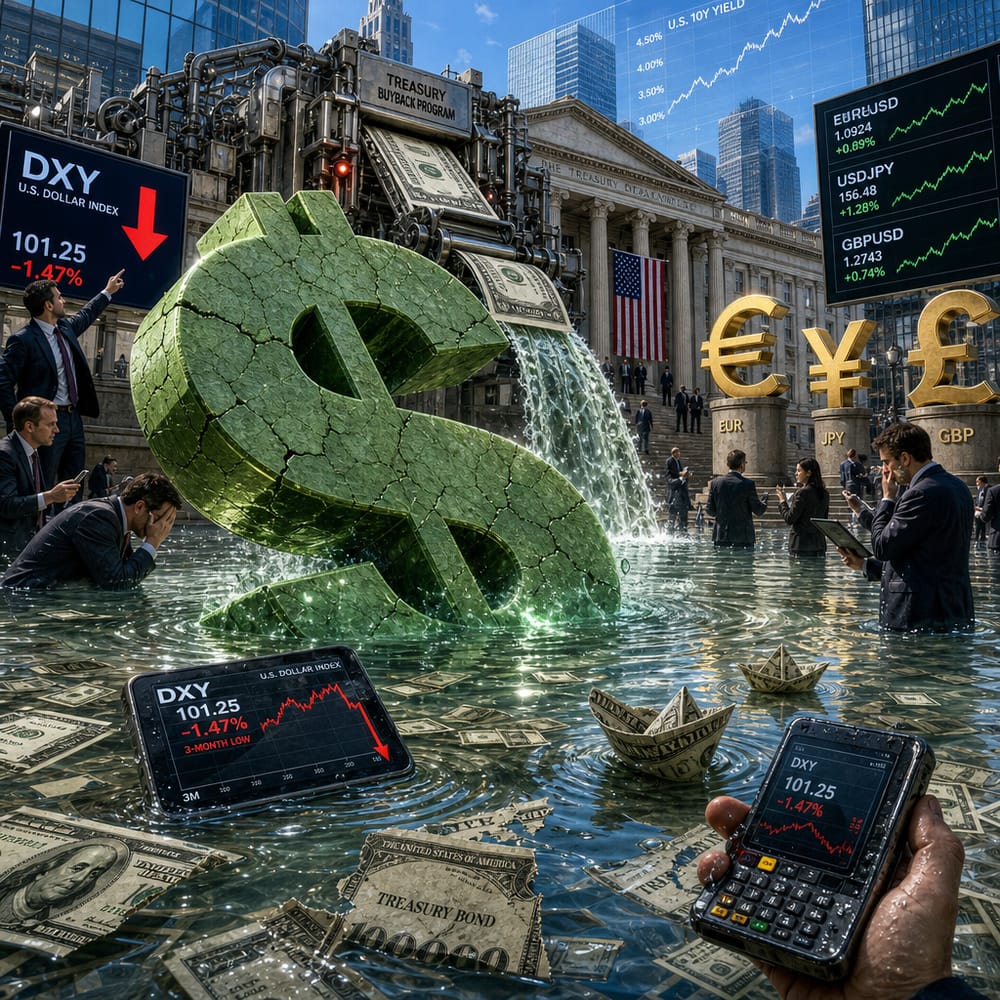
THE DOLLAR'S WOBBLE: WHAT TREASURY BUYBACKS MEAN FOR YOUR WALLET
The U.S. dollar is doing its best impression of a seesaw, and right now, it’s dipping. The U.S. Dollar Index, that vital barometer of Uncle Sam's currency against a basket of international pals like the euro, yen, and pound, has hit a nearly three-month low. Why? You can blame the U.S. Treasury's shiny new plan to buy back bonds. It's got investors scratching their heads and economists wringing their hands.
To break it down simply: the Treasury plans to wade back into the market, scooping up government bonds. The idea is to boost liquidity, which is economic-speak for making sure there’s plenty of cash sloshing around the financial system. But this move also has the side effect of weakening the dollar. Suddenly, the dollar isn’t the heavyweight champ it once was, and foreign exchange markets are reacting like it’s prom night and someone just spiked the punch.
WHAT TREASURY BUYBACKS MEAN FOR THE DOLLAR
So, what’s with the buybacks? Imagine the government as someone trying to tidy up their financial portfolio. By purchasing its own bonds, the Treasury is attempting to ease the upward pressure on longer-term interest rates, helping to keep borrowing costs manageable. But this maneuver can make the dollar less attractive to investors looking for safe havens with high returns.
The result? A softer dollar. The greenback's decline against other currencies is music to the ears of foreign governments and companies paying down dollar-denominated debt, but it also makes American goods cheaper abroad and potentially, more desirable—hello, export surge!
But before popping the champagne, consider the downside: a weaker dollar means U.S. imports get pricier, fueling inflation and squeezing consumer wallets even more.
CURRENCIES ON THE MOVE
With the dollar losing some of its shine, how are other currencies faring? The euro’s been flexing a bit of muscle, inching up as investors seek alternatives. The British pound, too, has found some spring in its step. Even the Japanese yen, which has had its share of struggles, has managed to pick up a bit of ground against the dollar. In the global currency dance, every move the dollar makes sends ripples across markets.
For currency traders, these shifts present opportunities and challenges alike. Savvy investors might ride these waves to profit, while others could find themselves washed ashore—it's a market that rewards the quick and punishes the indecisive.
WHAT THIS MEANS FOR THE US ECONOMY
The long-term economic effects? That's where things get trickier than a Rubik’s cube. On the one hand, a weaker dollar can boost exports, helping American businesses compete overseas. On the flip side, it makes imports more expensive, potentially fueling inflation. If inflation rises unchecked, it could force the Fed to jack up interest rates, slowing economic growth just when things are getting back on track post-pandemic.
Let's not forget about international investments. A softer dollar means U.S. investors get less bang for their buck when snapping up foreign stocks or bonds. It’s like buying a candy bar today that costs the same as yesterday, but you get less chocolate.
As the Treasury’s buyback plans unfold, all eyes will be on Federal Reserve Chair Kevin Warsh’s upcoming address at the Jackson Hole Symposium. Traders are eager for any hints about future monetary policy moves. Will the Fed take a backseat and let the dollar drift, or will it intervene to stabilize the currency's value?
The impact of these Treasury maneuvers is akin to throwing a pebble into a pond—the ripples are felt far and wide. For U.S. retail investors, the advice remains: keep your eyes on the forex market, stay informed about global economic developments, and don’t let the dollar’s unpredictable ride catch you off guard. The only certainty in these turbulent times is uncertainty itself, so buckle up and hold on tight.
This article is for informational purposes only and is not investment advice. Always do your own research or consult a licensed financial professional before making investment decisions.
© Copyright 2024. All Rights Reserved.
© Copyright 2024. All Rights Reserved.