

U.S. Dollar Index Near Multi-Month Lows as Treasury Bond Buybacks Ease Pressure
Sunday, August 30, 2026
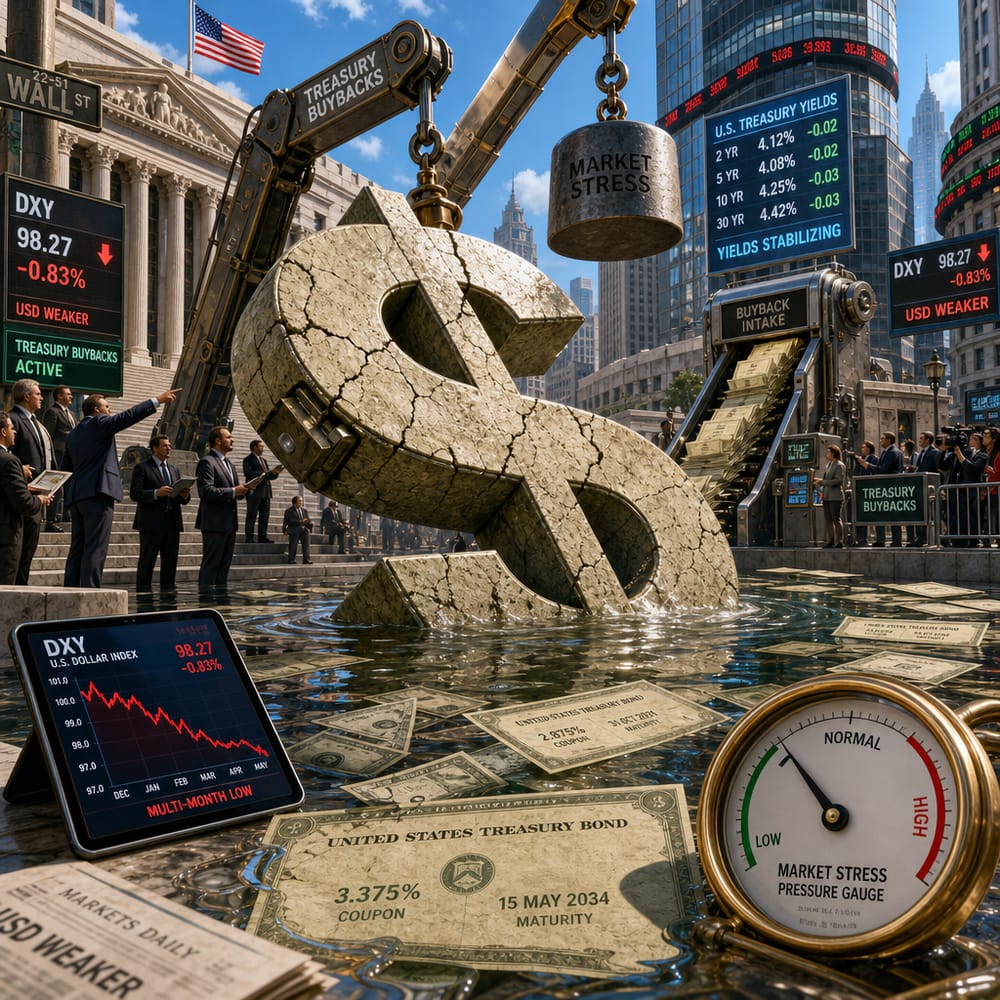
WHEN DOLLARS GET DISCOUNTED: THE IMPACT OF TREASURY BOND BUYBACKS
Grab your popcorn, folks, because the U.S. Dollar is taking a little tumble and everyone’s talking about it. The Dollar Index, that almighty barometer for American currency strength, has dropped to its lowest levels since mid-May. What’s causing this greenback to lose a bit of its swagger? Look no further than the U.S. Treasury, which is playing the buyback game with Treasury bonds—kind of like a financial version of playing Go Fish with multi-billion dollar cards.
WHAT'S THE DEAL WITH TREASURY BOND BUYBACKS?
First, let’s dissect this whole buyback business. Imagine buying back your old toys to make sure they don’t clutter up the wrong shelves. The U.S. Treasury has been purchasing bonds to ease the pressure on the market—think of it as a soothing balm for a rather tense financial situation. In doing so, they’re pulling on an economic lever that helps manage debt levels and keeps the economy from teetering too close to the edge of uncertainty.
THE DOLLAR'S DANCE
Now, why does this matter for the U.S. dollar? Well, when the Treasury starts buying back bonds, it impacts the supply and demand dynamics of the dollar. Lower demand for U.S. bonds can mean less demand for dollars, as foreign investors typically buy dollars to get their hands on our Treasury securities. Fewer investors clambering for dollars can lead to a weaker dollar. And just like that, the Dollar Index finds itself in a downward dog pose.
THE LONG VIEW
But what happens next? In the long term, these Treasury actions may very well reshape the power dynamics of the dollar. A weaker dollar might sound like a bad thing, but it's not all doom and gloom. It can actually make U.S. exports cheaper and more attractive overseas, potentially boosting American manufacturing and job creation. However, it’s a double-edged sword, as it also means imports become more expensive, which could stir the pot for inflation.
FOREIGN EXCHANGE RESERVES AND THE GLOBAL STAGE
As the Treasury plays its bond buyback card, other nations are watching closely. Countries hold foreign exchange reserves—basically a stash of foreign currencies and assets—to manage their own economic stability. If the dollar weakens significantly, central banks around the world might recalibrate their holdings. While the U.S. dollar is still the prom king of global currencies, any hint of weakness makes other countries consider diversifying their reserves, potentially parking more money into euros or yen.
THE RIPPLE EFFECT
Why should retail investors care? Well, the currency in your pocket affects everything from your vacation expenses in Paris to the price of your morning espresso. A weaker dollar might make traveling abroad more expensive, but it could be a boon for American companies that export goods. Investors will want to keep an eye on companies with big international exposure, like tech giants and consumer staples, which might either benefit from or be battered by these currency swings.
THE FUTURE OF THE GREENBACK
So what’s the future look like for the dollar? It’s tough to say. The dollar's journey is a winding road, influenced by a myriad of factors from global politics to domestic economic policies. As the Treasury continues its buyback spree, the immediate future of the Dollar Index might look a little shaky. However, the U.S. economy has been the comeback kid more times than Rocky Balboa, and it wouldn’t be wise to count it out just yet.
For now, the dollar's lower dance is sparking all kinds of speculation. Whether it rebounds like a plucky underdog or settles into a new groove will depend on a complex web of international and domestic factors. So, keep your eyes peeled and your wallets ready, because the next chapter in the dollar’s saga is bound to be as riveting as ever.
This article is for informational purposes only and is not investment advice. Always do your own research or consult a licensed financial professional before making investment decisions.
© Copyright 2024. All Rights Reserved.
© Copyright 2024. All Rights Reserved.