

U.S. Dollar Index (DXY) Resumes Climb Amid Hotter-than-Expected CPI
Wednesday, November 11, 2026
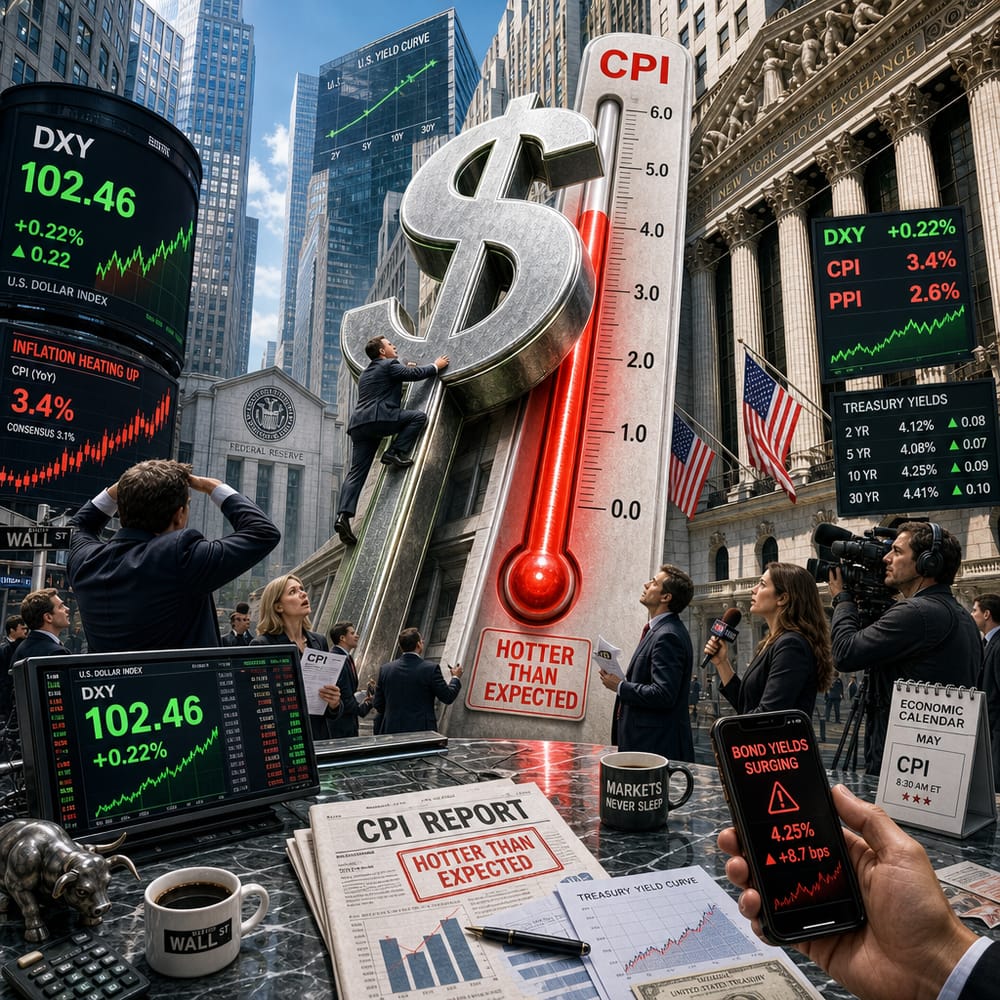
DOLLARS AND DILEMMAS: WHAT THE DXY'S CLIMB MEANS FOR YOUR WALLET
Wake up and smell the inflation! The U.S. Consumer Price Index just threw a wrench in our blissful ignorance with a hotter-than-your-morning-coffee report. And what's the market's reaction? The U.S. Dollar Index, or DXY, decided it was time to flex its muscles, climbing to 102.46 for a neat 0.22% bump.
Now, you might be wondering, "Why should I care if the dollar is up? It’s not like I’m taking a spontaneous trip to Europe this weekend." Well, buckle up, because a strong dollar doesn’t just affect your fantasies of sipping espresso in Rome; it has rippling effects across global markets, emerging economies, and yes, even what's in your shopping cart.
THE FED'S DECEMBER SHOWDOWN
Here's the deal: when the CPI—our trusty measure of inflation—comes in hot, it sends a message that inflation is stickier than a toddler's jam-covered fingers. And that's not something the Federal Reserve takes lightly. Our friends at the Fed are now under pressure to perhaps put the pedal to the metal with interest rate hikes in their December meeting. Some talking heads are even whispering about a half-point jump.
But why does this matter? Higher interest rates mean more expensive borrowing, cooling down spending and investment. The Fed's plan? Squeeze inflation out of the economy like a lemon in your unsweetened iced tea. A solid plan, but one that could also mean a bumpy ride for stocks and bonds.
GLOBAL TRADE AND EMERGING MARKETS: THE RIPPLE EFFECT
A stronger dollar isn't just a show of strength; it’s a global shaker. For countries that conduct trade in U.S. dollars, an expensive dollar makes imports cheaper and exports pricier. Not great news if you’re trying to peddle goods abroad. Emerging markets, often laden with dollar-denominated debt, suddenly find their IOUs a lot heftier to pay off.
These markets might have to tighten their belts, possibly slowing growth and even sparking financial instability if things get too tight. And let’s not even get started on how this could swing commodity prices. Oil, gold, and pretty much anything else priced in dollars could see a tumble as the greenback surges.
STOCKS AND THE GREAT UNCERTAINTY
As if that wasn’t enough, the impact of the stronger dollar and potential Fed moves sent a shiver through stock markets. Even as Nvidia tried to claw back some dignity after a tough week, broader markets are feeling the pinch. The Nasdaq and S&P 500 have been playing limbo, trying to see how low they can go, thanks to these latest inflation tidings.
Investors are caught between a rock and a hard place. Do they trust the Fed to walk the tightrope of tackling inflation without tipping the economy into a recession? Or do they hedge their bets, bracing for more volatility? The financial crystal ball is about as clear as mud right now.
A DOLLAR'S VALUE IN YOUR POCKET
So, what’s the takeaway for you, the astute retail investor? Stay nimble and informed. Watch how the Fed balances its inflation-fighting mandate with economic growth. Keep an eye on how emerging markets react to the dollar's strength—these ripples can become tidal waves in the blink of an eye.
Consider diversification in your portfolio. In unpredictable times, spreading your investments across different assets, regions, and sectors can help hedge against currency and economic swings. And remember, today's dollar drama could mean tomorrow's opportunity—or challenge, depending on which side of the trade you're on.
As always in the world of finance, there are no guarantees, only educated guesses and strategic maneuvers. So, stay sharp, stay curious, and let's see how this economic saga unfolds. After all, in the money markets, the plot thickens by the minute.
This article is for informational purposes only and is not investment advice. Always do your own research or consult a licensed financial professional before making investment decisions.
© Copyright 2024. All Rights Reserved.
© Copyright 2024. All Rights Reserved.