

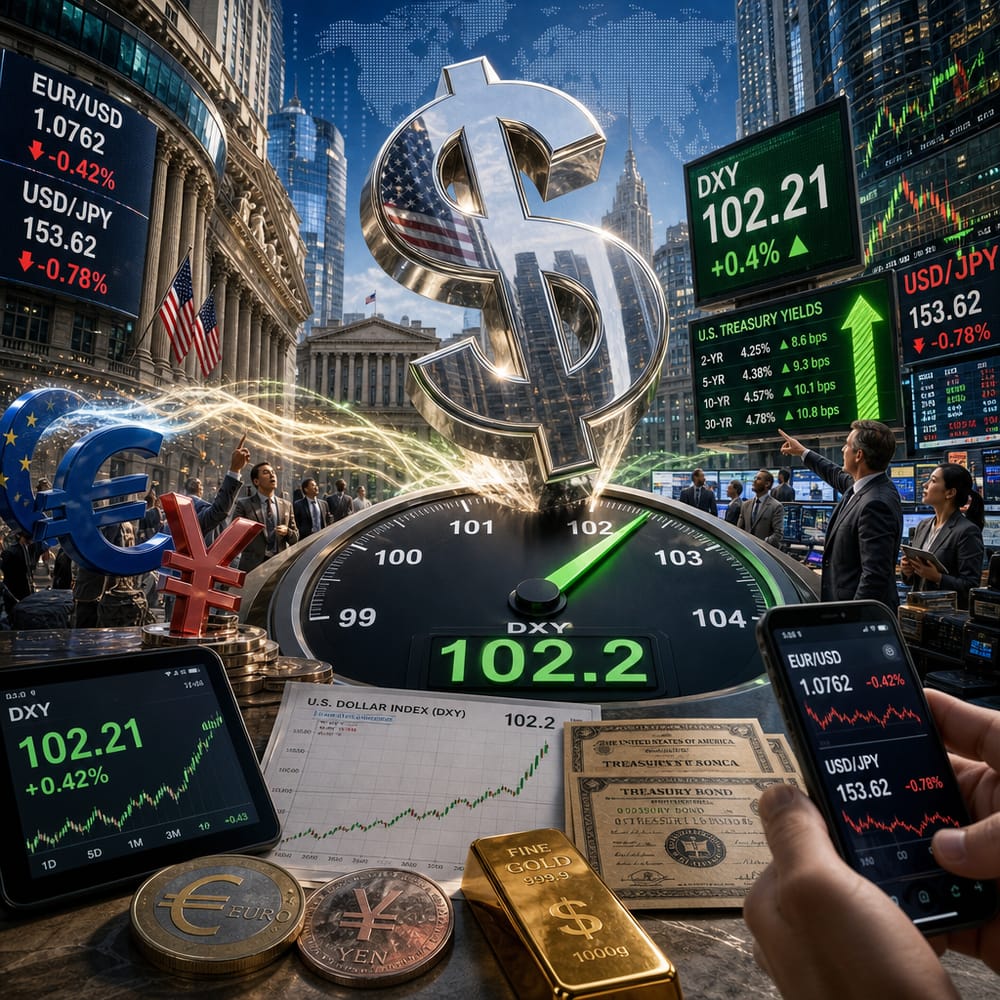
U.S. Dollar Index (DXY) Rebounds to 102.2
Sunday, October 11, 2026
THE DOLLAR JUMPS: HERE'S WHY YOU SHOULD CARE
So, the U.S. Dollar Index (or DXY for those in the know) just pulled a little Rocky Balboa. It clambered up to 102.2, flexing its green muscles with a 0.4% climb. But why should you care if the dollar’s been hitting the gym? Let’s break it down, because the ripples of this change may just land on your doorstep.
First, let’s talk about what’s got the dollar feeling so frisky. The U.S. yield movements are a big part of it. When yields on Treasury bonds—those government IOUs—start looking juicy, investors from around the globe can’t resist. They pour their money into the U.S., seeking both safety and that sweet, sweet return. This demand for dollars drives up its value.
Then there’s the safe-haven flows. In a world that's got more drama than the latest reality TV show, money loves to feel safe. Whether it’s geopolitical tensions, trade skirmishes, or that one country nobody can agree on, investors flee to Uncle Sam's rock-solid currency when things get shaky.
Now, let’s talk currency pairs—those duos that dance in the global economy. When the dollar gets strong, it’s like it suddenly became the star quarterback, and nobody can take their eyes off it. For instance, the EUR/USD and USD/JPY see some serious action. A brawny dollar makes the euro and yen look like they’ve skipped leg day, affecting everything from your morning Starbucks sourced from overseas to the price of electronics.
With the dollar flexing, exporters in Europe or Japan struggle because their goods get pricier. Imported inflation becomes a reality, and central banks may have to rethink their strategies. For everyday folks, currency strength can mean changes in what we pay for goods tied to international prices.
But, there’s a flip side to this shiny dollar coin. If the dollar keeps beefing up, it could potentially bench-press some serious issues. A too-strong dollar can choke U.S. exports, making American goods pricier abroad and hurting businesses that rely on foreign customers. This could lead to slimmer profit margins, job cuts, and all the economic hiccups that follow.
Moreover, emerging markets start feeling the pinch too. Many of these markets have debt denominated in dollars. When the dollar rises, so does the cost of repaying those loans. It’s like you borrowed your neighbor’s lawnmower and suddenly they’re charging premium rates for the gas.
But let's not forget the juicy part: the risks. If the greenback continues its upward sprint, it could trigger a chain reaction in global markets. Trade imbalances could widen, sparking tensions and possibly retaliatory moves from countries whose economies are being pummeled. This, in turn, could create a self-perpetuating cycle of economic uncertainty.
In a nutshell, the dollar's recent rebound isn’t just a number for Wall Street suits to drool over. It's a heavy hitter in the global economy, swaying everything from the price of imported avocados to international travel plans. So, next time you see the DXY doing its thing, you might just want to pay attention. After all, every hero—financial or otherwise—has their story, and this one’s unfolding right in front of us.
This article is for informational purposes only and is not investment advice. Always do your own research or consult a licensed financial professional before making investment decisions.
© Copyright 2024. All Rights Reserved.
© Copyright 2024. All Rights Reserved.