

U.S. Dollar Index (DXY) Pullback Ahead of PCE Inflation Data
Wednesday, November 25, 2026
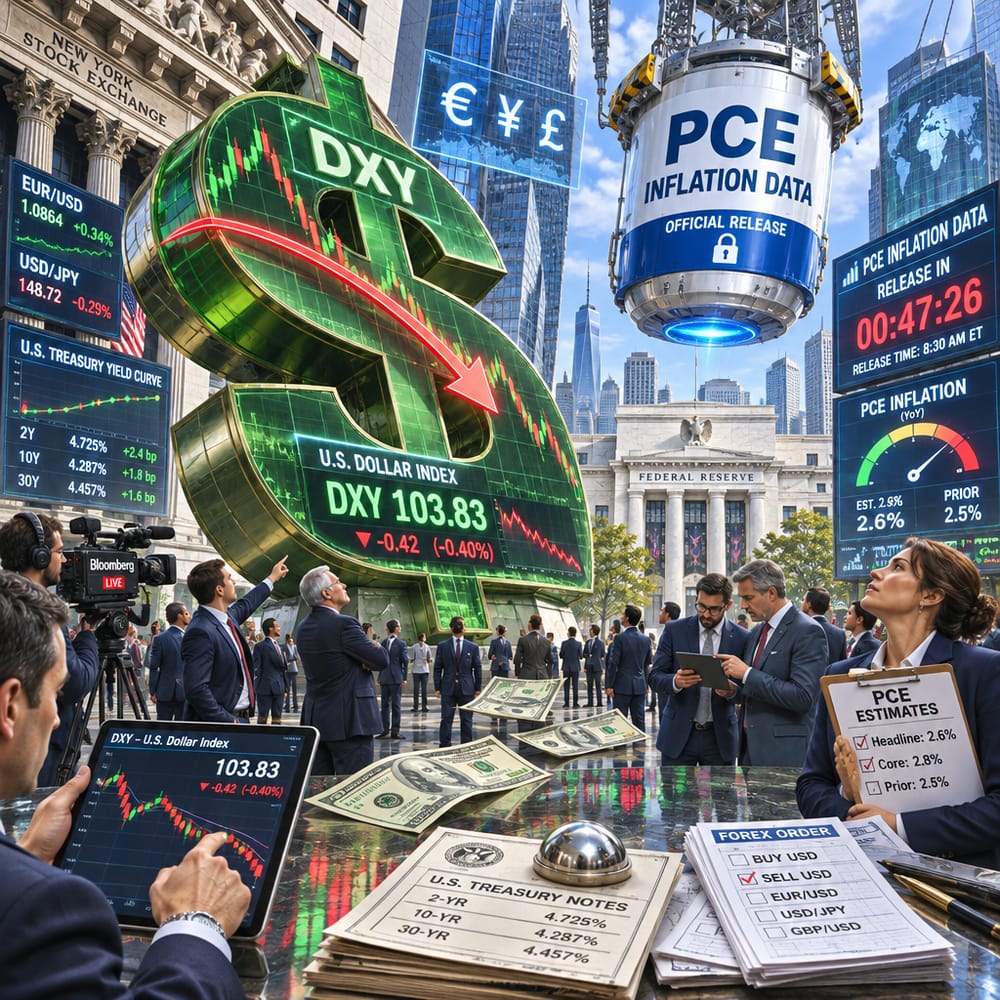
DOLLAR DRAMA: CAN PCE INFLATION DATA SHAKE UP THE GREENBACK?
If you thought global market drama was reserved for tech stock tumbles and airline meltdowns, say hello to the U.S. dollar. Right now, the dollar's got a date with destiny—or at least with its latest nemesis: PCE inflation data. The U.S. Dollar Index (DXY), which measures this heavyweight champ against a basket of foreign currencies, recently eased to 103.83. Traders are sitting on the edge of their seats, waiting for the upcoming inflation report to either confirm their fears or ease their minds.
So, what's the big deal? Well, the PCE (Personal Consumption Expenditures) inflation report is like the Fed's crystal ball for monetary policy decisions. It's the key data set they use to see if inflation is creeping up or down. And if you're holding U.S. dollars or dabbling in forex, this report could be your make-or-break moment.
HOW MIGHT DIFFERENT PCE OUTCOMES AFFECT THE DOLLAR?
Let's play out a couple of scenarios here. If the PCE data comes in hotter than expected, it could send the dollar soaring. Why? Because the Federal Reserve might feel the heat to hike interest rates faster than a caffeine-fueled barista whips up lattes. Higher rates tend to boost currency value as they attract more foreign capital looking for better returns. So, in this scenario, the dollar strengthens, making your trips to Paris a bit cheaper.
But, if the report whispers sweet lullabies of cooling inflation, we could see the Fed hitting the brakes on rate hikes. That could mean the dollar takes a little nap—weakening against other currencies. If you’re planning on sending money abroad or investing in foreign assets, this might make things a tad pricier.
WHAT DOES THIS MEAN FOR OTHER CURRENCIES?
If the dollar strengthens, other currencies, especially those in emerging markets, might feel the pinch. They could see capital outflows as investors chase those juicy U.S. yields. Think of it as everyone flocking to the hottest new restaurant in town, leaving the old haunts eerily quiet.
On the flip side, a weaker dollar could be a boon for these same currencies, potentially attracting investors seeking undervalued opportunities. A weaker dollar often means stronger commodities like gold and oil, as they become cheaper for holders of other currencies. It's the financial ecosystem's way of keeping things balanced—or at least trying to.
THE TRADER'S PLAYBOOK: POSITIONING AHEAD OF THE DATA
So, how are traders playing this high-stakes game? They're positioning themselves like poker players hedging their bets ahead of the final draw. Some are going long on the dollar, expecting a hawkish Fed to send it climbing. Others are taking a more bearish stance, betting that cooler inflation will ease the Fed's rate hike spree, causing the dollar to dip.
Options traders, those who love a good hedge, are likely snapping up both call and put options on the dollar, positioning for big moves in either direction. It's like having an umbrella and sunscreen at the ready—because who trusts the weather forecast, anyway?
In the grand scheme of things, it all boils down to this: the PCE inflation data could be a plot twist in the dollar's narrative, dictating its strength or weakness in the coming months. For traders and investors, the best advice might be to buckle up and stay nimble. The landscape could change with the wind, and in the world of forex, adaptability is the name of the game.
So, keep your eyes peeled on that PCE report. Whether the dollar skyrockets or swoons, it promises to be a day of high drama and opportunity for those ready to seize it. And remember, in the world of finance, the only constant is change—even if it's wrapped in green bills.
This article is for informational purposes only and is not investment advice. Always do your own research or consult a licensed financial professional before making investment decisions.
© Copyright 2024. All Rights Reserved.
© Copyright 2024. All Rights Reserved.