

U.S. Dollar Index (DXY) Near Two-Month Highs as Fed Rate-Hike Bets Build
Wednesday, September 23, 2026
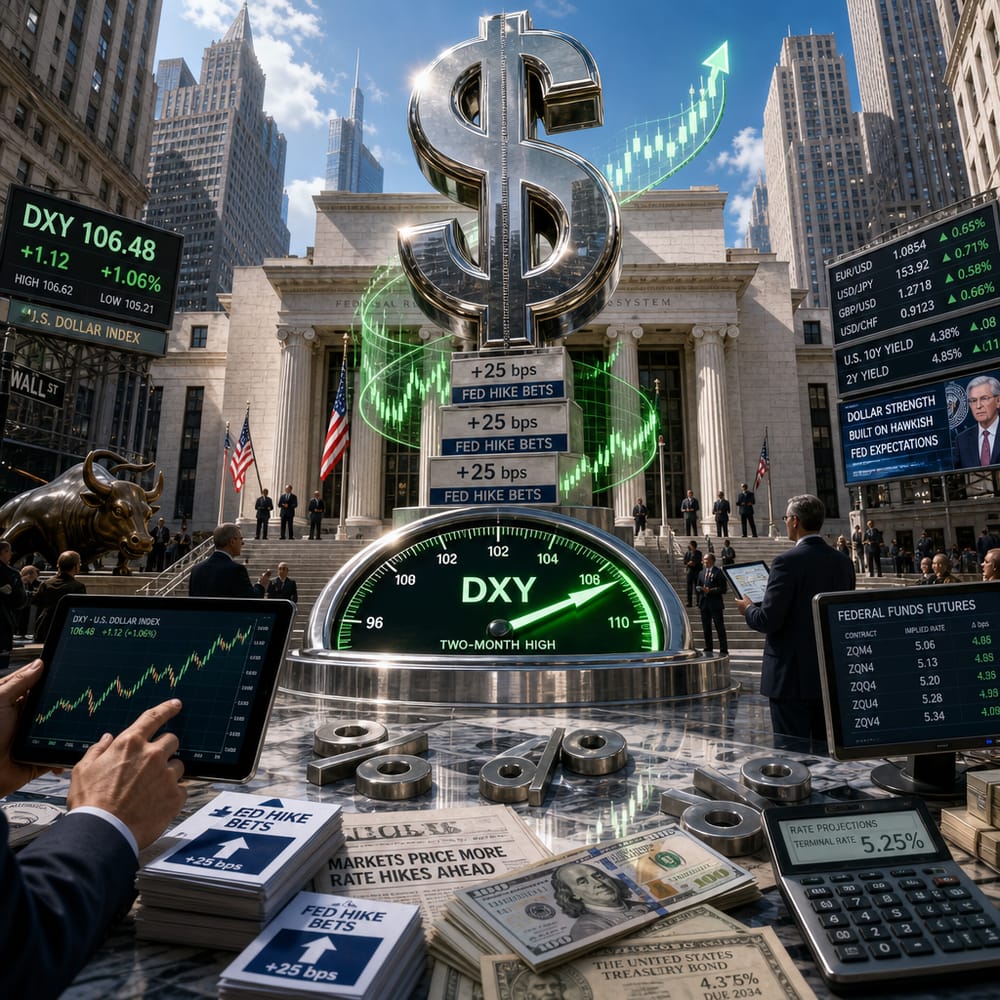
THE U.S. DOLLAR'S GRAND RETURN: WHY IT MIGHT JUST BE GETTING STARTED
Hold onto your hats, folks, because the U.S. Dollar Index (DXY) is making waves, climbing near a two-month high. It's like the Hulk of currencies, flexing its muscles once more. If you’re wondering what’s powering this dollar resurgence and what it means for the global economy, you’ve come to the right place. Let’s dig into like we’re searching for treasure.
WHY IS THE DOLLAR SURGING?
The U.S. dollar’s latest power move can be chalked up largely to a series of compelling events — and, like most financial stories, it begins with the Federal Reserve. Whispers of more interest rate hikes are buzzing louder than mosquitoes in summer. With inflation remaining stubbornly high and the Fed seemingly itching to take action, traders are betting on another rate hike in October. For those not deep in the financial weeds, hiking interest rates is essentially the Fed’s way of pulling the brakes on an economically speeding car.
But rates aren’t the only thing climbing. Treasury yields are on a steep climb too. These government bonds are now as popular as the latest TikTok trend, with the 10-year Treasury yield hitting highs not seen in nearly two decades. Higher yields can make U.S. assets more attractive to investors worldwide, resulting in more folks wanting to buy dollars. It’s a bit like Black Friday, but for currency.
THE FED'S GAME PLAN
With the dollar at these levels, the Fed is playing a high-stakes game that would make any poker player sweat. If they keep raising rates, the dollar could continue its upward march. But how high can it go before we see some side effects?
A stronger dollar might sound like a win for team USA, but it has a double-edged sword. Sure, imports become cheaper, which is great for those craving French wine or Italian leather. But on the flip side, it makes U.S. exports pricier and less competitive on the global market. American manufacturers might find themselves with warehouses full of unsold goods. Global trade dynamics are delicate—and a too-strong dollar can tip scales in a way that’s less than favorable.
WHAT'S THE BIGGER PICTURE?
The dollar is the world's favorite currency, the superstar on the global financial stage. So, when it flexes, everyone pays attention. Emerging markets, in particular, tend to feel the dollar's every move acutely. A stronger dollar can mean trouble for these markets, especially if they owe debts in dollars. Their borrowing costs rise, making it harder to pay off those IOUs. It’s like suddenly being asked to pay back your student loans in gold bars.
And let’s not forget the potential impact on commodities like oil and gold, which are priced in dollars. When the dollar strengthens, these commodities can become more expensive for other countries, possibly depressing demand.
There’s also the geopolitical angle. With the Trump administration recently mulling over major economic decisions like a potential diesel export ban, and ongoing tensions with countries like Iran, the dollar’s strength is more than just numbers on a screen. It’s a tool that can reflect and influence U.S. foreign policy.
WHAT TO WATCH FOR NEXT
So, what's the next move? Keep an eye on the Fed's next steps. And as we approach midterm elections, political moves could also shake things up. The economy is never just an economic story; it's a political one too.
For investors, the ongoing dance of rates, yields, and dollar strength creates a mixed bag of opportunities and risks. Those with international investments or plans to do business abroad should be especially alert to how these dynamics play out.
In the end, whether you’re a seasoned trader or just someone with a curious eye on their 401(k), the dollar's current trajectory is a story of bold predictions, strategic plays, and global influence. This greenback saga is far from over — so grab some popcorn and stay tuned.
This article is for informational purposes only and is not investment advice. Always do your own research or consult a licensed financial professional before making investment decisions.
© Copyright 2024. All Rights Reserved.
© Copyright 2024. All Rights Reserved.