

U.S. Dollar Index (DXY) Holds Above 101 amid Rate-Hike Speculation
Thursday, July 30, 2026
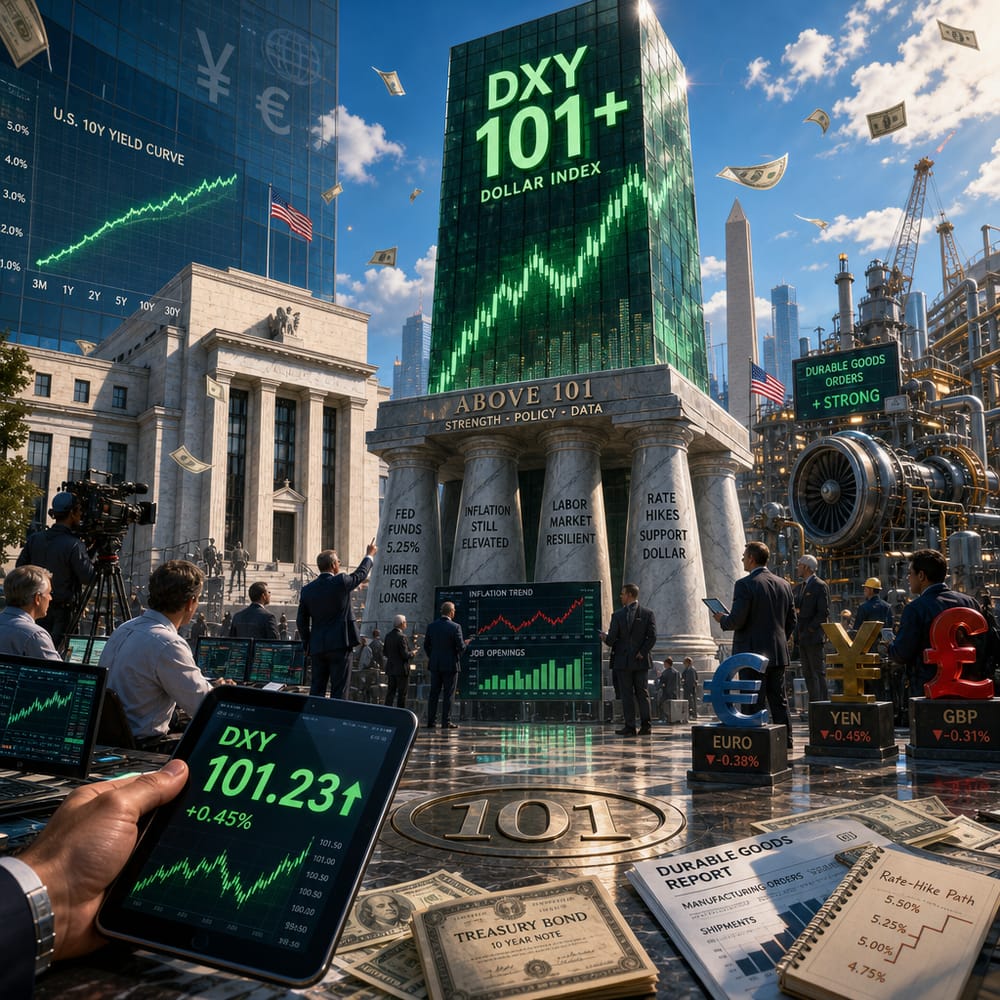
U.S. Dollar Index (DXY) Holds Above 101: What's Cooking on the Currency Stove?
The U.S. Dollar Index is strutting its stuff with a swagger, striding confidently above 101—much like a fashionista in a killer outfit, making heads turn. But what’s the secret sauce keeping the dollar this bold and beautiful? It’s the juicy mix of Fed drama, economic reports, and some geopolitical spice that’s got the DXY flexing its muscles. So, grab your popcorn because the currency party is just getting started.
THE FED, THE STRAITS, AND THE SUSPENSE
A bunch of talking heads recently gathered in a room full of tension and crisp suits—yep, the Federal Reserve meeting. The big news? They decided to keep interest rates unchanged, leaving everyone hanging like a plot twist in a telenovela. But hold your horses, because this isn’t the end of the rate hike saga. Analysts are whispering about a potential hike on the horizon, driven by lingering inflation concerns that seem harder to shake than a clingy ex.
Meanwhile, on the other side of the globe, Iran and the U.S. are exchanging more than just pleasantries over the Strait of Hormuz, and tensions there have been driving oil prices up faster than a caffeinated squirrel. This sort of geopolitical drama tends to increase demand for the safe-haven U.S. dollar, giving it an extra boost like a shot of espresso.
DURABLE GOODS AND DOLLAR DELIGHTS
Let's sprinkle a little economics on this mix, shall we? The latest durable goods report showed some tasty growth, signaling that the backbone of America—manufacturing—is holding strong. This is music to the ears of the dollar bulls, as it reinforces the narrative that the U.S. economy is no paper tiger.
But here’s the million-dollar question: Is the DXY’s recent strength a new normal, or just a flirt with 101 before it retreats? The index’s position over this line has historically been as reliable as a cat following a laser pointer. It’s a tease, and just as it climbs, it could tumble if food for thought, like future Fed decisions, turns sour.
THE PATH OF THE FED: RAISE OR CHILL?
The Fed's current stance is like an episode of "Will They, Won't They?"—a little flirtatious, a bit non-committal. Chairman Kevin Warsh’s latest performance was a balancing act between ignoring inflation like it's a background noise in a crowded café and hinting, ever-so-subtly, at tightening the belt soon. This indecision has the market doing its own nervous shuffle, raising yields on long-term government debt but betting on calm in the near term.
But what impact would a rate hike have on the DXY? A hike would be like giving protein shakes to the weightlifting index, pumping it up even more as it becomes more attractive to yield-hungry investors. However, it’s not all padded shoulders and flexing. A stronger dollar could make U.S. exports as appealing as a salad at a barbecue, affecting global trade balances and domestic economic growth.
TO DXY OR NOT TO DXY
So, what’s at stake here for your average Joe or Jane scrolling through this financial rollercoaster while sipping their morning brew? The dollar's dance in the spotlight has broad implications, from the price of the goods in your shopping cart to the health of emerging markets dealing with dollar-denominated debt.
The DXY’s flirt with 101 is more than a numbers game; it's a reflection of a market pondering its next move amidst global politicking, economic signals, and good old Fed speculation. Whether it’s about catching the next rate hike clue dropped by the Fed or keeping an eye on international skirmishes, the U.S. dollar is in for an interesting ride.
Stay tuned, because in the world of currency, nothing stays the same for long. The DXY could very well be gearing up for another lap or preparing to pull back into the pit stop. Either way, keep your eyes peeled, because in this market dance, you never know when the beat will change.
This article is for informational purposes only and is not investment advice. Always do your own research or consult a licensed financial professional before making investment decisions.
© Copyright 2024. All Rights Reserved.
© Copyright 2024. All Rights Reserved.