

U.S. Dollar Index (DXY) Hits One-Month High on Persistent Fed Hawkishness
Sunday, August 16, 2026
THE GREENBACK'S GAIN: WHY THE DOLLAR'S ON A TEAR AND WHAT IT MEANS FOR YOU
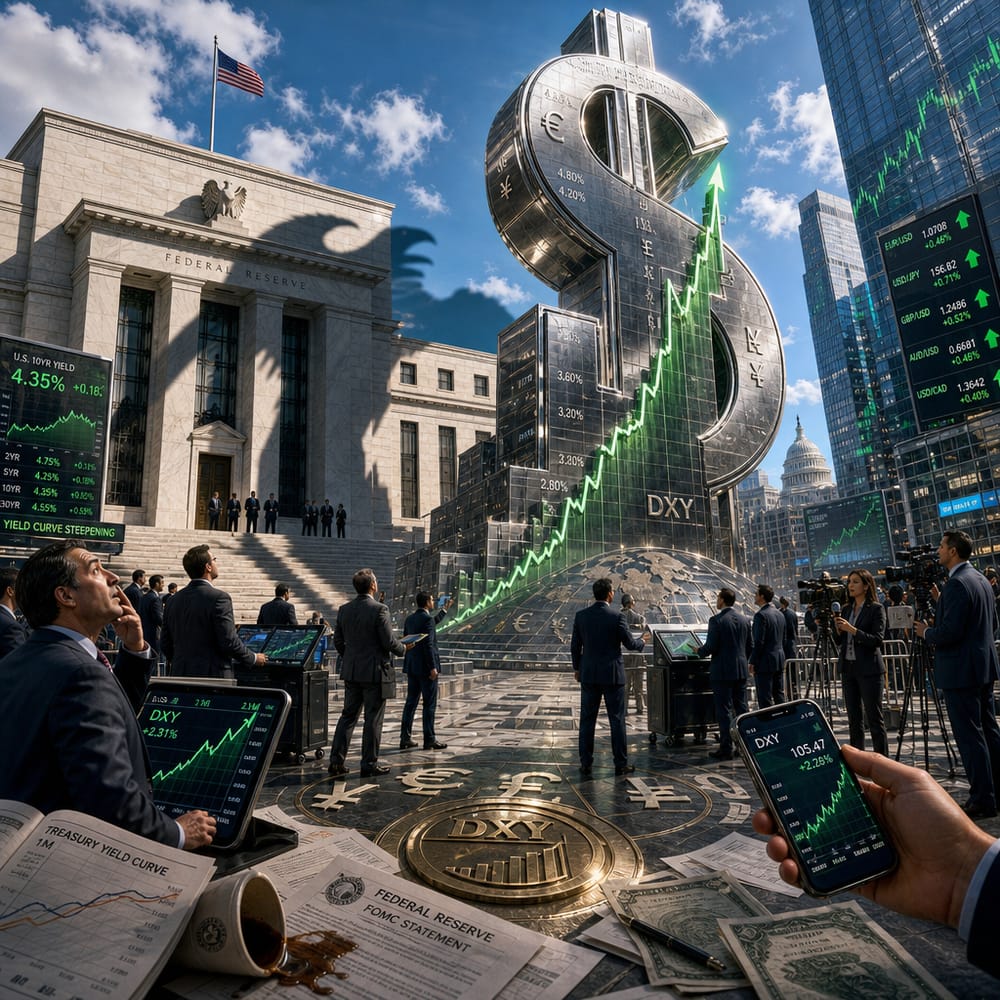
If the U.S. dollar were a contestant on "Survivor," it would have just snagged the immunity idol and be strutting around camp with that smug grin. The U.S. Dollar Index (DXY) hit a one-month high, and like any reality show villain, it's because the U.S. Federal Reserve just can’t stop being, well, itself: hawkish. No, that's not a political stance from a bird. In finance speak, being hawkish means the Fed is all about keeping inflation in check, possibly by raising interest rates. And this cautious, tight-lipped approach has investors all hot and bothered, nudging the dollar higher.
So, what's powering this surge in dollar swagger? Let’s break it down. The Fed has been dropping breadcrumb hints that it might continue its rate hikes. Now, when interest rates go up, so does the allure of a currency. It’s like when your crush finally gets a haircut — suddenly, everyone’s interested. Higher rates mean higher returns on investments denominated in that currency, making Uncle Sam’s greenbacks the belle of the ball.
Now, who benefits from this financial flirtation? Forex traders, for starters. They’re the ones betting on currency swings like it's the Super Bowl. A stronger dollar can mean fat profits if they’ve played their cards right. But before you go clicking on that “Trade Now” button, remember that the forex world is more complicated than trying to assemble IKEA furniture without the instructions.
But here’s why you, dear reader, should care: when the dollar flexes its muscles, it sends ripples across the globe. It’s not just about forex traders scoring (or losing) some dough. A stronger dollar can make American exports pricier and imports cheaper. Great if you're shopping for European truffles, not so much if you're trying to sell American cheese abroad. Commodities, like your morning cup of joe or that gold necklace you’ve been eyeing, can get cheaper. Why? Because they’re typically priced in dollars. So as the dollar strengthens, those commodities feel the pinch.
Then there's the ripple effect on emerging markets. Picture this: you've borrowed in dollars because it seemed like a good idea back when the dollar was the dorky kid in the corner. Now it's captain of the football team, and you’re scrambling to keep up with loan payments that just got a whole lot more expensive. Ouch.
Now, let’s pivot back to the Fed. What’s next on their playlist, and how might they keep their dance with the dollar going? If they keep their hawkish stance — raising rates or even just talking tough — the dollar could continue its ascent. But, like dancing, it’s all about balance. Tightening too much, too fast, could cool down the economy more than anyone wants. And if the U.S. economy falters, the dollar’s strength could fade faster than yesterday's TikTok trend.
For investors holding foreign currencies, these dollar dynamics might mean you’re watching your international investments’ value dip. If your overseas portfolio has been looking a tad lackluster, you can thank the dollar's recent popularity contest. Diversifying your holdings and considering the currency exposure might be wise moves if you don't want to be left holding an empty bag.
In the end, the dollar's climb is more than just a number on a screen. It’s an intricate dance involving Federal Reserve policies, global trade dynamics, and investment strategies that could affect your wallet. Whether you’re a seasoned forex trader or someone just trying to make sense of it all, keeping an eye on the Fed’s next moves might just be your best bet for seeing where the dollar drama goes next. So, grab some popcorn and settle in. The dollar show is just getting started.
This article is for informational purposes only and is not investment advice. Always do your own research or consult a licensed financial professional before making investment decisions.
© Copyright 2024. All Rights Reserved.
© Copyright 2024. All Rights Reserved.