

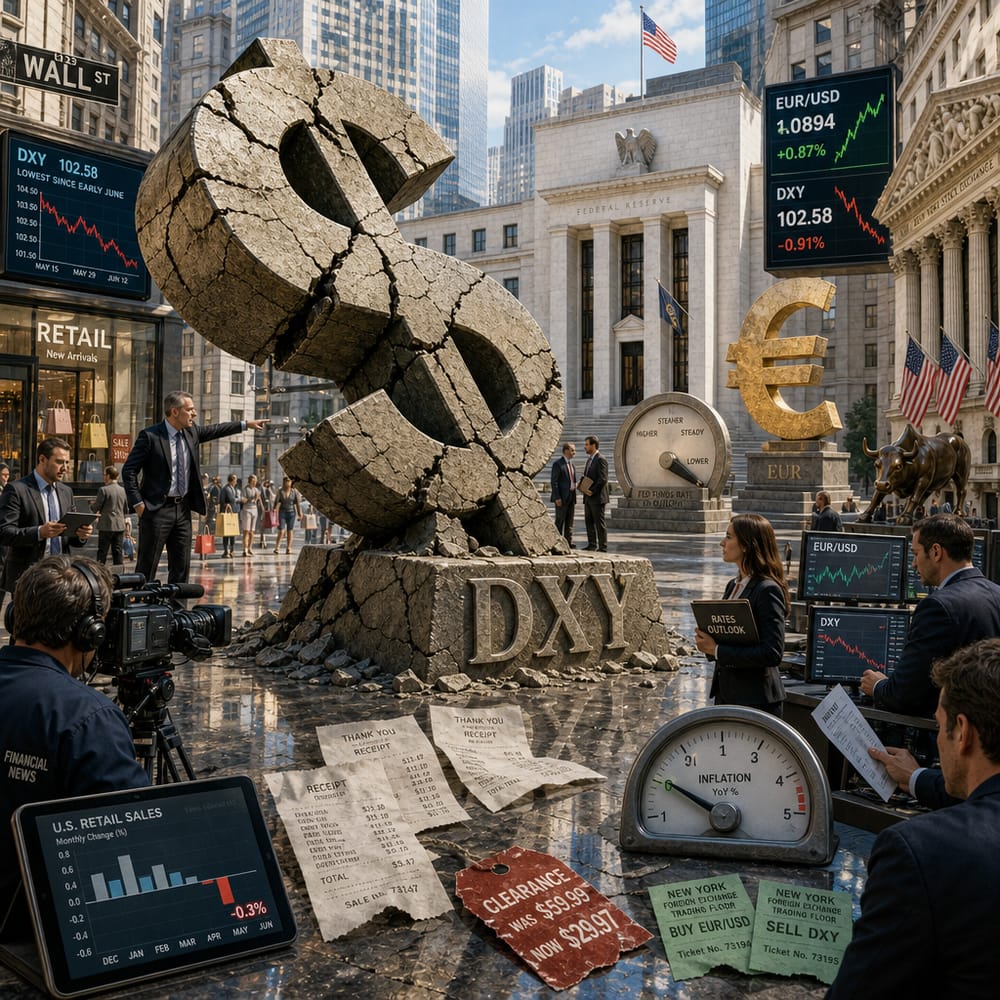
U.S. Dollar Index (DXY) Hits Lowest Since Early June
Tuesday, August 18, 2026
WHEN THE BUCK DOESN'T STOP: WHAT A WEAK DOLLAR MEANS FOR YOUR INVESTMENTS
If you've got a dollar bill handy, you might want to give it a little pep talk. The U.S. Dollar Index (DXY) has taken a hit and is sulking at its lowest point since early June. Not exactly a confidence booster. The culprit? Disappointing U.S. retail sales and tame inflation numbers, which have markets tempering their bets on more rate hikes from the Federal Reserve. But what does a weaker dollar mean for you, the everyday investor, and the global markets at large? Let's unravel this currency conundrum.
THE DOLLAR'S DILEMMA
So, why is everyone so jittery about the dollar taking a backseat? Think of the U.S. dollar like the Beyoncé of global currencies—commanding attention and leading the charge. When its star power dims, it's bound to shake things up. A weaker dollar can ripple through the global economy, altering trade dynamics, impacting inflation rates, and even tweaking your portfolio in unexpected ways.
For starters, a softer dollar typically means foreign currencies are stronger in comparison. This can be a mixed bag: it makes U.S. goods cheaper abroad, potentially boosting exports, but it also makes imported goods pricier. Your French wine and Italian leather might see a price bump. More expensive imports can nudge inflation, the very force the Fed’s been trying to tame with its interest rate magic tricks.
WHAT ABOUT THE FED?
You might be thinking, "Does this mean the Fed will hit the brakes on hiking rates?" Well, the answer isn't clear cut. The Fed, like a cautious driver in a rainstorm, has been navigating the delicate balance of cooling inflation without steering the economy into a ditch. With inflation seemingly under control and consumers keeping their wallets zipped, the Fed could opt for a pause in hiking rates. Lower chances of rate hikes mean borrowing could stay cheaper, giving businesses and consumers a little more room to breathe.
Yet, if inflation decides to rear its head, the Fed might have to rethink its strategy. It's like knowing a storm could be on the horizon but hoping you packed an umbrella just in case.
THE BIGGER GLOBAL PICTURE
Let's zoom out a bit. A weaker dollar can make life a little easier for developing economies with dollar-denominated debt. They effectively get a discount on their repayments, helping to stabilize budgets. But don't pop the champagne just yet—those same countries could also face rising costs for dollar-priced commodities like oil.
And speaking of commodities, investors might start eyeing other assets like gold or oil as the dollar wobbles. Gold often shines brighter when the dollar dims—it's a safe haven in turbulent times. Meanwhile, oil prices can climb, as seen with recent geopolitical tensions ramping up crude costs. If you're invested in resources or commodities, keep your eyes peeled on how these moves might affect your holdings.
YOUR PORTFOLIO'S PAS DE DEUX WITH CURRENCIES
So, what should you do if your portfolio's feeling the dollar's tango? First, don't panic. Understand that currency shifts are part of the market's intricate dance. Diversification remains your best friend, ensuring that you’re not overexposed to any single currency or economic shift.
Consider sectors that traditionally benefit from a weaker dollar. Export-heavy industries like technology and manufacturing often get a boost as their products become more affordable overseas. On the flip side, companies heavily reliant on imports might face tighter margins.
And, as always, keep an eye on central bank signals. If the Fed hints at a change in strategy, it could be time to reassess your investment game plan.
THE BOTTOM LINE
A weaker dollar isn't just an abstract concept for economists to debate over espresso. It's a live-wire issue that can impact global trade, inflation, and your investment strategies. Whether the dollar rebounds or continues its slide, staying informed and adaptable will help ensure your portfolio doesn’t miss a beat in this ever-changing financial landscape.
So, as the U.S. dollar finds its footing, remember the golden rule of investing: Keep calm, stay diversified, and watch as the global dance unfolds. After all, if finance were easy, it wouldn't be nearly as interesting.
This article is for informational purposes only and is not investment advice. Always do your own research or consult a licensed financial professional before making investment decisions.
© Copyright 2024. All Rights Reserved.
© Copyright 2024. All Rights Reserved.