

U.S. Dollar Index (DXY) Hits Highest Close Since April 2025
Saturday, November 14, 2026
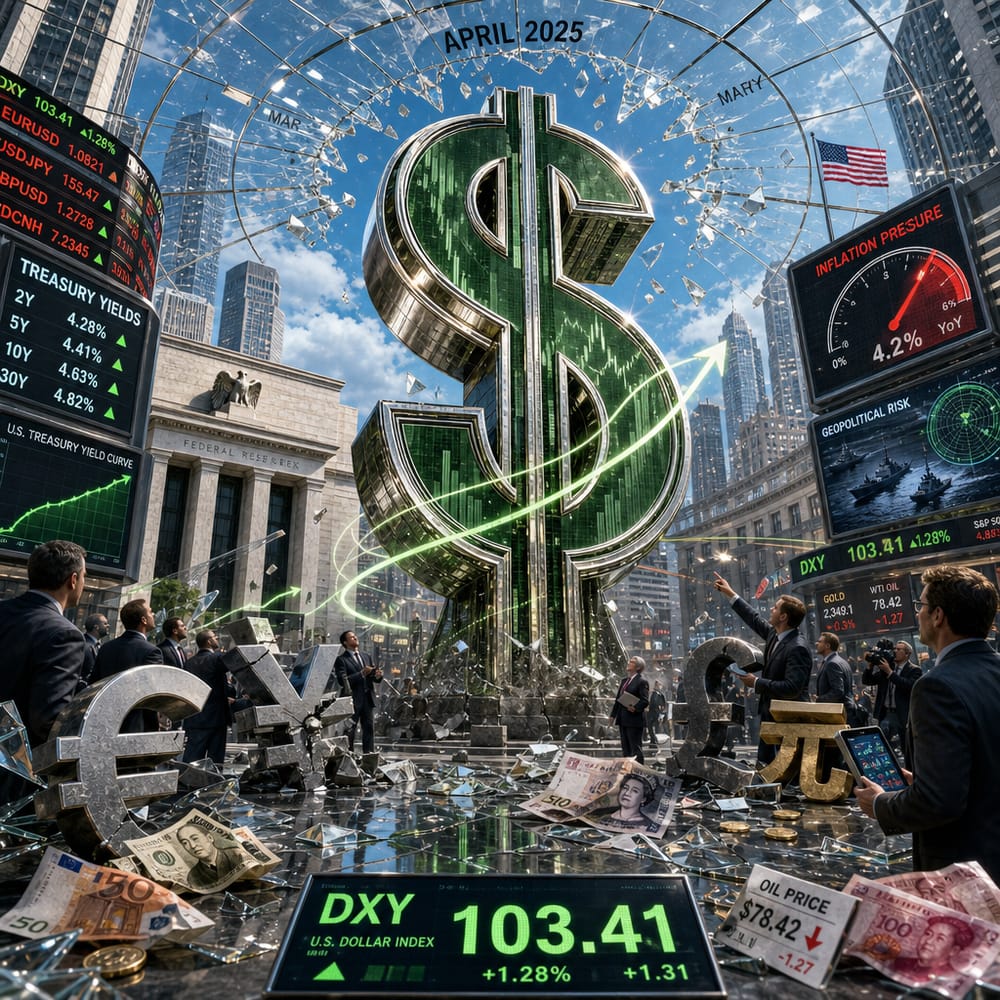
THE DOLLAR ROARS: WHAT'S DRIVING ITS BIGGEST SURGE SINCE 2025
Hold onto your wallets, folks, because the U.S. dollar just got a turbo boost — and no, it wasn’t from Elon Musk’s latest gizmo. As of November 13, the U.S. Dollar Index (aka DXY, because who doesn't love a catchy acronym?) hit 103.41, its highest close since April 2025. So why should you care? Well, when the dollar flexes its muscles, it’s not just an American affair; it sends ripples across the globe.
WHY THE DOLLAR IS STRONGER THAN YOUR MORNING COFFEE
Let's break it down: The almighty dollar is having its moment in the sun for a few reasons. First, U.S. inflation is playing puppet master with the economy. Imagine inflation as that persistent toddler who insists on having its way — the Federal Reserve is doing everything short of bribing it with candy to calm it down. The Fed's strategy? Tightening the monetary policy, which is just a fancy way of saying they're pulling back on the money hose to keep prices from spiraling into space. The markets are betting on more rate hikes, which tends to make the dollar more attractive.
And then there’s the delightful chaos that is global geopolitics. When things get tense around the world, investors often rush to the dollar like it’s the only life raft in a stormy sea. With tensions ranging from the U.S.-China trade tango to other international dramas, the dollar is basking in the glow of its safe-haven status.
IMPACT ON THE GLOBAL STAGE
But what does a stronger dollar mean for the rest of the world? For starters, it makes U.S. exports pricier and imports cheaper. Great if you’re a shopaholic loving those European luxury goods, but not so hot if you’re an American manufacturer trying to sell abroad. It’s a bit like being on a seesaw where only one side is enjoying the ride.
Developing economies may feel the pinch even more. Countries that took out loans in dollars suddenly find their debt loads heavier. It’s like realizing your student loan interest rate just went up — not fun. This could force these countries to raise their own interest rates, slowing down growth and potentially leading to economic turbulence.
COMMODITIES AND THE EMERGING MARKETS CONUNDRUM
And for all you commodity enthusiasts, a stronger dollar generally means lower commodity prices. Oil, gold, and other raw materials priced in dollars become more expensive for anyone using another currency. So, if you’ve been tracking oil prices or speculating on gold, keep an eye on the DXY — it’s the silent player in the game.
Emerging markets are particularly vulnerable here. With commodities being a key export for many of these countries, a dip in prices can spell trouble for their economies. It’s like having your paycheck slashed, but your bills stay the same. Investors in these regions may start getting twitchy, reconsidering their strategies and potentially pulling out money to invest in perceived safer territories.
THE ROAD AHEAD: MORE DOLLAR DOMINANCE?
So, what’s next on the dollar’s horizon? Much depends on the Fed and whether they keep their foot on the interest rate pedal. If U.S. inflation continues to misbehave, we could see more rate hikes, which would likely keep the dollar strong. But it’s not all set in stone. Global economies are like a giant chessboard where each move can alter the game.
The upcoming global diplomacy dance — with meetings between leaders like Trump, Putin, and Xi — could throw a curveball or two. Any major geopolitical developments could shift investor sentiment faster than a viral TikTok trend.
BOTTOM LINE
For now, the dollar's doing a victory lap, and its strength is shaking things up from Wall Street to the markets of Mumbai. Whether you're an investor, a business owner, or just someone planning a holiday abroad, keep an eye on the dollar's moves. In today's interconnected world, the DXY isn’t just a number — it’s a global influencer. So, here's to hoping your wallet keeps up with the ride!
This article is for informational purposes only and is not investment advice. Always do your own research or consult a licensed financial professional before making investment decisions.
© Copyright 2024. All Rights Reserved.
© Copyright 2024. All Rights Reserved.