

U.S. Dollar Index (DXY) Eyes Weekly Gains as Treasury Yields Surge
Friday, September 25, 2026
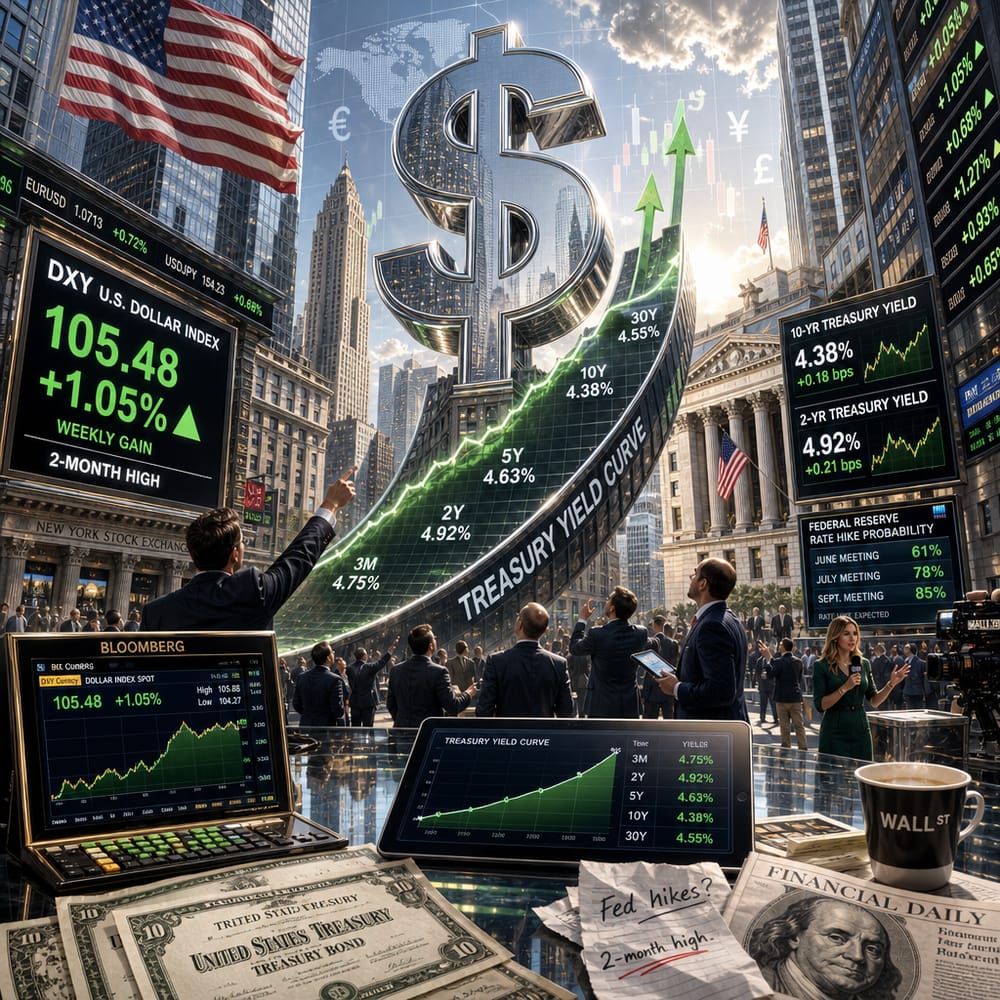
The U.S. Dollar Index (DXY) is flexing its muscles, and it's looking pretty jacked. After months of relative lethargy, the DXY is poised to close out a two-month high, scoring its first back-to-back weekly gain in over three months. What's the secret behind this sudden burst of energy? The U.S. Treasury yields have surged, turbocharging the greenback, while whispers of more rate hikes from the Federal Reserve hang in the air like an ominous cloud. But before you go all-in on greenbacks, let's unpack what this means for you, the everyday investor.
DOLLAR PUMPED UP
You might be wondering, why should I care if the dollar is grabbing gains? Here's why: a stronger dollar can ripple across the globe like a financial butterfly effect. It's like the ultimate financial influencer, dictating the rules of global trade, commodity prices, and even impacting emerging markets. Picture this: the dollar is the star quarterback, and everyone's watching to see its next move on the field.
The magic ingredient in this dollar rally? The rising U.S. Treasury yields—those are the interest rates Uncle Sam pays to borrow money. When these yields rise, the dollar often follows suit, as investors from around the globe flock to the safety of U.S. bonds, lured by the prospects of higher returns. It's like the dollar's siren song, irresistible to investors worldwide.
THE FED'S GAME PLAN
Enter the Federal Reserve, the central bank that's got everyone on the edge of their seats. They've got their hands on the economic thermostat, and they've been hinting at turning up the heat with more rate hikes. Why? To keep inflation in check and ensure the economy doesn't overheat like a forgotten pot on the stove. But more rate hikes could drive Treasury yields even higher, adding more fuel to the dollar's fire.
Now, you might be thinking, "Great, so everything's coming up dollar bills, right?" Not so fast. While a strong dollar is a flex for the U.S. economy, it's not all sunshine and rainbows globally. Other countries, especially those in emerging markets, can feel the pinch. A beefed-up dollar means their debts, often denominated in dollars, become more expensive to pay off. It's like trying to climb Mount Everest with a backpack full of bricks.
THE RIPPLE EFFECT
So, what does this mean for your investments? Well, it depends on where you're putting your money. If you're into commodities like oil or gold, brace yourself. A stronger dollar can cause commodity prices to dip—since they're priced in dollars, they get pricier for overseas buyers when the dollar's value shoots up. This could explain recent oil price dips, even as geopolitical tensions brew.
For stock investors, especially those with a foot in the international waters, currency fluctuations can be a double-edged sword. While U.S.-based stocks could benefit from a stronger dollar, companies that export goods might find their products less competitive abroad, potentially biting into their profits.
LOOKING AHEAD
So, what's a savvy investor like you supposed to do with all this intel? First, keep an eye on the Fed's next moves. Their decisions could set the DXY on a fresh course, impacting how you allocate your assets. Diversification could be your trusty shield here—spreading your investments across different sectors and geographies might help you weather any dollar-driven storms.
In a world where money never sleeps, the DXY's dance over the next few weeks will be one to watch. Whether you're a seasoned trader or just getting your feet wet in the investment pool, understanding the dollar's journey can help you make smarter moves in your portfolio. And remember, in the rollercoaster ride of finance, even small shifts can lead to big changes in your investment landscape.
So, buckle up, keep your eyes on the economic horizon, and get ready to make informed decisions as the dollar continues its mighty stride. Because, let's face it, when the dollar talks, the world listens—like it or not.
This article is for informational purposes only and is not investment advice. Always do your own research or consult a licensed financial professional before making investment decisions.
© Copyright 2024. All Rights Reserved.
© Copyright 2024. All Rights Reserved.