

U.S. Dollar Index (DXY) Drifts Lower Amid Soft Fed Rate Expectations
Monday, August 17, 2026
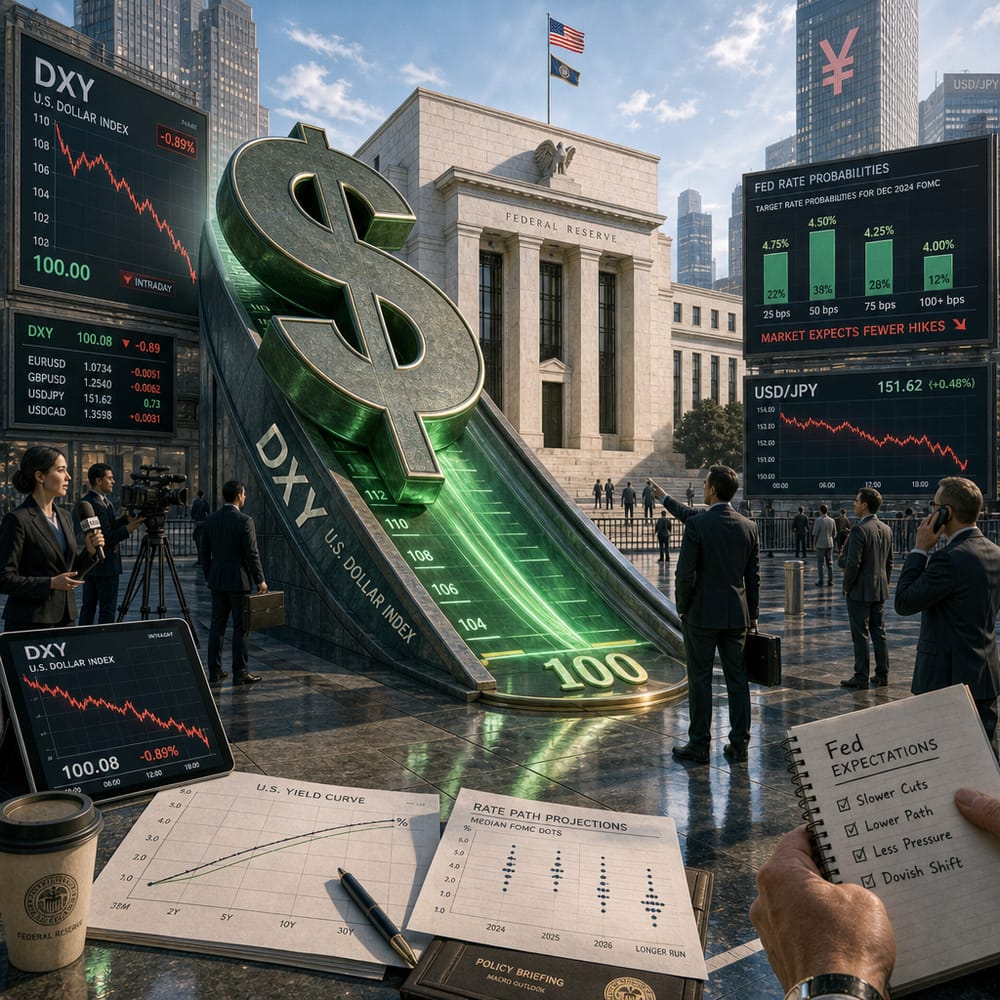
U.S. DOLLAR INDEX (DXY) DRIFTS LOWER AMID SOFT FED RATE EXPECTATIONS
Stop the presses, folks! The mighty U.S. dollar, that greenback titan we've all grown so accustomed to as the world's financial linchpin, is looking a bit wobbly these days. Like a heavyweight champ that just took a hit to the jaw, the U.S. Dollar Index (DXY) is dipping precariously close to the psychological 100 level. Why? Because investors are wagering that the Federal Reserve might be cooling off its rate-hiking bonanza. So, what does all this mean for you, your wallet, and the global markets? Buckle up, because the repercussions are not just your everyday pocket change.
So, why is the dollar getting all soft and cuddly? Well, it appears the Fed might be rethinking its tough-love interest rate policy. Gone are the days when the Fed's hawkish whispers sent the dollar soaring. Nowadays, whispers from the Fed suggest a more dovish approach, meaning lower rates or at least a pause in hikes, and investors are reacting as expected. As the dollar dips, the DXY index follows suit, and traders are left scratching their heads, recalibrating their global economic GPS.
A weaker dollar isn't just a topic for financial analysts to drone on about while clutching their morning lattes. It has real consequences. For starters, it can shake up global trade. A less robust dollar makes U.S. goods cheaper for foreign buyers, potentially boosting exports. Great news for U.S. exporters, right? Not so fast. While it might light a fire under some sectors, it could also cause a trade imbalance, with the U.S. importing more than it exports, thus widening the trade deficit.
And then there's inflation, that pesky economic buzzword that never seems to go away. A softer dollar can nudge inflation upwards. Imported goods become pricier as foreign currencies strengthen against the dollar, meaning everything from your beloved Italian espresso to basic consumer goods could end up costing a bit more. For the average American, that might mean their wallet feels a bit lighter when hitting the grocery store or the gas pump.
But let’s not just look inward. This currency saga is a global affair, and the USD/JPY (that's the U.S. dollar to Japanese yen, for the uninitiated) is another plot twist. The yen’s recent strengthening against the dollar might be causing some heartburn for Japanese exporters, who thrive on a weaker yen to stay competitive. As Japan and other major economies adjust to the dollar's slip, we're watching a real-time rebalancing act on the world stage.
Now, don’t panic—yet. This dollar dip doesn’t spell doom. It just means that the financial crystal ball is getting a bit cloudy. Investors and analysts are playing the guessing game on how the Fed's decisions will unfold. Will they stick with the softer stance or revert back to their hawkish ways? As the saying goes, the only certainty is uncertainty.
Here's the bottom line: If you’re a U.S. investor with an eye on the global scene, it’s time to pay attention. This isn't just some esoteric currency fluctuation; it's a dance that affects everything from corporate earnings to pricing at your local shop. Watching how the Fed navigates this dollar dilemma will be crucial in predicting the next moves of global markets.
So, as the DXY flirts with that 100 line, consider this a wake-up call. Whether you’re an experienced investor or just someone trying to make sense of your 401(k), understanding the dollar's role on the global stage is paramount. Keep an eye on those headlines and be ready to adapt because, in this economic game, the rules can change in a heartbeat.
This article is for informational purposes only and is not investment advice. Always do your own research or consult a licensed financial professional before making investment decisions.
© Copyright 2024. All Rights Reserved.
© Copyright 2024. All Rights Reserved.