

U.S. Dollar Index (DXY) Climbs to a 2026 High
Monday, November 16, 2026
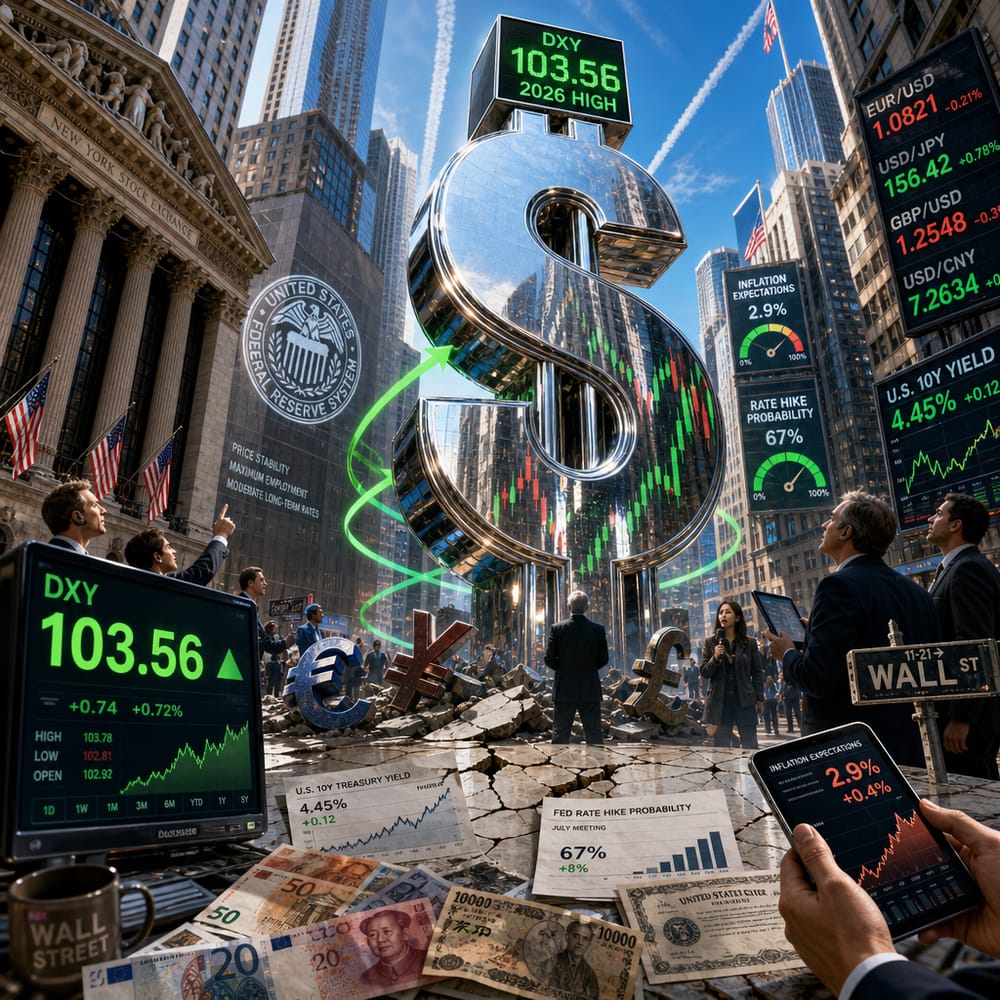
U.S. DOLLAR INDEX HITS NEW HIGH: WHAT IT MEANS FOR YOU
Buckle up, folks! The U.S. Dollar Index (DXY) just hit a high not seen since 2026, and it's chugging along like the little engine that could. Hitting a crisp 103.56, it's as if the greenback has been chugging Red Bull, soaring high while other currencies are left playing catch-up. But why is this happening, and more importantly, why should you care?
Now, before your eyes glaze over, wondering what this means for your next online shopping spree or vacation abroad, let’s break it down. The dollar's power move is fueled by rising inflation expectations and whispers that the Federal Reserve might continue tightening its fiscal belt. Translation? Investors are betting Jerome Powell’s band of money maestros will keep hiking interest rates, hoping to tame inflation like a homeowner fixated on a pesky drip in an otherwise perfect ceiling.
A STRONGER DOLLAR: WHO WINS AND WHO LOSES?
A dollar that can bench press 103.56 on the DXY is a mixed bag of treats and tricks. For U.S. importers, it's like finding a ten-dollar bill in an old coat pocket. A strong dollar means cheaper imports, so the gadgets, clothes, and wine Americans love to buy from Europe, Asia, and beyond become more affordable. Yay for savings at the checkout!
On the flip side, U.S. exporters are likely feeling like someone hid a banana peel on their racetrack. A heftier dollar makes American goods pricier abroad, which could hurt sales of everything from aircraft to avocados. If you're part of a business that's trying to sell Uncle Sam's finest to the rest of the world, you might need to polish those marketing skills.
IMPACT ON EMERGING MARKETS
Now let's talk about the other side of the Atlantic and Pacific. Emerging markets are looking at the beefed-up dollar with a mix of envy and dread. For these nations, a strong dollar can be like a double-edged sword. On one edge, it drives up the cost of servicing dollar-denominated debt. Imagine doing your mortgage payments while someone keeps hiking the interest rate for fun. Not cool, right?
On the other edge, the strong dollar can sap foreign investment. Investors seeking safe havens might abandon ship from riskier emerging markets, causing capital to flow back to the U.S. markets like a particularly vicious game of musical chairs.
THE RIPPLE EFFECTS
This surge isn't happening in a vacuum. The dollar’s rise is sending ripples across various sectors. Let's pick apart a few more consequences of having the world's favorite green paper in beast mode.
Commodities, for starters, are taking a hit. Most global commodities are priced in U.S. dollars, so when the dollar is strong, it makes commodities like oil and gold more expensive for overseas buyers. Cue oil prices slipping back a bit—down to $85 a barrel—as demand softens outside the U.S., where the dollar reigns supreme.
Moreover, global trade balances are getting a makeover. The U.S. trade deficit might shrink as exports become costly, and imports get cheaper. It's like giving a diet to a spendthrift—suddenly, there’s less splurging and more saving.
WHAT’S NEXT FOR THE DOLLAR?
The million-dollar question (pun intended) is, what happens next? As investors continue reading the Federal Reserve's tealeaves, any signs of further tightening could propel the dollar even higher. But remember the Fed has to balance like a tightrope walker—raise rates too high and you risk slowing down an economy that’s just finding its stride.
For everyday investors like you, it’s all about keeping an eye on how this dollar strength plays out. Look at how it impacts earnings reports of U.S. multinationals, listen out for any changes in Fed policy, and if you're thinking of investing abroad, be mindful of the currency risk.
In the meantime, enjoy the cheaper imports, keep an eye on those stocks, and maybe consider delaying that trip abroad (unless you’re a fan of burning through your travel budget faster than a firecracker on the Fourth of July).
And remember, just like the dollar, the market will ebb and flow—how you ride the wave is up to you.
This article is for informational purposes only and is not investment advice. Always do your own research or consult a licensed financial professional before making investment decisions.
© Copyright 2024. All Rights Reserved.
© Copyright 2024. All Rights Reserved.