

U.S. Dollar Index (DXY) Approaches One-Year High
Wednesday, September 30, 2026
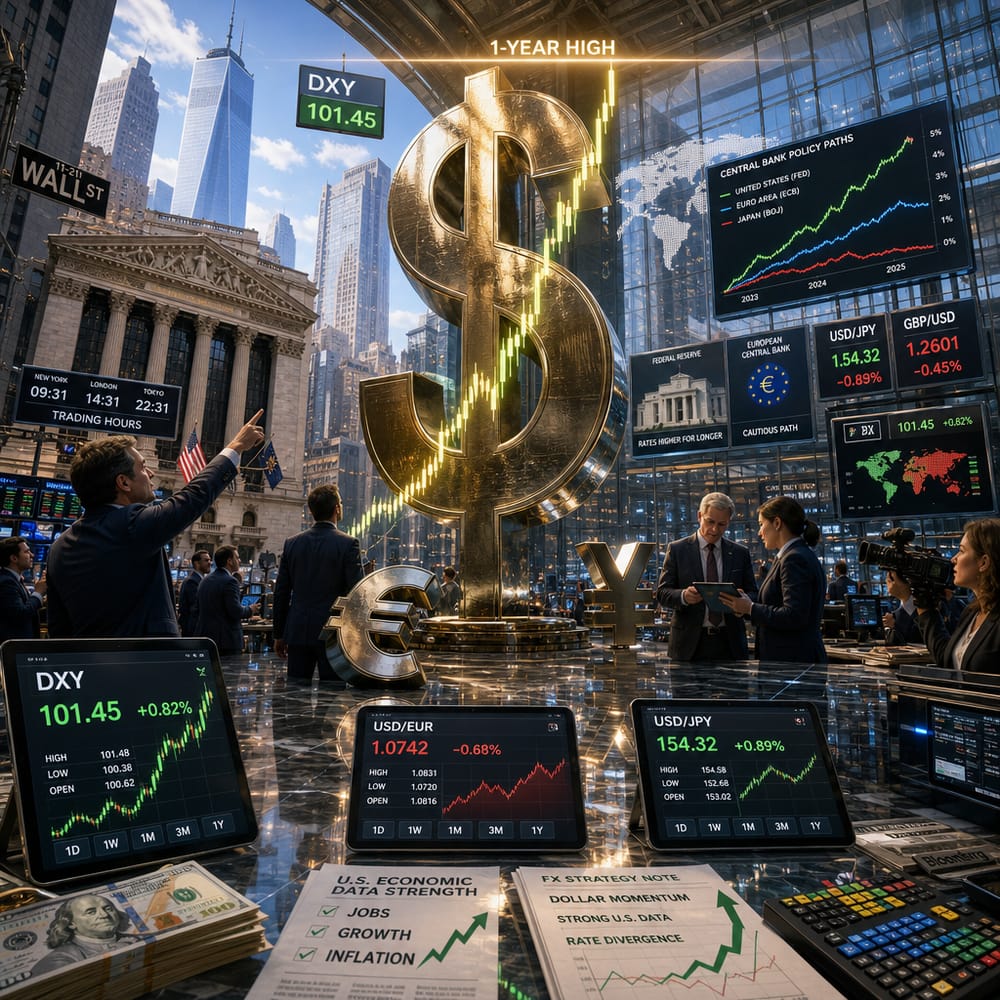
DOLLAR DOMINATES: WHAT A STRONG GREENBACK MEANS FOR THE WORLD
If you’ve been paying any attention to the dollar lately, you might think it’s been hitting the financial gym. The U.S. Dollar Index (DXY) is flexing at 101.45, puffing up to levels not seen in nearly a year. So, what's inflating the dollar's muscles, and why should you as a retail investor care? Buckle up, because it’s a wild ride through economic data, global power plays, and potential risks for emerging markets.
A TALE OF TWO MARKETS
To kick things off, the dollar's surge isn't just a random act of financial bravado. It's a tale of two markets, starring the U.S. economy and the not-so-dynamic duo of global central banks. The recent boost in the dollar's biceps is largely thanks to stronger-than-expected U.S. economic data. Take a peek at the private sector job report that just dropped: 90,000 jobs sprouted in September, defying the naysayers who pegged it much lower. A solid labor market is like spinach to Popeye for the dollar—giving it that extra oomph.
On the flip side, central bank policies around the world are adding fuel to the fire. While the Federal Reserve is caught in a tango with inflation and interest rates, other central banks have got two left feet. The Fed's preferred inflation gauge recently showed core inflation at a breezy 3.0%, lighter than expected, which might give them pause as they consider any drastic rate hikes. Meanwhile, other countries are still grappling with higher inflation rates, keeping their currencies weaker in comparison. It's a classic case of the dollar taking a victory lap while the rest watch from the sidelines.
TRADE BALANCE AND TRADE-OFFS
Now, let's talk trade. A stronger dollar can make U.S. exports about as appealing as last week's leftovers. When the dollar gains muscle, American goods become more expensive for overseas buyers. This could widen the trade deficit as imports become cheaper for U.S. consumers. And while that might not sound like a big deal, a ballooning trade deficit can have ripple effects, potentially slowing down domestic manufacturing and affecting jobs.
But it's not all doom and gloom. A strong dollar also means cheaper imported goods, which could help keep inflation in check. Picture this: with a robust dollar, you may be paying less for that shiny new gadget made overseas or that exotic fruit you're eyeing at the supermarket. Lower import prices can help prevent inflation from scorching your wallet, despite all the other pressures bubbling in the economy.
EMERGING MARKETS' DOLLAR DILEMMA
Now, let's zoom out to emerging markets, where the dollar's strength is akin to a heavyweight champion entering a bantamweight match. A fortified dollar can wreak havoc on these economies, many of which have debts denominated in—yep, you guessed it—dollars. When the dollar surges, emerging markets need more of their local currency to pay back the same dollar-denominated debt, leading to financial strain and potential defaults.
In addition, investors often flock to the stronger, more stable dollar, pulling their investments out of riskier emerging markets. This could lead to a vicious cycle of capital flight, depreciating local currencies, and increased borrowing costs. For countries already treading water, this isn't exactly the life preserver they were hoping for.
WHAT DOES IT ALL MEAN?
So, why should you care about the dollar's beefed-up status? Well, aside from potentially altering the price of your next iPhone, these shifts can affect the broader stock market, bond yields, and even real estate prices. A strong dollar might push multinational companies to rethink strategies if export revenues take a hit, while emerging market turmoil could lead to volatility in the global markets.
For the everyday investor, keeping an eye on the dollar isn't just for the Wall Street elite. It's about understanding how currency strength plays into your broader investment strategy, whether you're considering international stocks, domestic manufacturing firms, or simply pondering the impact on inflation.
In the end, the dollar's rise to its near-high is a signal that the U.S. economy is in a favorable spot compared to much of the world. It's the financial equivalent of winning the gold medal. But remember, the stronger the dollar gets, the more those small emerging markets—and indeed, other parts of the world—may start to feel the weight of the U.S.'s economic prowess. So keep your eyes peeled, retail investors, because the only constant in this wild money market is change.
This article is for informational purposes only and is not investment advice. Always do your own research or consult a licensed financial professional before making investment decisions.
© Copyright 2024. All Rights Reserved.
© Copyright 2024. All Rights Reserved.