

U.S. Dollar Hits Two-Month Lows Amid Weaker U.S. Data
Monday, August 17, 2026
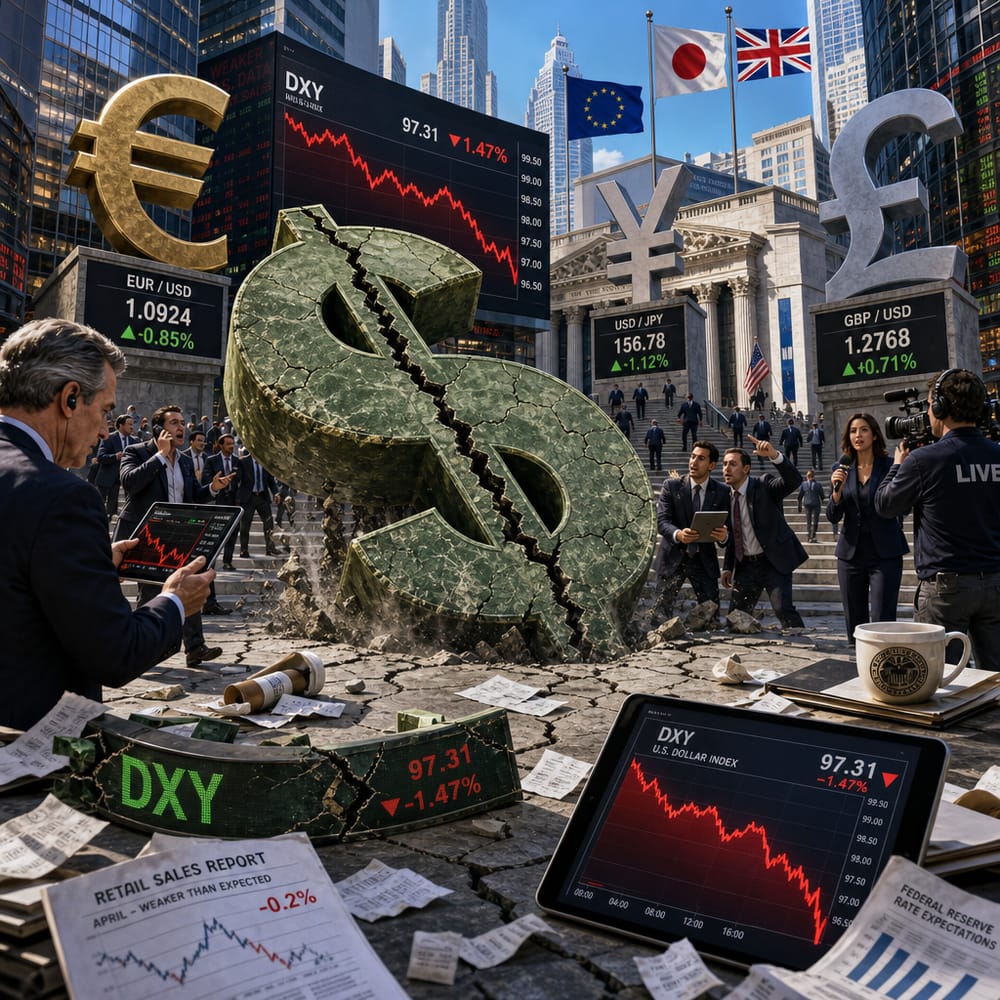
When was the last time you thought about the U.S. dollar on a beach vacation? Probably never, unless you're the kind of person who reads currency reports while sipping a piña colada. Yet, like a clandestine puppet master, the dollar's latest act is set to ripple through the global economy—and it's all thanks to a little softening in U.S. retail sales and a Federal Reserve that's suddenly feeling less hawkish.
Yes, folks, the U.S. dollar index, that mysterious gauge which tracks the greenback's strength against a basket of other major currencies, has slipped to its weakest level since early June. And just like that, global trade dynamics are up for a shake-up.
THE RIPPLE EFFECT: DOLLAR'S IMPACT ON TRADE
Let's break it down in plain English: A weaker dollar can make U.S. exports more attractive on the international market because your overseas buyers are getting more bang for their buck—or euro, yen, or pound. It's like getting a surprise discount at your favorite online store; suddenly, everything's in your cart. But for importers, this is less of a party—imported goods become pricier, pushing up costs and potentially feeding into U.S. inflation. Suddenly, that fancy imported cheese you're fond of is a luxury item.
High import costs can fan the flames of inflation, too. As prices rise, the local consumer feels the pinch—like finding out the "all-you-can-eat" buffet now comes with a time limit. But, on the flip side, a cheaper dollar could entice foreign investors, as American assets suddenly look more tempting.
CURRENCY MARKETS PLAY MUSICAL CHAIRS
Let's take a peek at the currency pairs playing this game. The EUR/USD, USD/JPY, and GBP/USD—they're like the Kardashians of the forex world, always in the spotlight. When the dollar weakens, these pairs can swing wildly, affecting everything from your European summer getaway costs to the price of Japanese electronics.
In the U.S., meanwhile, investors are eagerly waiting for the Fed's next move. Rate hikes, which make borrowing money more expensive, typically strengthen a currency. With the Fed now hinting at a pause, it's like they're giving the dollar a gentle nudge off its pedestal.
FED WRESTLES WITH EXPECTATIONS
Recent U.S. data showed retail sales took a surprising dip. Perhaps Americans are tightening their belts, or maybe that latest season of Stranger Things really did draw everyone inside. Whatever the reason, it's impacted the economy enough that the Fed might think twice about hiking rates aggressively.
But what does this mean for you, the average Joe scrolling through this article? Well, if you're planning on buying a house or a car, keep your eyes on mortgage and auto loan rates. They might just stay comfortably low if the Fed holds back.
WATCHING THE WORLD STAGE
Lest we forget, geopolitics also has a say in this global symphony. Tensions in the Middle East, trade spats between the U.S. and Brazil over tariffs—even the energy market's tremors due to depleted reserves—all swirl into this economic cocktail. Each of these can tweak how currencies move, sometimes in unpredictable ways.
So, should you become a currency day trader? Probably not. But understanding how these shifts impact your pocketbook, from the cost of goods to investments, is a smart move. It's like tuning into the whispers of the financial grapevine, knowing your next strategy at the negotiation table—or at least at the checkout counter.
THE BOTTOM LINE
A weaker U.S. dollar is not just a number on a chart. It's a living, breathing entity moving through economies, touching everything from the markets to the cost of your morning coffee. Whether it's good news or bad often depends on where you're standing, but one thing's for sure: the dollar dance is one worth watching.
So as you scroll through your phone, remember that in the world of finance, even the smallest tremor in the dollar's value can mean a seismic shift in your economic landscape. Stay informed, stay nimble, and maybe—just maybe—consider investing a little more time in understanding that after-dinner currency report.
This article is for informational purposes only and is not investment advice. Always do your own research or consult a licensed financial professional before making investment decisions.
© Copyright 2024. All Rights Reserved.
© Copyright 2024. All Rights Reserved.