

U.S. Dollar Futures: Long Positions Remain Stretched
Tuesday, August 18, 2026
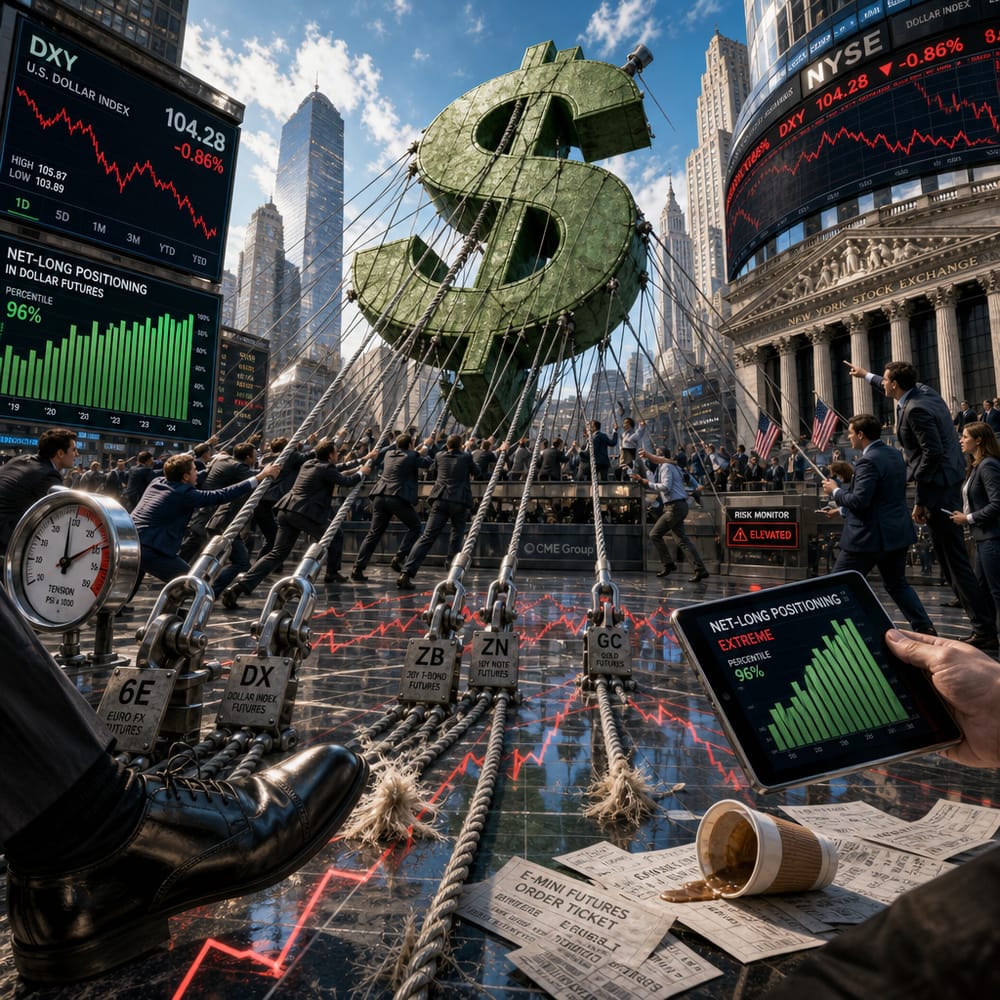
U.S. DOLLAR FUTURES: LONG POSITIONS REMAIN STRETCHED
Whether you’ve got your coffee in hand or you’re just a caffeine-powered insomniac, brace yourself for some currency talk that might actually be more exciting than watching paint dry. We’re diving into the enigmatic world of U.S. dollar futures, where traders are still betting big on the greenback despite its recent slip in the currency index. So what's going on behind the scenes, and what could it mean for you and your wallet?
Imagine the dollar as that one friend who seems to have it all together but keeps giving you mixed signals. On one hand, the dollar index, which measures the buck against a basket of currencies, has been dancing in the red. Yet, if you peek into the futures market—the place where traders make bets on a currency's future value—you’d see they're holding onto long positions like it’s the last donut in the break room. To translate from trader-speak: folks are still bullish on the dollar, thinking it will rise.
Current trends in U.S. dollar futures show traders are heavily net-long, meaning they’ve placed more bets on the dollar gaining value than losing it. It’s kind of like betting on a horse that stumbled but still looks like it could win the race. But what’s driving this high-stakes gamble? It’s all about expectations. Despite the dollar’s recent dips, traders are banking on economic policies, interest rates, and maybe a little gut instinct to propel the dollar higher.
But here’s the twist: such enthusiastic futures positioning might just be a harbinger for something bigger—a shift in market sentiment. If traders decide to change their tune and start unwinding these long positions, the dollar could take a nosedive faster than you can say “exchange rate.” This could ripple across forex markets, affecting everything from your summer vacation budget to the cost of imported avocados.
So why does this matter to the average Joe? Well, a shift in the dollar's value can have wide-ranging implications. A stronger dollar makes U.S. goods more expensive abroad, potentially hitting domestic manufacturers and exporters right in the wallet. On the flip side, a weaker dollar could be a boon for these companies but might raise the price of imported goods. It’s like a financial seesaw, and everyone’s trying to keep their balance.
For investors, the risks and opportunities are two sides of the same coin. If you’re rooting for the dollar, you might see juicy returns if the greenback rallies. But if the market does a 180, those holding long positions could find themselves in a pickle, akin to betting on a winning streak that suddenly goes cold.
Still, some see opportunities in the volatility. Risk-takers may find value in the shifting tides, looking to profit from the ups and downs, while others might opt to sit tight, preferring not to ride the rollercoaster of currency fluctuations.
But let’s not forget the broader market picture. The recent rise in global bond yields, driven by inflation fears and oil price uncertainties, adds another layer to the mix. Higher yields typically attract foreign investors, boosting demand for the dollar. It's like a game of economic Jenga, where every move could send things toppling—or create a new opportunity.
In essence, the dollar futures market is a buzzing hive of anticipation and speculation. Whether you’re a seasoned trader or just someone who likes to keep an eye on where your money’s going, knowing what’s happening with the dollar can give you an edge—be it in long-term investments, business decisions, or even planning your next vacation.
So, stay curious, stay informed, and remember: in the world of finance, the only constant is change. And maybe, just maybe, you can make that work in your favor.
This article is for informational purposes only and is not investment advice. Always do your own research or consult a licensed financial professional before making investment decisions.
© Copyright 2024. All Rights Reserved.
© Copyright 2024. All Rights Reserved.