

U.S. Dollar Broadly Strengthens on Fed Minutes
Sunday, November 22, 2026
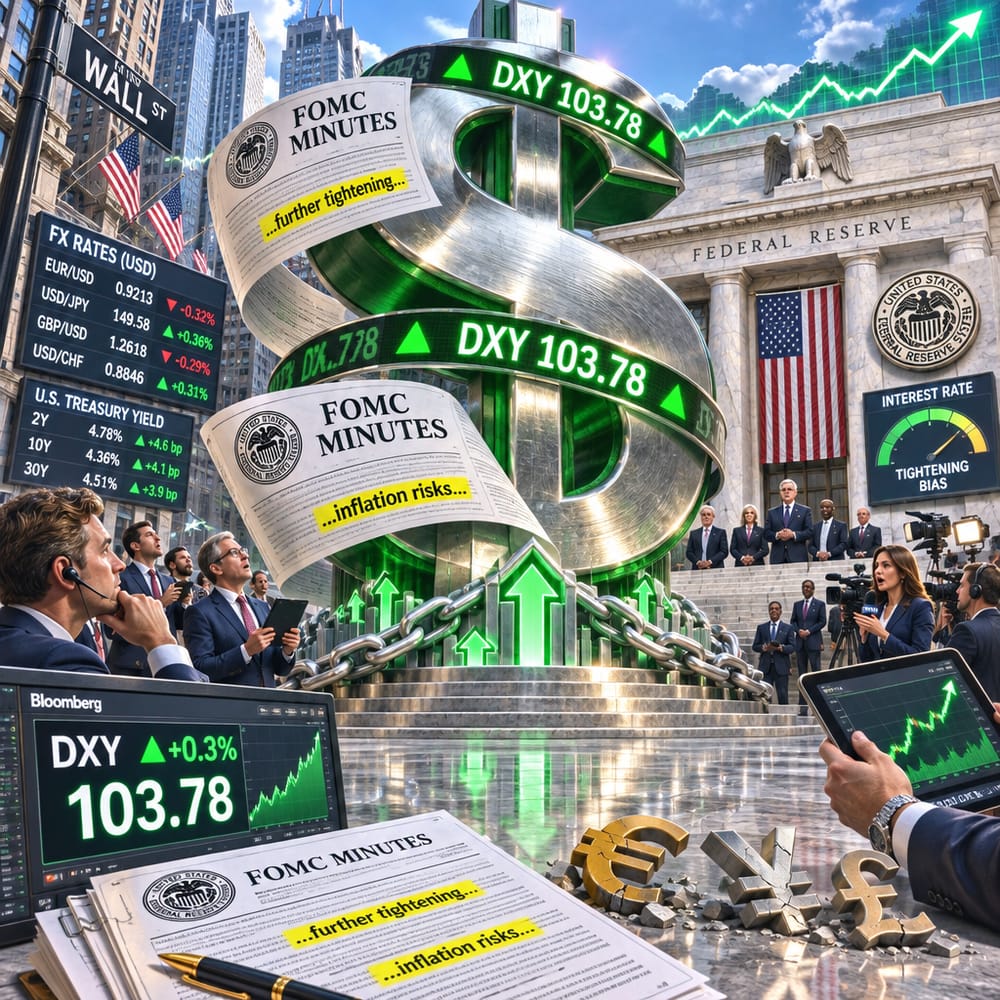
U.S. DOLLAR BROADLY STRENGTHENS ON FED MINUTES
If you’re wondering why your dollar bill suddenly feels a little heavier in your wallet, it’s because the U.S. dollar has been lifting some financial weights lately. The secret sauce? A little document called the FOMC minutes. Think of it as the Federal Reserve's diary, minus the teenage drama, but with plenty of money-making muscle.
So what’s this all about? The FOMC, or Federal Open Market Committee for those who aren’t up to speed with financial acronyms, basically decides how expensive it will be for you to get that next mortgage or car loan. When they meet, the minutes they release are like a treasure map for investors trying to predict the future of interest rates.
The latest release has sent the U.S. dollar index, otherwise known as the DXY, up by a good 0.3% to hit 103.78. Not a bad day at the office for Uncle Sam’s favorite greenbacks. But before you start planning a shopping spree in Paris, let’s dig into what’s really driving this dollar dynamo.
KEY TAKEAWAYS FROM THE FED MINUTES
The key takeaway from these minutes might as well have been written in bold, flashing neon: the Fed is ready to keep tightening. Translation? Interest rates are likely heading north, and the market is bracing for it. Investors, who can sniff out potential rate hikes like bloodhounds on a scent trail, are betting their chips on more tightening.
But why the hawkish stance? Inflation is still lurking around like an unwelcome guest who just won’t leave, and the Fed’s policy-making crew is itching to show it the door. More hikes could be the eviction notice they’re aiming to serve.
DOLLAR DOMINANCE AND GLOBAL RIPPLE EFFECTS
With the dollar flexing its muscles, it’s had some interesting effects on its global currency companions. Currencies like the euro and yen have found themselves on the back foot, grappling with the stronger dollar. Think of a heavyweight match where the dollar is landing one-two punches, leaving its opponents wobbling on the ropes.
For everyday folks, this means if you’re planning a vacation or importing goods, those euros and yen could cost you a little more. However, if you’re exporting your goods, you might be feeling more love with the dollar gains.
WHAT IT MEANS FOR FUTURE FED POLICY
The big question on everyone’s lips is: what next? With the latest minutes reinforcing the idea of more hikes, market watchers are now on high alert for any subtle hints or whispers from the Fed about their next moves.
Some speculate that if inflation doesn’t play ball and head back to the Fed’s comfort zone, we might see continued rate hikes. Others argue that if the data starts to show a cooling trend, the Fed might ease the brakes a little. Either way, it’s a game of wait-and-see, with the Fed holding the cards.
But this isn’t just about setting interest rates. It’s about signaling to markets, businesses, and yes, the average Joe or Jane, just how serious they are about curbing inflation. And right now, the signals are flashing red for “more action incoming.”
THE BOTTOM LINE FOR INVESTORS
So, what’s the takeaway for you, the savvy retail investor? First, remember that currency movements can impact your portfolio, especially if you have international exposure. The dollar’s strength could hurt overseas earnings, impacting stocks with significant foreign revenue.
Stay informed and keep a keen eye on upcoming economic data releases. They could provide clues that might influence the Fed’s next move. Whether you’re bullish or bearish on the dollar, the key is to be nimble and ready to adapt as new information rolls in.
In the financial world, the Fed minutes are a bit like your favorite Netflix series—packed with intrigue and drama, and always leaving you wanting more. As for the mighty dollar, with the Fed in its corner, it looks like it’ll be throwing its weight around for a while yet.
This article is for informational purposes only and is not investment advice. Always do your own research or consult a licensed financial professional before making investment decisions.
© Copyright 2024. All Rights Reserved.
© Copyright 2024. All Rights Reserved.