

U.S. CPI Slows Slightly in July — Has Inflation Turned the Corner?
Friday, August 21, 2026
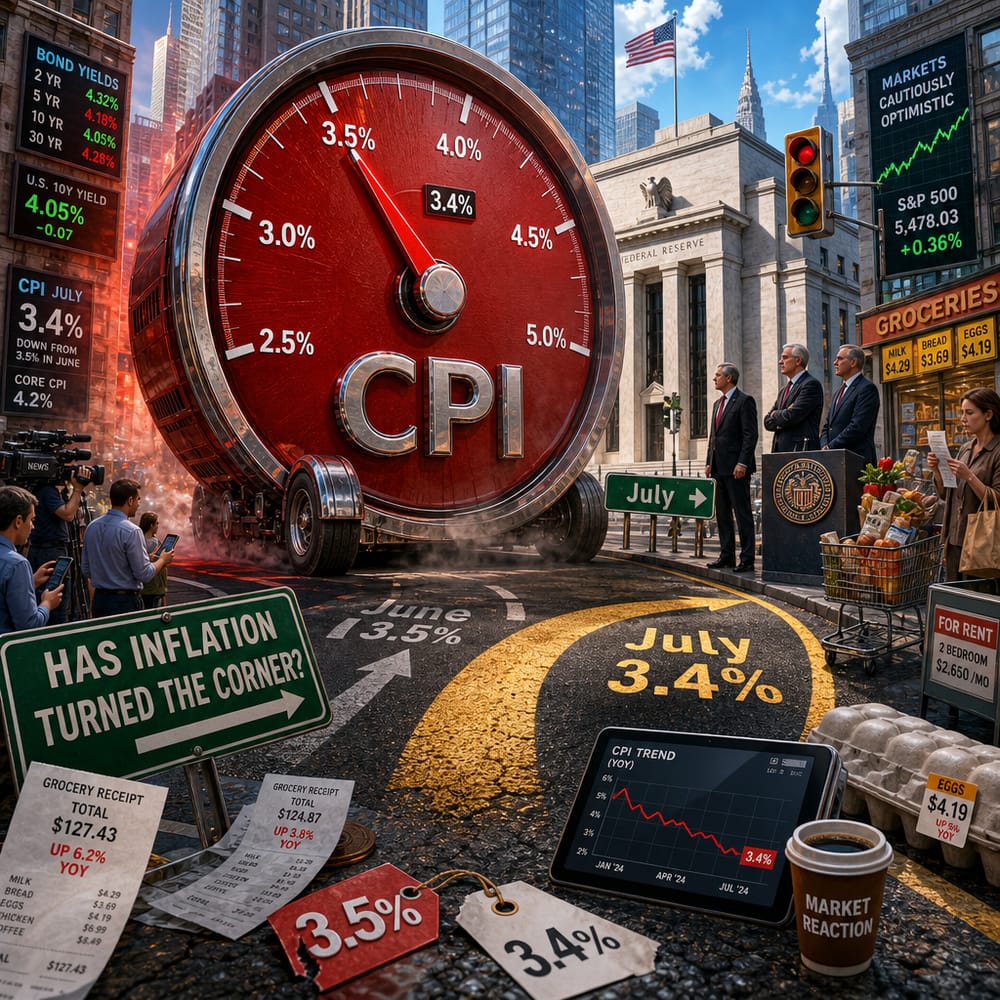
INFLATION COOLS IN JULY, BUT ARE WE REALLY OUT OF THE WOODS?
Hold onto your hats, folks! The latest numbers are in, and it seems like inflation's hot streak might be taking a breather. The Consumer Price Index (CPI), our trusty thermometer for measuring how feverish the economy is feeling, rose by 3.4% in July compared to the previous year. That’s a smidge cooler than June’s 3.5% rise. So, does this mean inflation is finally packing its bags and heading for the hills? Well, not so fast.
The CPI, for those who’ve been ignoring financial news the way you ignore the broccoli on your plate, measures the average change over time in the prices paid by urban consumers for a market basket of consumer goods and services. In other words, it’s how much more you’re shelling out for groceries, gas, and that latte habit you’ve been trying to kick.
WHAT’S COOKING IN THE INFLATION KITCHEN?
Let’s break down what’s cooking in the inflation kitchen. The biggest contributors to this inflationary magic trick are housing and energy. Housing costs are still strutting down Wall Street like they own the place, with rents and home prices continuing their upward climb. Meanwhile, energy prices, which had taken a bit of a nap earlier this year, have woken up with a vengeance thanks to the ongoing soap opera in the Strait of Hormuz involving the U.S. and Iran.
But here’s where things get interesting: food prices have been serving up a mixed menu. Some staples like eggs and dairy have seen a little relief, but others, particularly meat, are still living large on the expense report. It’s like your grocery cart is a rollercoaster of price tags.
HOW WILL THE FED DANCE TO THIS TUNE?
Now, the Federal Reserve, the maestros of monetary policy, are eyeing these numbers like an audition for "America's Got Talent." Their primary gig is to keep inflation in check without throwing the economy into a tailspin. With the CPI cooling slightly, the Fed might be tempted to hold off on raising interest rates further. After all, raising rates too quickly can stifle economic growth, kind of like reaching for the snooze button one too many times.
But it’s a tightrope walk. If inflation starts heating up again, the Fed might have to step in with some tough love — think of it as the financial equivalent of your strict grandma making you finish your veggies before dessert.
RISKY BUSINESS: WHAT IF INFLATION DOESN’T EASE OFF?
If inflation decides it’s not done with its world tour, we’re in for some serious turbulence. Persistent inflation can erode purchasing power, meaning your dollar buys less, kind of like trying to pay for a New York City cab ride with pennies. It can also send markets into a tizzy, as seen with recent stock market volatility triggered by rising Treasury yields. Investors tend to get jittery when inflation heats up, worried that their returns will shrink faster than your favorite pair of jeans in a hot dryer.
Moreover, if inflation doesn’t ease, we might see the Fed play hardball with interest rates, potentially dampening consumer spending and business investment. That's the economic equivalent of taking away the punch bowl just as the party’s getting started.
THE GLOBAL RIPPLE EFFECT
Let’s not forget the global stage. Inflation isn’t just a one-country show. Across the Pacific, Japan’s inflation is hitting yearly highs, driven by energy costs. This kind of global synergy means that the U.S.'s inflation situation could be influenced by international factors like oil prices and supply chain disruptions. So, while we’re all trying to make sense of our grocery bills, let’s keep an eye on international markets that might stir the pot further.
THE BOTTOM LINE
So, with all this in mind, should you be stuffing your mattress with cash or finally booking that vacation? The reality is that we’re still in a bit of a waiting game. Inflation’s slight cool-off in July is a promising sign, but it’s not a free pass to go wild with the credit card just yet. Savvy investors and consumers alike should keep their eyes peeled on economic indicators and Fed announcements. After all, in the ever-changing dance of the economy, it’s always good to know the next steps.
This article is for informational purposes only and is not investment advice. Always do your own research or consult a licensed financial professional before making investment decisions.
© Copyright 2024. All Rights Reserved.
© Copyright 2024. All Rights Reserved.