

U.S. Bond Yields Surge to Multi-Decade Highs, Impacting Stock Market Sentiment
Thursday, October 01, 2026
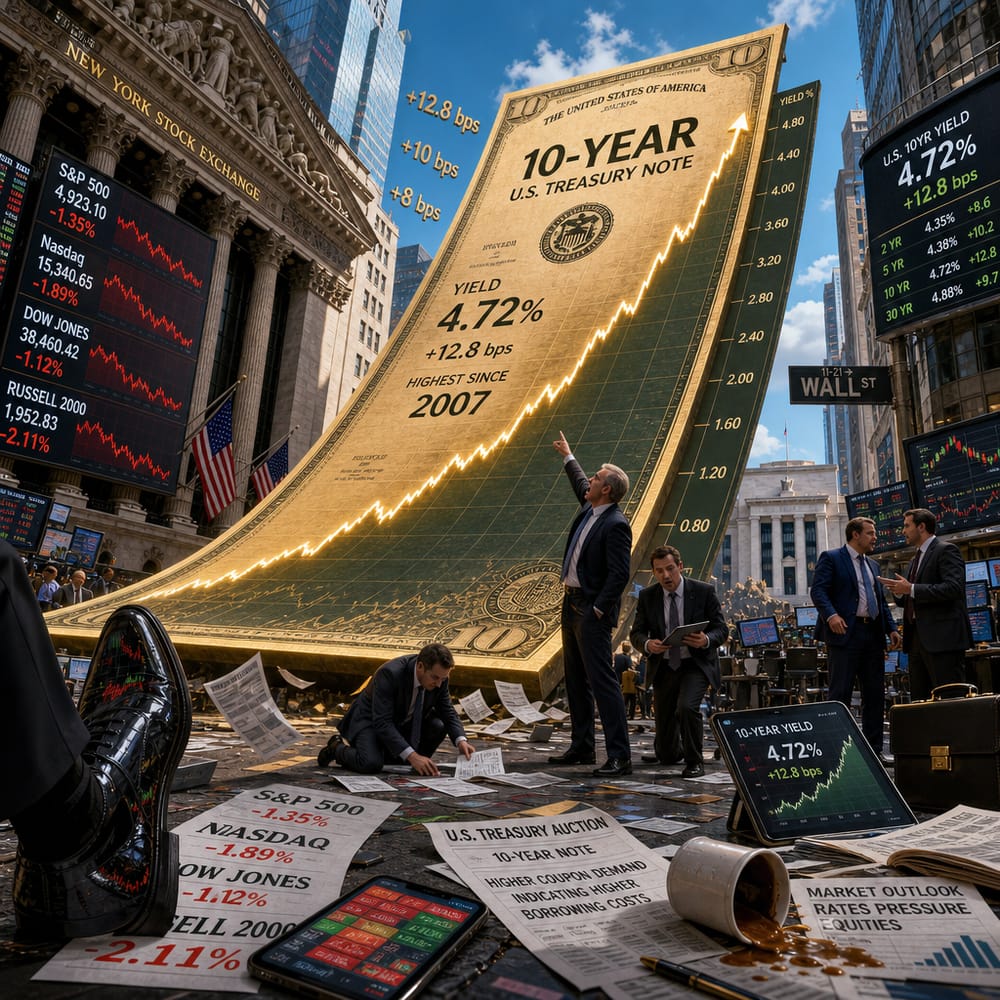
The bond market is throwing a party, but the stock market isn't sure if it wants to dance. This week, the 10-year Treasury yield soared to heights not seen since 2002, as if it had discovered its teenage self at a reunion and burst back onto the scene. For those of you who blanked out during Economics 101, let's break it down: the 10-year Treasury yield is crucial because it impacts the interest rates on everything from your mortgage to those pesky auto loans. It's like the granddaddy of all interest rates, setting the mood for borrowing costs everywhere.
So, why should you, scrolling through this article on your phone, care? Well, when bond yields rise, borrowing becomes more expensive. Imagine your credit card company suddenly deciding you need to pay more interest just because rates are up. Ouch, right? Likewise, companies that rely heavily on debt to fund their business operations will also feel the pinch. Higher borrowing costs can lead to reduced expansion plans and tighter budgets, potentially slowing down business activities and hurting stock prices.
But it’s not just businesses feeling the heat. Rising yields are also sending mixed signals to investors — the kind who’d rather park their money in stocks when bonds offer little. But with bonds suddenly offering juicier returns, investors might start eyeing them with newfound affection.
THE RIPPLE EFFECTS
The impact? Let’s take a stroll through Wall Street. The S&P 500, Nasdaq, Dow, and even the junior Russell 2000 have all been feeling the heat. Sectors like tech — addicted to growth and often fueled by cheap credit — might start sweating bullets first. These companies love to invest in future possibilities, financed by debt. But with borrowing costs on the rise, their love affair with the credit market might hit a rocky patch.
On the flip side, financials, particularly banks, might be gearing up to roll out the welcome mat for higher yields. Banks thrive on the spread between what they pay you (peanuts) and what they charge borrowers (a tidy sum). Rising rates often fatten up that spread, potentially boosting bank profits. It’s a bit like when your favorite diner raises coffee prices but keeps your free refill. Win for them, not so much for you.
THE LONG GAME
If the bond yields stay elevated, it's not just about shifting money from stocks to bonds. This could have lasting effects on the economy. Persistent high yields might stick a wrench in the gears of economic growth. Higher rates often mean less borrowing and spending — by both businesses and consumers. Imagine the housing market taking a hit as potential buyers balk at steeper mortgage rates. Or businesses delaying expansion because the loan they hoped for just got more expensive.
Then there's the backdrop of inflation. High yields can be a sign that inflation fears are lurking. The Federal Reserve might have to step onto the scene, doing its best to keep inflation in check by tweaking interest rates. It’s like playing whack-a-mole with the economy — a tricky game where everyone hopes they don’t just end up with a headache.
WHAT'S NEXT?
So, what should the armchair investor do during these yield highs? Keep a keen eye on how sectors are reacting. Financials could see gains, while tech might face turbulence. Diversification — spreading investments across various sectors — remains your best friend. It's like not putting all your eggs in one basket unless you’re planning to make a very specific type of omelet.
And for those intrigued by bonds, this could be a good time to revisit them. Higher yields mean better returns, especially for those who want less risk compared to the stock market rollercoaster. Yet, it's important to remember the balance — don’t go all in with bonds just because they're having their moment in the spotlight.
In conclusion, while the bond market flexes its muscles, the stock market wrestles with the implications. The wise investor will stay informed and nimble, ready to adjust sails as the winds of interest rates continue to shift. The dance between stocks and bonds continues, and those with an ear to the ground will be best poised to step to the rhythm.
This article is for informational purposes only and is not investment advice. Always do your own research or consult a licensed financial professional before making investment decisions.
© Copyright 2024. All Rights Reserved.
© Copyright 2024. All Rights Reserved.