

U.S. Bond Rout Continues; Record Treasury Yields Roil Equities
Thursday, September 24, 2026
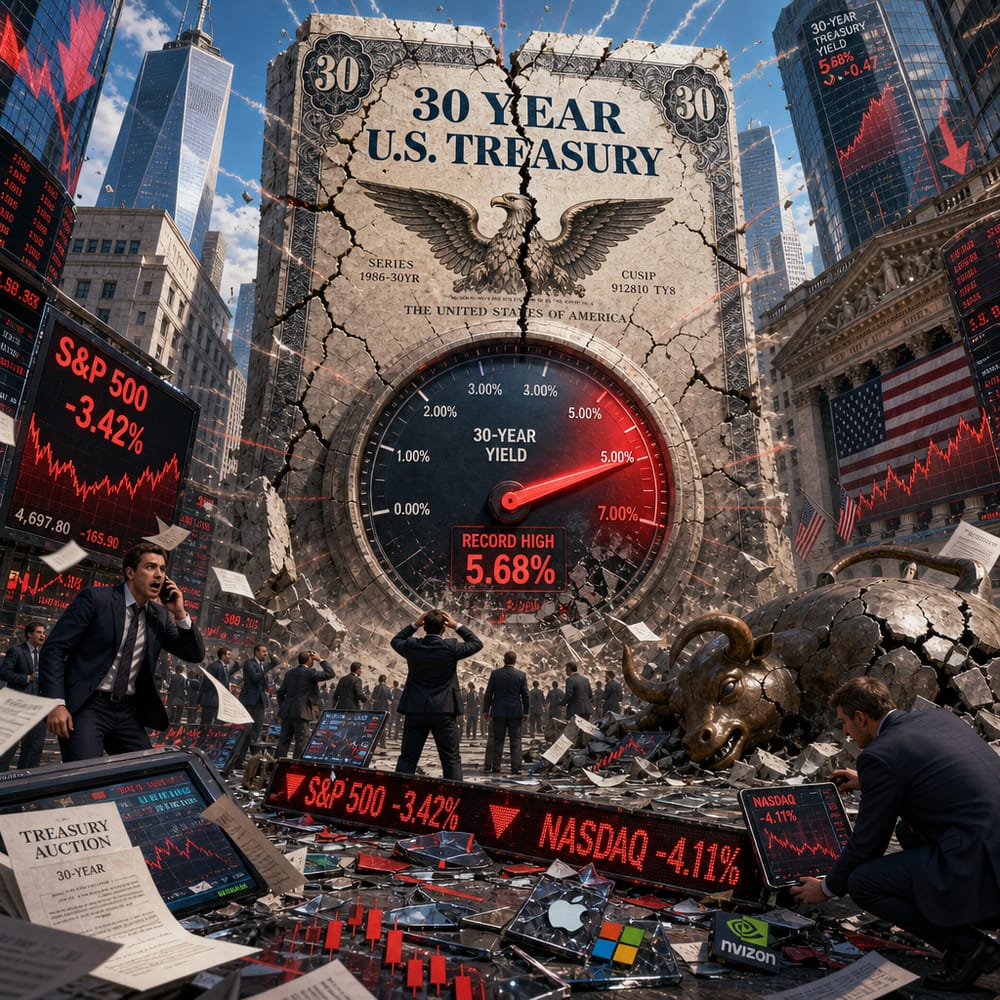
STOCKS' DRAMA: 30-YEAR TREASURY YIELDS SHAKE UP MARKETS
Think the latest binge-worthy series has enough drama? Think again. The real action is playing out in the financial markets, with the 30-year U.S. Treasury bond yield spiking to levels not seen since early 2004. This isn't just a rerun of economic turmoil; it's the latest episode in a series that continues to captivate investors and mess with their portfolios.
In case your memory of 2004 is fuzzy, let me remind you: Facebook was a college thing, Netflix was still mailing DVDs, and U.S. Treasury yields were roaming the same lofty heights they’ve now reached. Fast forward to today, and our beloved bonds are causing market tantrums yet again. So why exactly is this a big deal? And how are investors—who are probably feeling like they're on a rollercoaster without a seatbelt—reacting?
THE BOND MARKET'S BLOCKBUSTER SEQUEL
Rising yields can send a shiver down the spine of equity markets faster than a horror movie. Here's the short version: as yields climb, borrowing costs go up. This can cool off corporate expansion plans and chill the overall economy. Higher yields mean safer, more lucrative returns from bonds, which can lure money away from riskier stocks. It’s no wonder the S&P 500 and Nasdaq are feeling the heat, with major indices pressured by these rising rates.
But let’s break this down with a little history. When Treasury yields surge, it often signals that investors expect higher inflation or that the Fed might raise rates to keep inflation in check. It's like that moment in a heist movie where the alarm bells go off—it's a signal that something significant is about to happen.
HOW DID WE GET HERE?
The bond market has been a bit of a drama queen lately. The ripple effects from sustained economic growth, employment gains, and hints that the Fed might keep rates elevated have investors bracing for impact. The yield on the 30-year Treasury recently hit 5.44%, a level that hasn't seen the light of day for over 20 years. And the 10-year Treasury yield—the one tied closely to mortgage rates—has spiked to its highest since 2007.
It's not just the U.S. feeling the pressure of this bond market rout. Yields on Japanese and European bonds are climbing too, making it a global episode with a storyline that crosses borders.
PORTFOLIO PANIC OR PLAYBOOK CHANGE?
So what’s an investor to do? Well, those in the know are already tweaking their strategies to account for these rising yields. Some are embracing bonds for the juicy returns they promise, a shift from recent years when equities were the belle of the ball. Others are gravitating towards sectors that traditionally perform well in high-rate environments—think financials and energy.
But it’s not just about ditching stocks for bonds. Savvy investors consider this an opportunity to fine-tune their portfolios, potentially focusing on stocks with solid fundamentals and attractive valuations—or diversifying into assets that hedge against inflation.
And let’s not forget the tech heavyweights. The Nasdaq, home to tech giants, is under particular scrutiny. High-growth tech stocks often suffer when yields rise because their sky-high valuations are based on future cash flows, which are worth less when discounted at higher rates.
THE BIG QUESTION
Will these soaring yields flip the script entirely, or is it just another twist in the never-ending market saga? The jury's still out, but the savvy investor knows to stay alert, stay informed, and maybe keep a little popcorn on hand. After all, the financial markets are as compelling as any drama Netflix could dream up. Whatever the eventual outcome, keeping a steady eye on the bond market's cast of characters will be critical.
Bottom line? Whether you're a Wall Street pro or just someone with a 401k, this bond drama is one to watch. It’s a plot twist with real-life implications, and while it might not have a Hollywood ending, the story’s far from over.
This article is for informational purposes only and is not investment advice. Always do your own research or consult a licensed financial professional before making investment decisions.
© Copyright 2024. All Rights Reserved.
© Copyright 2024. All Rights Reserved.